These indoor plants for bathroom settings include 92 choices to consider for rooms that may be warm, humid or limited in space. The list suits readers who will assess the bathroom’s actual light and ventilation instead of choosing on humidity alone. African Mask Plant, African Violet, Air Plant and Areca Palm are among the included members. Their care levels and light needs vary widely, and some entries require bright conditions that a windowless bathroom cannot provide. Use each plant page to compare requirements, then consider temperature changes, condensation, airflow and safe access for watering. A bathroom location should fit the species rather than compensate for unsuitable light.
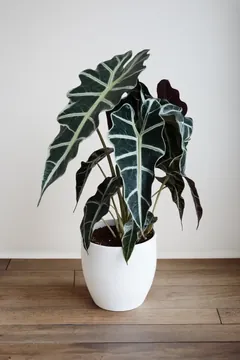
Alocasia × mortfontanensis
- LightAfrican Mask Plant grows best in bright, indirect light…
- WaterKeep African Mask Plant evenly moist, but never leave the…
- ToxicityToxic to pets
- Mature sizeIndoors, it can grow 2 to 3 ft / 60 to…
African Mask Plant is a bold tropical foliage plant with broad, glossy, arrow-shaped leaves. Deep green surfaces highlight strong silver-white veins. Its upright form brings structure and contrast to an indoor collection. It suits growers who can provide steady moisture, warmth, humidity, and filtered light. Care is more demanding than for many common houseplants, especially during winter dormancy.
Full care guide →
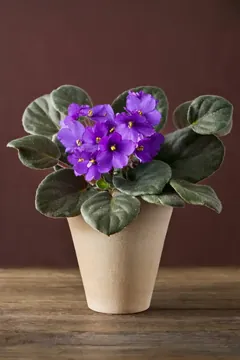
Saintpaulia ionantha
- LightAfrican Violet flowers best in bright, indirect light…
- WaterWater African Violet when the topsoil feels dry. Bottom…
- ToxicitySafe for cats & dogs
- Mature sizeA full-grown plant generally reaches 6…
African Violet is a compact perennial that forms a neat rosette of soft, velvety leaves. Colorful flowers rise above the foliage and may appear in many shades. Its small size suits shelves, desks, and bright windowsills. It can bloom for long periods when light, moisture, and temperature remain stable. Beginners can grow it, although careful watering helps prevent marked or damaged leaves.
Full care guide →
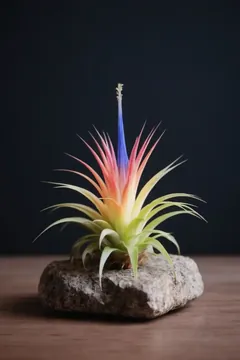
Tillandsia ionantha
- LightAir Plant prefers bright, indirect light at 150 to 250…
- WaterAir Plant needs a complete soak rather than conventional…
- ToxicitySafe for cats & dogs
- Mature sizeIt may grow 6 to 8 in / 15 to 20 cm…
Air Plant is a small bromeliad that forms a tidy rosette without growing in soil. Its narrow, silvery-green leaves absorb moisture and nutrients from the air. The foliage turns red as flowering approaches, adding seasonal color. It suits open displays, mounted arrangements, and small spaces. Care is simple if the plant receives bright filtered light, regular soaking, and enough airflow to dry fully afterward.
Full care guide →
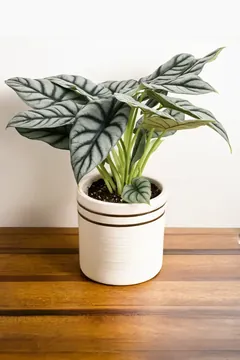
Alocasia baginda
- LightAlocasia Silver Dragon needs bright, indirect light…
- WaterWater Alocasia Silver Dragon when the topsoil feels dry…
- ToxicityToxic to pets
- Mature sizesee care guide
Alocasia Silver Dragon is grown for thick, heart-shaped leaves with a metallic silvery-green surface. Dark green veins form a raised pattern across each blade. Its compact, sculptural foliage stands out on a table or plant shelf. This Alocasia suits experienced growers who can maintain warmth, high humidity, filtered light, and careful watering. Sudden changes in moisture or temperature may quickly affect its leaves.
Full care guide →
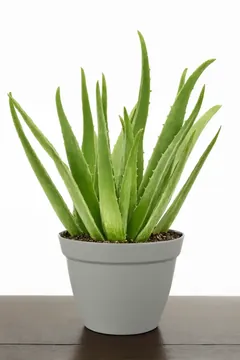
Aloe vera
- LightAloe Vera needs bright, direct light between 250 to 1000…
- WaterAllow Aloe Vera's soil to dry completely before watering…
- ToxicityToxic to pets
- Mature sizeIndoors, it can grow 1 to 2 ft / 30 to…
Aloe Vera is a sturdy succulent that forms a rosette of thick green leaves. Each fleshy leaf has small spikes along its edges and stores water for dry periods. Its clean shape works well on sunny windowsills and in bright rooms. It is easy to grow when given strong light, a draining mix, and infrequent watering. Owners should also consider its toxicity before placing it near pets or children.
Full care guide →
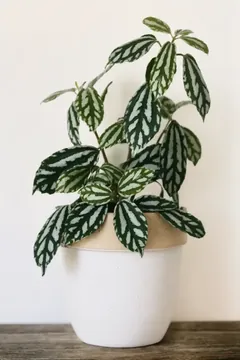
Pilea cadierei
- LightAluminum Plant prefers bright, indirect light between 150…
- WaterWater Aluminum Plant when the topsoil feels dry. Check the…
- ToxicitySafe for cats & dogs
- Mature sizeIt reaches about 1 ft / 30 cm tall and…
Aluminum Plant is a compact evergreen perennial with bushy, upright growth. Its green leaves carry bright silver markings that resemble brushed metal. Stems may spread or droop as they lengthen, making the plant useful in pots or mixed displays. It is easy to maintain under stable indoor conditions. Regular pinching keeps growth dense, while filtered light preserves the strong contrast in its patterned foliage.
Full care guide →
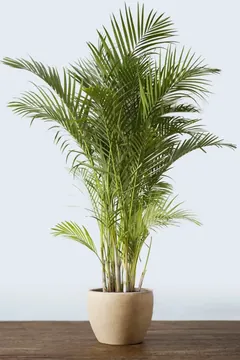
Dypsis lutescens
- LightAreca Palm thrives in bright, indirect light measuring 150…
- WaterWater Areca Palm when the topsoil feels dry. Check below…
- ToxicitySafe for cats & dogs
- Mature sizeIndoors, it can reach 6 to 10 feet / 1
Areca Palm grows as a dense clump of smooth, ringed trunks with a golden-yellow tone. Long, arching fronds divide into narrow green leaflets, creating a soft, feathery look similar to bamboo. It can become a large floor plant and needs room to spread. This palm suits bright interiors where moisture remains steady. Dry air, excess salts, and poor drainage can damage the leaf tips.
Full care guide →
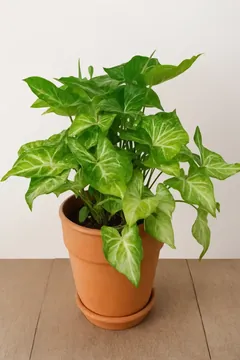
Syngonium podophyllum
- LightArrowhead Plant accepts low to medium light between 50 to…
- WaterKeep Arrowhead Plant consistently moist, but never soggy…
- ToxicityToxic to pets
- Mature sizeIt can reach 1 to 2 ft / 30 to 60 cm…
Arrowhead Plant is a tropical vine with glossy leaves that begin in a clear arrow shape. Foliage may be solid green or patterned with white, cream, or pink. Young plants stay compact, while older stems climb or trail. It is adaptable and easy to grow in lower indoor light. This plant suits shelves, hanging pots, or supports, but its toxic tissues require careful placement around pets and children.
Full care guide →
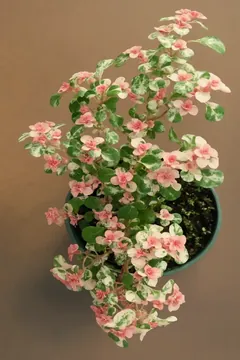
Pilea microphylla
- LightArtillery Plant prefers bright, indirect light between 150…
- WaterKeep Artillery Plant's soil consistently moist without…
- ToxicitySafe for cats & dogs
- Mature sizeIt reaches 6 to 12 in / 15 to 30 cm…
Artillery Plant is a small, spreading Pilea with many rounded leaves on fine stems. Its foliage may combine green and white, creating a soft, textured mound. Tiny flowers release pollen with a sudden burst, which inspired the common name. The plant fits terrariums, small pots, and mixed displays. It is easy to grow when kept warm, evenly moist, and protected from harsh direct sunlight.
Full care guide →
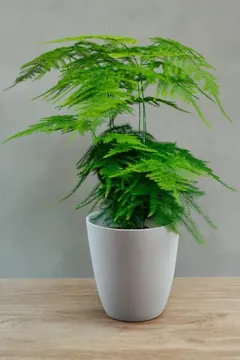
Asparagus setaceus
- LightAsparagus Fern grows best in bright, indirect light…
- WaterKeep Asparagus Fern evenly moist, but do not leave the…
- ToxicityToxic to pets
- Mature sizeDepending on support and pruning, it…
Asparagus Fern has fine, lacy foliage carried on long arching or trailing stems. Although it resembles a fern, it belongs to the asparagus family. Its airy shape works in hanging baskets, tabletop pots, or larger floor displays. It is fairly easy to grow with steady moisture and filtered light. Mature stems may become long and tangled, while dry conditions can make the delicate foliage shed.
Full care guide →
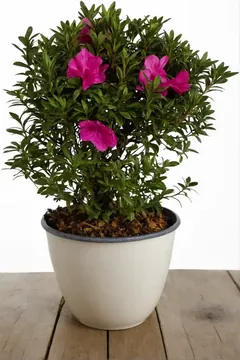
Rhododendron
- LightAzalea prefers bright, indirect light measuring 150 to 250…
- WaterWater Azalea when the topsoil feels dry. Check moisture…
- ToxicityToxic to pets
- Mature sizeIndoors, it can grow 2 to 4 ft / 60 to…
Azalea is an evergreen shrub grown indoors for its abundant spring flowers. Some plants produce a smaller second display in fall. Glossy, dark green leaves create a dense background for blooms in several colors. It suits cool, bright rooms where moisture and soil acidity can be managed. Warm, dry conditions shorten flowering, so it may require more attention than a typical foliage houseplant.
Full care guide →
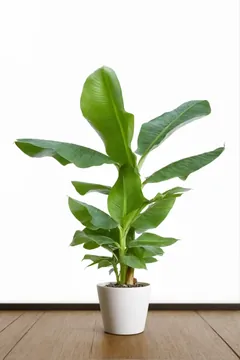
Musa acuminata
- LightBanana Plant prefers bright, indirect light between 150 to…
- WaterKeep Banana Plant's soil consistently moist, but never…
- ToxicitySafe for cats & dogs
- Mature sizeIndoors, it may grow 6 to 8 feet / 1
Banana Plant is a large tropical perennial with huge, glossy leaves shaped like paddles. The foliage rises from a sturdy central form and gives a room a bold canopy. Mature indoor plants may produce orange or purple flowers followed by small, inedible bananas. It needs generous space, warmth, humidity, and steady moisture. Its fast, substantial growth suits bright rooms better than cramped shelves or narrow walkways.
Full care guide →
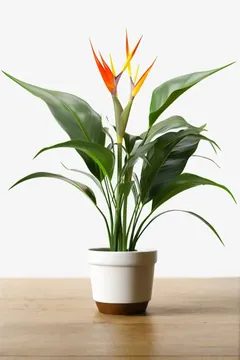
Strelitzia reginae
- LightBird of Paradise needs bright direct light at 250 to 1000…
- WaterLet most of the potting mix dry before watering Bird of…
- ToxicitySafe for cats & dogs
- Mature sizeIndoors, it eventually reaches 3 to 6…
Bird of Paradise is a bold tropical plant with broad, glossy, dark green leaves shaped like banana foliage. Mature plants can produce vivid orange and blue flowers that resemble birds in flight. Its upright form adds height and structure indoors. Grow it if you have strong sunlight, generous floor space, and patience for flowering. Large leaves may need occasional cleaning to show their natural shine.
Full care guide →
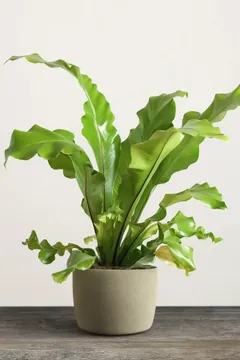
Asplenium nidus
- LightBird’s Nest Fern prefers medium to bright indirect light at…
- WaterKeep the mix evenly moist for Bird’s Nest Fern, but never…
- ToxicitySafe for cats & dogs
- Mature sizeThe fern may eventually stand 3 to 6 ft…
Bird’s Nest Fern forms a neat rosette of bright green, sword-shaped fronds. New growth rises from the central crown and gradually opens outward. Its smooth, undivided leaves give it a cleaner look than many feathery ferns. This plant suits shelves, tables, and shaded rooms with steady warmth. It is manageable for beginners who can provide consistent moisture without soaking the crown or roots.
Full care guide →
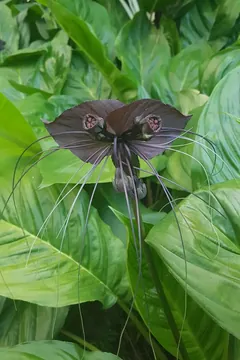
Tacca chantrieri
- LightBlack Bat Flower needs bright indirect light at 150 to 250…
- WaterBlack Bat Flower needs consistently moist soil, but its…
- ToxicityNot ASPCA-listed
- Mature sizeIts eventual height is 2 to 3 ft / 60…
Black Bat Flower is an upright perennial grown for its extraordinary blooms. Broad, dark bracts spread like a bat’s wings around the true flowers, while long whisker-like structures add drama. Green foliage creates a lush base beneath the blooms. This tropical plant appeals to collectors seeking an unusual flowering specimen. It is more demanding than a typical houseplant and needs stable warmth, moisture, humidity, and filtered light.
Full care guide →
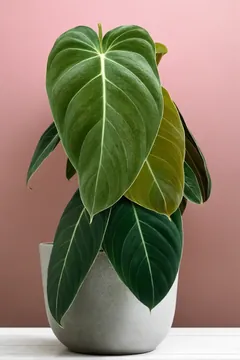
Philodendron melanochrysum
- LightBlack Gold Philodendron grows best in bright indirect light…
- WaterWater Black Gold Philodendron when the topsoil feels dry…
- ToxicityToxic to pets
- Mature sizeIts stated eventual height is 2 ft / 30…
Black Gold Philodendron is a climbing vine with large, heart-shaped leaves. The foliage has a soft velvet surface and deep green to nearly black coloring. Golden veins and highlights become more striking as leaves mature. Give the vine a support if you want larger foliage and a tidy upright shape. It suits collectors who can provide bright filtered light, warmth, humidity, and careful watering.
Full care guide →
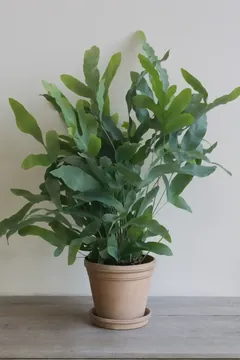
Phlebodium aureum
- LightBlue Star Fern prefers bright indirect light at 150 to 250…
- WaterKeep the soil consistently moist for Blue Star Fern, but do…
- ToxicityNot ASPCA-listed
- Mature sizeIt can eventually reach 2 to 3 feet /…
Blue Star Fern is an evergreen fern that spreads from creeping rhizomes and forms a broad clump. Its arching fronds have an unusual blue-green cast and softly divided outlines. The foliage looks less delicate than many traditional ferns. This easy indoor plant suits shelves, stands, or wide pots. It works well for growers who can maintain light moisture while keeping the rhizomes above dense, soggy soil.
Full care guide →
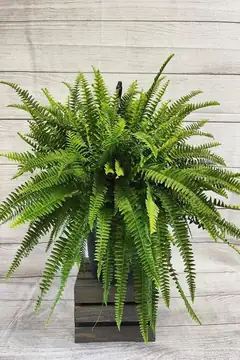
Nephrolepis exaltata
- LightBoston Fern needs bright indirect light at 150 to 250…
- WaterKeep Boston Fern soil consistently moist without leaving it…
- ToxicitySafe for cats & dogs
- Mature sizeIts fronds can stand or trail 1 to 3 ft…
Boston Fern forms a lush fountain of arching fronds covered with many fine leaflets. Mature foliage spills over the pot, making this fern useful on plant stands or in hanging planters. Its soft green texture adds volume without a rigid outline. It suits growers who enjoy full, cascading foliage and can maintain consistent moisture, filtered light, and moderate to high humidity throughout the year.
Full care guide →
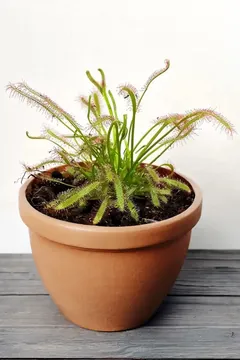
Drosera capensis
- LightCape Sundew needs bright direct light at 250 to 1000…
- WaterCape Sundew must remain wet at all times. Use only room…
- ToxicityNot ASPCA-listed
- Mature sizeIt eventually grows 6 to 12 in / 15 to…
Cape Sundew is a small carnivorous plant that forms a low rosette. Its narrow leaves carry sticky, tentacle-like glands that trap small insects. The glistening droplets give the foliage a jeweled appearance while helping the plant collect nutrients. This sundew suits sunny windows and growers willing to use mineral-free water. Unlike most houseplants, it needs permanently wet, nutrient-poor soil and should never receive standard fertilizer.
Full care guide →
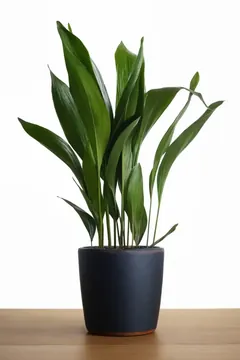
Aspidistra elatior
- LightCast Iron Plant tolerates low to medium indirect light at…
- WaterWater Cast Iron Plant when half of the soil has dried. Use…
- ToxicitySafe for cats & dogs
- Mature sizeIt eventually reaches 1 to 3 ft / 30 to…
Cast Iron Plant is an evergreen perennial that grows as a dense clump. Long, arching leaves have a deep green color, leathery texture, and simple upright shape. It is valued indoors because it tolerates lower light and occasional lapses in care better than many foliage plants. This slow, durable plant suits shaded rooms, quiet corners, and growers who prefer understated foliage over flowers or fast growth.
Full care guide →
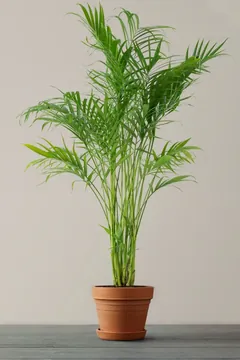
Chamaedorea cataractarum
- LightCat Palm prefers bright indirect light at 150 to 250…
- WaterWater Cat Palm when the topsoil feels dry. Check below the…
- ToxicitySafe for cats & dogs
- Mature sizeThe clump can spread 3 to 5 ft / 0
Cat Palm is a small, clustering palm with many arching, feathery fronds. Its bushy growth rises from the base rather than forming one tall, bare trunk. The foliage brings a soft tropical look to floors and broad plant stands. This palm suits a bright room with space for its widening crown. It needs more moisture and humidity than drought-tolerant palms, so regular checks are important.
Full care guide →
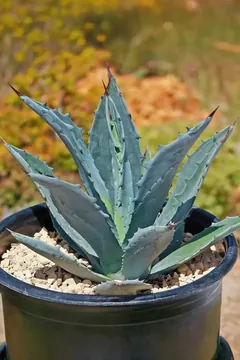
Agave americana
- LightCentury Plant needs bright direct light at 250 to 1000…
- WaterAllow Century Plant soil to dry completely before watering…
- ToxicityToxic to pets
- Mature sizeEventual size is 3 to 6 ft / 0
Century Plant is a large rosette-forming succulent with thick, sword-shaped leaves. The grey-green foliage has sharp tips and spiny edges, creating a bold architectural outline. It stores water in its leaves and tolerates long dry periods. Indoors, it suits a very sunny, spacious location where people and pets cannot brush against it. The plant can live for decades, but its eventual size demands planning.
Full care guide →
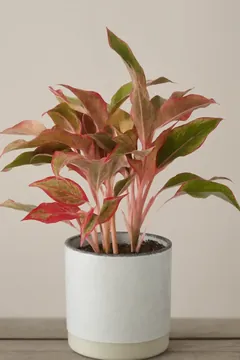
Aglaonema
- LightChinese Evergreen grows in low to medium indirect light of…
- WaterWater Chinese Evergreen after the topsoil feels dry. Check…
- ToxicityToxic to pets
- Mature sizeIt reaches about 12 to 18 in / 30 to 45…
Chinese Evergreen is a slow-growing, clump-forming houseplant valued for its lush patterned foliage. Depending on the cultivar, its leaves may show green, cream, silver, pink, or red markings. Its compact shape works well on desks, shelves, and shaded room corners. It tolerates lower light than many colorful plants, making it suitable for beginners who can avoid overwatering.
Full care guide →
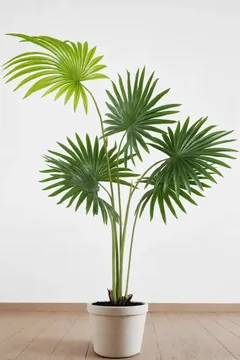
Livistona chinensis
- LightChinese Fan Palm grows best in bright indirect light of 150…
- WaterWater the Chinese Fan Palm when the topsoil feels dry…
- ToxicitySafe for cats & dogs
- Mature sizeIt may eventually reach 6 to 10 feet / 1
The Chinese Fan Palm has large, glossy fronds divided into broad fan-like sections. A mature frond can measure up to 2 ft / 60 cm across, creating a bold tropical outline. Indoors, it becomes a substantial floor plant without needing complicated care. It suits bright rooms with enough space for its widening crown and arching foliage.
Full care guide →
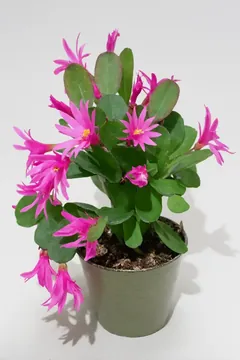
Schlumbergera bridgesii
- LightChristmas Cactus performs best in bright indirect light of…
- WaterWater Christmas Cactus when the topsoil feels dry. Although…
- ToxicitySafe for cats & dogs
- Mature sizeIt can reach 1 to 2 ft / 30 to 60 cm…
Christmas Cactus is a tropical jungle cactus rather than a desert species. It forms long, flat stems made from linked segments, with bright flowers appearing near the tips. Blooms may be red, pink, or white and usually arrive around the winter holidays. It is easy to grow indoors and works well in pots where its arching stems can hang freely.
Full care guide →
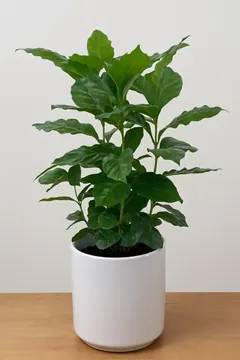
Coffea arabica
- LightCoffee Plant needs bright indirect light of 150 to 250…
- WaterKeep Coffee Plant soil consistently moist but not soggy…
- ToxicityToxic to pets
- Mature sizeIt can grow 3 to 6 ft / 1 to 2 m tall…
Coffee Plant is an evergreen shrub with glossy green leaves and a neat, upright form. Mature specimens may produce fragrant white flowers followed by red fruits called coffee cherries. It brings rich foliage and an unusual crop plant story indoors. Care is moderately demanding because the roots need steady moisture, while the leaves prefer bright filtered light and higher humidity.
Full care guide →
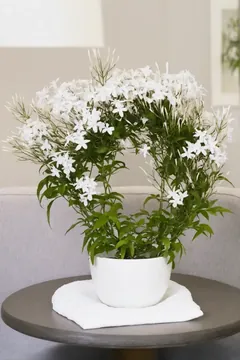
Trachelospermum jasminoides
- LightConfederate Jasmine grows best in bright indirect light of…
- WaterWater Confederate Jasmine when the topsoil feels dry. Check…
- ToxicitySafe for cats & dogs
- Mature sizeThe plant may spread 3 to 4 ft / 0
Confederate Jasmine is an evergreen climber with glossy dark green leaves and twining stems. Its foliage often turns deep bronze-red during winter. Clusters of strongly fragrant white flowers appear from mid to late summer. Indoors, it needs support and room to climb, but rewards steady care with a leafy screen and seasonal scent.
Full care guide →
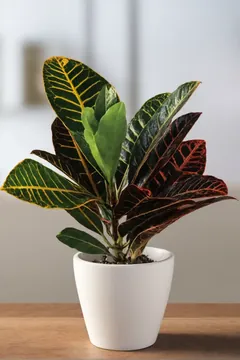
Codiaeum variegatum
- LightCroton Plant needs bright indirect light of 150 to 250…
- WaterWater Croton Plant when the topsoil feels dry. Check the…
- ToxicityToxic to pets
- Mature sizeIndoors, it may reach 3 to 8 ft / 0
Croton Plant is an upright shrub grown for large, leathery leaves with bold variegation. Its foliage may combine green with vivid yellow, red, orange, or other warm tones. The strong color makes it a striking indoor focal point. It needs more consistent light, warmth, and moisture than many easy houseplants, so it best suits attentive growers.
Full care guide →
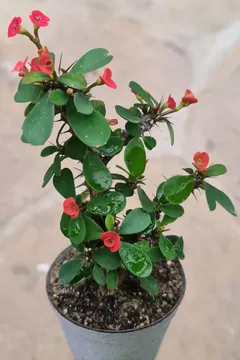
Euphorbia milii
- LightCrown of Thorns needs bright direct light of 250 to 1000…
- WaterAllow Crown of Thorns soil to dry out completely between…
- ToxicityToxic to pets
- Mature sizeIt can reach 2 to 3 ft / 60 to 90 cm…
Crown of Thorns is a woody succulent shrub with thick, spiny stems. Small flowers are surrounded by colorful bracts that create most of the display. Its upright form and tolerance for dry soil make it manageable in sunny indoor spaces. Growers must place it carefully because both the sharp spines and irritating milky sap can cause injury.
Full care guide →
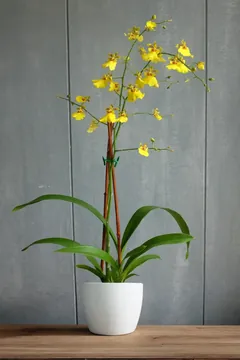
Oncidium altissimum
- LightDancing Lady Orchid prefers bright indirect light of 150 to…
- WaterWater Dancing Lady Orchid when the top of its potting…
- ToxicitySafe for cats & dogs
- Mature sizeFlowering growth may reach 2 to 4 ft /…
Dancing Lady Orchid is an epiphytic orchid known for long, branching flower sprays. Its yellow and brown blooms have a shape often compared with small dancing figures. The airy display adds height without requiring a broad, leafy plant. It suits growers with some orchid experience who can provide filtered light, an open bark mix, and careful watering.
Full care guide →
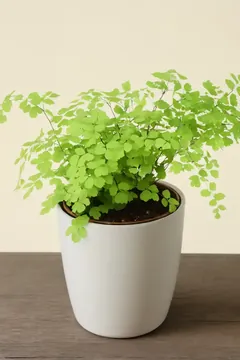
Adiantum raddianum
- LightDelta Maidenhair Fern prefers bright indirect light of 150…
- WaterKeep Delta Maidenhair Fern soil consistently moist, but…
- ToxicitySafe for cats & dogs
- Mature sizeIt reaches 1 to 2 ft / 30 to 60 cm in…
Delta Maidenhair Fern forms delicate triangular fronds carried on arching black stems. Its finely laced foliage creates a soft look while the plant remains naturally compact. It works well on a shaded stand, in a bright bathroom, or inside a humid plant display. Care is intermediate because the thin fronds react quickly to dry soil and dry air.
Full care guide →
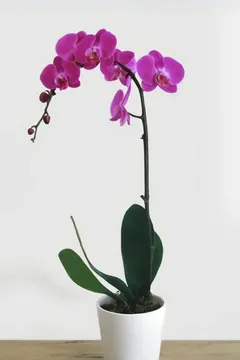
Dendrobium
- LightDendrobium Orchid prefers bright indirect light of 150 to…
- WaterWater Dendrobium Orchid when the top of the potting medium…
- ToxicitySafe for cats & dogs
- Mature sizeIt reaches 1 to 2 ft / 30 to 60 cm tall…
Dendrobium Orchid refers to a diverse group of epiphytic orchids with showy, long-lasting flowers. Blooms may be white, purple, yellow, or pink, depending on the species or cultivar. Their upright or arching canes create a strong shape even when flowers are absent. They suit growers with some experience because temperature and seasonal needs can differ across the group.
Full care guide →
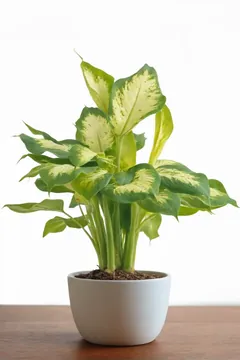
Dieffenbachia
- LightDumb Cane prefers bright indirect light at 150 to 250…
- WaterWater Dumb Cane once the topsoil feels dry. Check the…
- ToxicityToxic to pets
- Mature sizeIts eventual height is 3 to 6 ft / 0
Dumb Cane is a tropical perennial valued for its broad, patterned foliage. Depending on the selection, its leaves combine green with cream or white. The bold markings brighten rooms without requiring direct sun. It develops an upright, leafy form that can become a sizable floor plant. Grow it only where its toxic foliage will remain safely beyond the reach of children and pets.
Full care guide →

Alocasia gageana
- LightDwarf Elephant Ear prefers bright indirect light at 150 to…
- WaterWater Dwarf Elephant Ear when the topsoil becomes dry to…
- ToxicityToxic to pets
- Mature sizeIt can eventually reach 3 to 4 ft / 90…
Dwarf Elephant Ear is an evergreen perennial with broad leaves shaped like elephant ears. Each leaf rises on a green petiole, creating a full tropical clump. Its smaller scale makes it easier to place indoors than many large Alocasias. It suits attentive growers who can maintain warm conditions, high humidity, bright filtered light, and evenly managed soil moisture.
Full care guide →
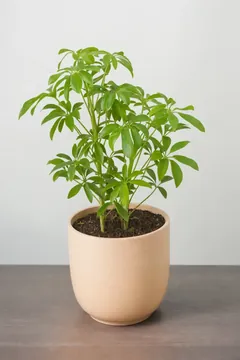
Schefflera arboricola
- LightDwarf Umbrella Tree grows best in bright indirect light at…
- WaterWater Dwarf Umbrella Tree when the topsoil feels dry. Test…
- ToxicityToxic to pets
- Mature sizeIndoors, it can grow 4 to 8 ft / 1
Dwarf Umbrella Tree is a glossy-leaved houseplant with leaflets that spread like the ribs of an umbrella. Its finger-like foliage forms a dense canopy above branching stems. It can grow as a bushy floor plant or be trained into a small tree shape. This plant suits growers who can offer bright filtered light and regular care without keeping the soil constantly wet.
Full care guide →
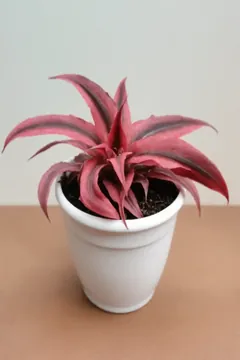
Cryptanthus bivittatus
- LightEarth Star shows its strongest color in bright indirect…
- WaterWater Earth Star when the topsoil feels dry. Apply water to…
- ToxicitySafe for cats & dogs
- Mature sizeIt remains only 3 to 6 in / 8 to 15 cm…
Earth Star is a compact bromeliad that forms a low, spreading rosette. Its strap-shaped leaves have toothed, wavy edges and may show pale green or pink stripes. Unlike tank bromeliads, it grows in soil and should not hold water in its center. Its small size, vivid patterns, and easy care make it useful for shelves, terrariums, and shallow containers.
Full care guide →
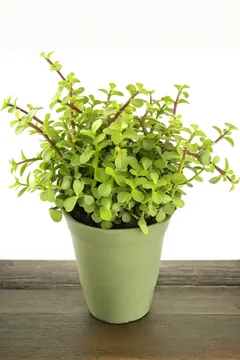
Portulacaria afra
- LightElephant Bush prefers bright indirect light at 150 to 250…
- WaterLet the soil dry completely before watering Elephant Bush…
- ToxicitySafe for cats & dogs
- Mature sizeIndoors, it may reach 2 to 4 ft / 0
Elephant Bush is a succulent shrub with small, fleshy oval leaves on reddish woody stems. Its flexible branches may trail from a basket or be pruned into a compact, tree-like form. The fine foliage also makes it useful for bonsai. It suits growers who want a forgiving plant but can still provide bright filtered light and let the soil dry fully between waterings.
Full care guide →
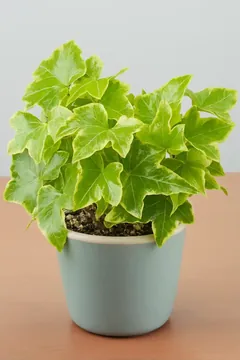
Hedera helix
- LightEnglish Ivy prefers medium to bright indirect light at 150…
- WaterWater English Ivy when the topsoil feels dry to the touch…
- ToxicityToxic to pets
- Mature sizesee care guide
English Ivy is a climbing or trailing vine with glossy, lobed leaves. Cultivars offer many leaf shapes and combinations of green, white, gray, or yellow. Its flexible stems can spill from baskets or climb a support. It suits growers who can provide cool conditions, bright filtered light, and regular pruning. Its toxic foliage makes careful placement important in homes with children or pets.
Full care guide →
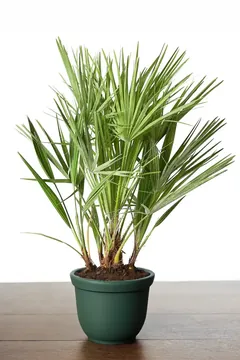
Chamaerops humilis
- LightEuropean Fan Palm needs bright direct light at 250 to 1000…
- WaterWater European Fan Palm when the topsoil feels dry. Check…
- ToxicitySafe for cats & dogs
- Mature sizeIndoors, it can reach 4 to 6 ft / 1
European Fan Palm can grow as a multi-trunked shrub or be trained as a small single-trunk tree. Its fan-shaped fronds divide into long, narrow leaflets, creating a bold architectural outline. Strong sunlight and a wide temperature tolerance make it useful for very bright rooms. Its slow growth also helps it remain manageable in a large indoor container for many years.
Full care guide →
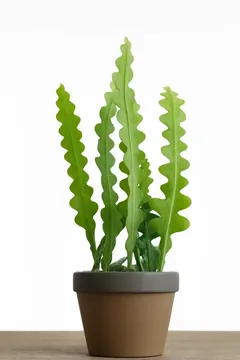
Epiphyllum anguliger
- LightFishbone Cactus prefers bright indirect light at 150 to 250…
- WaterWater Fishbone Cactus when the topsoil feels dry. Although…
- ToxicitySafe for cats & dogs
- Mature sizeIts trailing growth can reach 1 to 2 ft…
Fishbone Cactus is an epiphytic cactus with long, flattened stems that trail from its container. Deep, regular lobes give each stem the outline of a fish skeleton. Unlike desert cacti, it prefers filtered light and somewhat more moisture and humidity. Its cascading habit makes it well suited to hanging baskets, high shelves, and containers where the patterned stems can remain visible.
Full care guide →
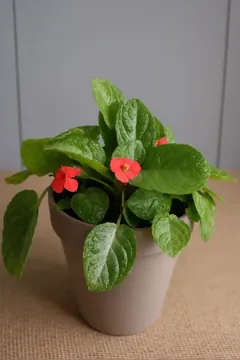
Episcia cupreata
- LightFlame Violet prefers bright indirect light at 150 to 250…
- WaterWater Flame Violet when the topsoil feels dry to the touch…
- ToxicitySafe for cats & dogs
- Mature sizeIt stays 4 to 8 in / 10 to 20 cm tall…
Flame Violet is a trailing evergreen perennial that forms rosettes of soft, velvety leaves. Its stems cascade over container edges, while bright red, funnel-shaped flowers add color. Under suitable conditions, blooming can continue throughout the year. The plant works well in hanging baskets but suits growers who can provide warm air, raised humidity, bright filtered light, and careful watering.
Full care guide →
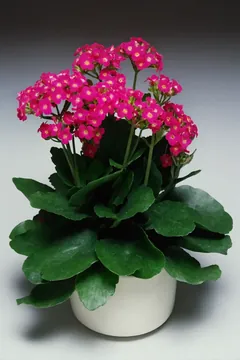
Kalanchoe blossfeldiana
- LightFlaming Katy grows best in bright, indirect light measuring…
- WaterWater Flaming Katy after the surface soil becomes dry…
- ToxicityToxic to pets
- Mature sizeA mature plant stands about 12 to 18 in…
Flaming Katy is a compact, branching succulent with shiny green foliage and dense flower clusters. Its vivid blooms add lasting color without taking up much room. The fleshy leaves store water, so it handles occasional missed watering better than constantly wet soil. It suits bright indoor spaces and growers who want a small flowering plant with simple seasonal care.
Full care guide →
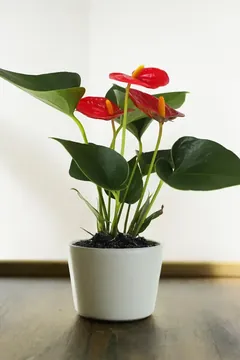
Anthurium andraeanum
- LightFlamingo Flower prefers bright, indirect light at 150 to…
- WaterWater Flamingo Flower once the topsoil feels dry. Test the…
- ToxicityToxic to pets
- Mature sizeIndoors, its eventual height is 1 to 2…
Flamingo Flower is an upright tropical plant that naturally grows as an epiphyte. It has broad, glossy leaves with a clear heart shape. Colorful spathes rise above the foliage and provide its main indoor display. This plant suits someone who can offer bright filtered light, an airy root mix and steady moisture without leaving the roots waterlogged.
Full care guide →
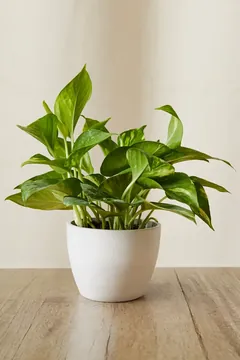
Epipremnum aureum
- LightGolden Pothos prefers bright, indirect light between 150…
- WaterLet Golden Pothos become almost dry before watering. Test…
- ToxicityToxic to pets
- Mature sizeIts eventual spread is 2 to 3 ft / 0
Golden Pothos is a flexible climbing or trailing houseplant with glossy, heart-shaped foliage. Its green leaves are usually streaked or splashed with yellow and cream. The vines can hang from a shelf or climb a support, making the plant useful in many room layouts. It tolerates some missed care, but brighter filtered light keeps growth fuller and preserves the colorful leaf pattern.
Full care guide →
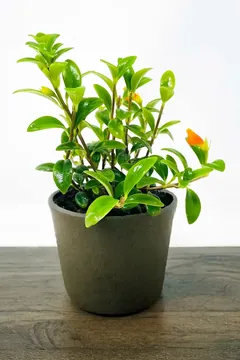
Nematanthus gregarius
- LightGoldfish Plant flowers best in bright, indirect light at…
- WaterKeep Goldfish Plant soil consistently moist but never…
- ToxicitySafe for cats & dogs
- Mature sizeIts trailing stems can reach 2 to 3 ft…
Goldfish Plant is a trailing houseplant with glossy green leaves and bright tubular flowers. Its orange or yellow blooms resemble small goldfish along the stems. The hanging habit works well on a shelf or in a suspended pot. This plant suits growers who can provide bright filtered light, steady moisture and moderate humidity without allowing the roots to remain soggy.
Full care guide →
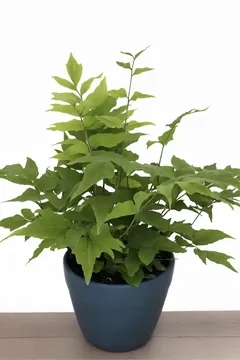
Cyrtomium falcatum
- LightHolly Fern prefers bright, indirect light between 150 and…
- WaterWater Holly Fern when the topsoil feels dry. Check the…
- ToxicitySafe for cats & dogs
- Mature sizeIts eventual height is 1 to 2 ft / 30…
Holly Fern forms a sturdy crown of large, glossy fronds. Each frond carries broad leaflets that resemble holly leaves, giving this fern a bolder texture than fine, feathery species. New growth rises from the center and gradually creates a wide clump. It suits an indoor gardener seeking a structured fern that can handle average room humidity with consistent care.
Full care guide →
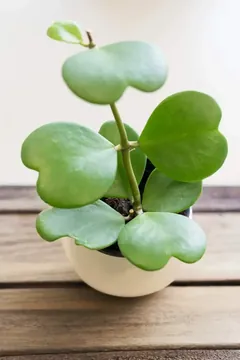
Hoya kerrii
- LightHoya Hearts prefers bright, indirect light at 150 to 250…
- WaterAllow Hoya Hearts soil to dry completely before watering…
- ToxicitySafe for cats & dogs
- Mature sizeMature vines can reach 6 to 10 ft / 1
Hoya Hearts is a succulent vine with thick leaves shaped like hearts. Mature plants carry the leaves along climbing or trailing stems, while single-leaf cuttings are also commonly seen. The waxy foliage stores moisture and remains attractive between growth periods. This hoya suits a bright room and a patient grower, since it develops slowly and needs its potting mix to dry fully.
Full care guide →
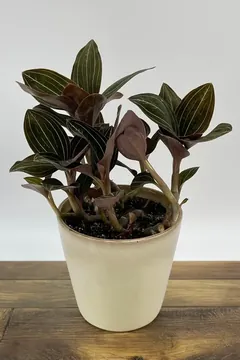
Ludisia discolor
- LightJewel Orchid prefers bright, indirect light between 150 and…
- WaterWater Jewel Orchid when the topsoil feels dry. Test with a…
- ToxicityNot ASPCA-listed
- Mature sizeIts eventual height is 6 to 12 in / 15…
Jewel Orchid is grown mainly for its richly patterned foliage. Velvety leaves range from dark green to almost black and carry pinkish-orange veins. Once a year, the plant typically sends up long spikes of small white flowers. Its compact shape works well in a warm indoor display. It suits growers who value leaves over large blooms and can provide an airy orchid mix.
Full care guide →
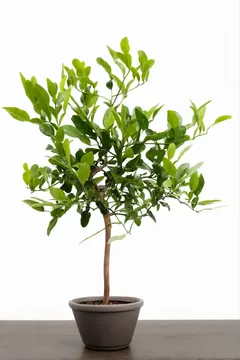
Citrus hystrix
- LightKaffir Lime grows best in bright, indirect light measuring…
- WaterWater Kaffir Lime after the topsoil becomes dry to the…
- ToxicityNot ASPCA-listed
- Mature size5 m, with a spread of 3 to 4 ft / 0
Kaffir Lime is an evergreen citrus shrub grown indoors for its glossy, double leaves and strong citrus scent. Small, bumpy fruits may follow fragrant white flowers when care is suitable. The aromatic foliage is its main indoor attraction. This plant suits growers who can provide bright light, careful watering, and enough room for a compact shrub.
Full care guide →
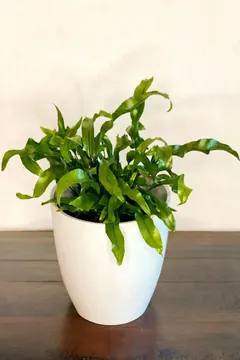
Zealandia pustulata
- LightKangaroo Paw Fern prefers bright, indirect light at 150 to…
- WaterWater Kangaroo Paw Fern when the surface of the potting mix…
- ToxicityNot ASPCA-listed
- Mature sizeIt eventually stands 1 to 2 ft / 30 to…
Kangaroo Paw Fern is a creeping or climbing fern with glossy, dark green leaves divided into single lobes. Its black rhizomes carry brown hairs, giving them a paw-like look. The spreading habit works well in a broad pot or raised display. It is an easy foliage plant for growers who can provide indirect light and regular moisture without leaving the roots waterlogged.
Full care guide →
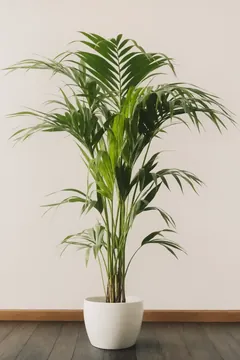
Howea forsteriana
- LightKentia Palm favors bright, indirect light between 150 and…
- WaterWater Kentia Palm when the topsoil is dry to the touch…
- ToxicityNot ASPCA-listed
- Mature sizeA mature specimen can reach 6 to 10…
Kentia Palm is a tall indoor palm with arching fronds and glossy, dark green leaflets. Its graceful outline brings height and soft texture to a room without dense, bushy foliage. It tolerates lower light better than many palms, although growth becomes slower there. This resilient plant suits growers who want a substantial floor specimen and can give it space to mature.
Full care guide →
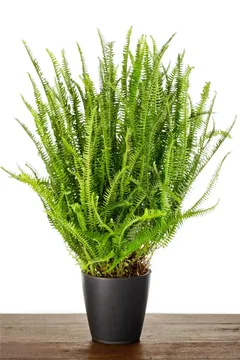
Nephrolepis obliterata
- LightKimberly Queen Fern performs best in bright, indirect light…
- WaterKeep Kimberly Queen Fern evenly moist, but never leave the…
- ToxicityNot ASPCA-listed
- Mature sizeIt can become 2 to 4 ft / 60 to 120 cm…
Kimberly Queen Fern is an evergreen fern with large, sword-shaped fronds that arch from a dense center. Its growth stays more upright and bushy than that of many trailing ferns. The rich foliage can fill a floor pot or plant stand without sprawling immediately. It suits an easy to intermediate grower who can maintain steady moisture, indirect light, and humid air.
Full care guide →

Tillandsia xerographica
- LightKing of Air Plants needs bright, indirect light measuring…
- WaterKing of Air Plants needs a full soak rather than soil…
- ToxicityNot ASPCA-listed
- Mature sizeIt eventually reaches 12 to 24 inches /…
King of Air Plants forms a broad rosette of curling, silvery-green leaves with an octopus-like shape. It needs no potting soil, so it can become a sculptural display on its own. A mature plant may flower once during its lifetime, producing striking red and purple blooms. It suits growers who want an unusual specimen and can maintain a regular soaking routine.
Full care guide →
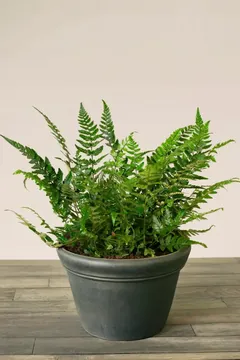
Polystichum tsus-simense
- LightKorean Rock Fern prefers medium to bright indirect light at…
- WaterWater Korean Rock Fern once the topsoil feels dry. Test the…
- ToxicityNot ASPCA-listed
- Mature sizeIts eventual height is 1 to 2 ft / 30…
Korean Rock Fern is a small evergreen fern that develops a neat, tufted shape. Its broad, lance-shaped fronds are leathery, glossy, and blue-green. The compact outline works well where a larger fern would overwhelm the space. This easy plant suits indoor growers seeking year-round foliage, provided the roots receive regular water and the fronds stay out of direct sun.
Full care guide →
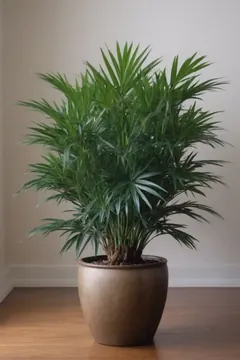
Rhapis excelsa
- LightLady Palm prefers bright, indirect light between 150 and…
- WaterWater Lady Palm after the topsoil feels dry. Check the mix…
- ToxicityNot ASPCA-listed
- Mature sizesee care guide
Lady Palm is a shade-tolerant palm that grows as a cluster of slender stems. Large, glossy leaves divide into broad fan-shaped segments, creating a full and orderly outline. Its upright form works well as a floor plant where softer tropical foliage is wanted. This easy palm suits indoor growers who can offer indirect light, regular watering, and enough space for a wide clump.
Full care guide →
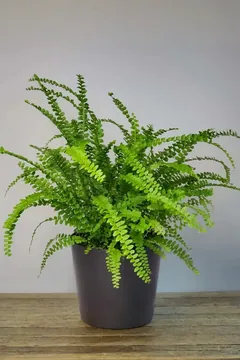
Nephrolepis cordifolia
- LightLemon Button Fern grows best in medium to bright indirect…
- WaterKeep Lemon Button Fern consistently moist without making…
- ToxicityNot ASPCA-listed
- Mature sizesee care guide
Lemon Button Fern is a small fern with a compact outline and rows of rounded, button-like leaflets. Crushing the fronds releases a faint lemon scent. Its modest size works well on shelves, desks, or other areas where a large fern would spread too far. This easy plant suits growers who can keep the mix moist without leaving it saturated.
Full care guide →
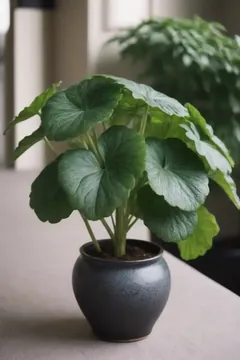
Farfugium japonicum
- LightLeopard Plant needs bright, indirect light at 150 to 250…
- WaterKeep Leopard Plant soil evenly moist, but not soggy. Check…
- ToxicityNot ASPCA-listed
- Mature sizeIts eventual height is 12 to 18 in / 30…
Leopard Plant is a slow-growing evergreen perennial with large, rounded leaves and a glossy surface. Dark green spots create the leopard-like pattern behind its common name. Small yellow flowers may appear during spring. Indoors, it offers bold foliage rather than height. It suits an easy to intermediate grower who can maintain moist soil, moderate humidity, and protection from direct sun.
Full care guide →
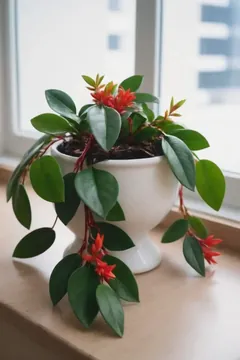
Aeschynanthus pulcher
- LightLipstick Plant performs best in bright, indirect light…
- WaterKeep Lipstick Plant soil consistently moist without leaving…
- ToxicityNot ASPCA-listed
- Mature sizeIts trailing growth can reach 2 to 3 ft…
Lipstick Plant is an evergreen perennial with glossy green leaves carried along trailing stems. Bright red tubular blooms emerge with the look of lipstick rising from a tube. The cascading growth works well in a hanging pot or raised position. It suits an easy to intermediate grower who wants flowering foliage and can supply indirect light, steady moisture, and moderate humidity.
Full care guide →
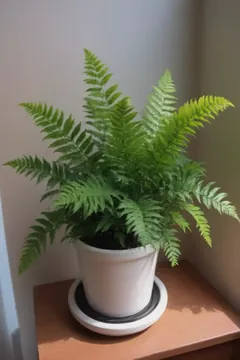
Nephrolepis biserrata
- LightMacho Fern prefers medium to bright indirect light at 150…
- WaterKeep Macho Fern soil consistently moist, but do not let it…
- ToxicityNot ASPCA-listed
- Mature sizeIts eventual height is 3 to 4 feet / 0
Macho Fern is a large, clumping fern with long, bright green fronds that curve downward as they mature. Its bold size creates a fuller display than compact indoor ferns. It works best where the arching foliage has room to spread without being brushed. This easy fern suits growers who can provide steady moisture, indirect light, and space for a broad mature plant.
Full care guide →
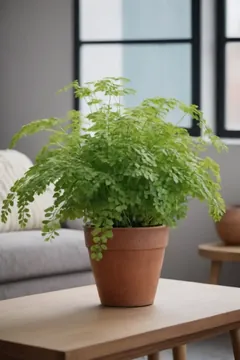
Adiantum
- LightMaidenhair Fern prefers bright, indirect light measuring…
- WaterKeep Maidenhair Fern soil consistently moist but never…
- ToxicityNot ASPCA-listed
- Mature size5 ft / 30 to 75 cm tall
Maidenhair Fern has airy, fan-shaped fronds held on thin, black, wiry stems. The delicate foliage creates a soft texture but reacts quickly when the root zone becomes dry. It favors warm rooms with humid air and steady moisture. This intermediate plant suits attentive growers who can monitor its pot often and protect the fragile fronds from direct sunlight and dry drafts.
Full care guide →
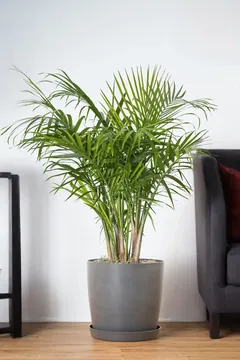
Ravenea rivularis
- LightMajesty Palm grows best in bright, indirect light at 150 to…
- WaterKeep Majesty Palm soil consistently moist without making it…
- ToxicityNot ASPCA-listed
- Mature sizeIts broad fronds may create a mature…
Majesty Palm is a tropical palm with large, feathery fronds that form a graceful indoor canopy. It comes from Madagascar, where it naturally grows near riverbanks and across swampy lowlands. That background explains its preference for steady moisture and humid air. This intermediate plant suits a roomy, bright position and a grower prepared to monitor both watering and humidity closely.
Full care guide →
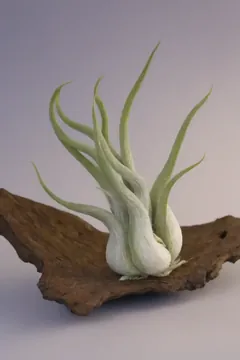
Tillandsia caput-medusae
- LightMedusa’s Head prefers bright, indirect light at 150 to 250…
- WaterMedusa’s Head absorbs moisture through its leaves rather…
- ToxicitySafe for cats & dogs
- Mature sizeA mature plant is usually 6 to 8 in /…
Medusa’s Head is a soil-free air plant with silvery-green leaves that curl and twist outward. Their snake-like form gives the plant its memorable common name. A vivid pink flower can appear during summer. Its small size works well on mounted displays, shelves, or open terrariums. It is easy to place, but regular soaking and good air movement remain important for healthy growth.
Full care guide →
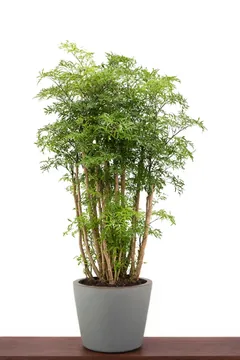
Polyscias fruticosa
- LightMing Aralia grows best in bright, indirect light at 150 to…
- WaterKeep Ming Aralia’s soil consistently moist, but never…
- ToxicityToxic to pets
- Mature sizeIndoors, it may reach 6 to 8 ft / 1
Ming Aralia is an elegant indoor tree with glossy leaves divided into many fern-like segments. Its narrow trunk often twists and may be sold braided for added structure. The airy foliage gives rooms a soft, finely textured look without forming a broad canopy. It needs steadier moisture and humidity than many easy houseplants, so it best suits growers who check soil regularly and avoid sudden changes.
Full care guide →
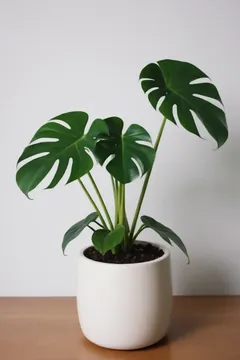
Rhaphidophora tetrasperma
- LightMini Monstera prefers bright, indirect light measuring 150…
- WaterWater Mini Monstera when the topsoil feels dry. Check the…
- ToxicityToxic to pets
- Mature sizeSupported vines can grow 6 to 10 ft / 1
Mini Monstera is a fast-climbing tropical vine with glossy green leaves and deep natural splits. Its foliage resembles a smaller Monstera deliciosa, though the plants are not the same species. The vine benefits from a pole, trellis, or other vertical support. It suits growers who want a dramatic climber without the huge leaves of a mature Swiss Cheese Plant, but its sap and foliage are toxic.
Full care guide →
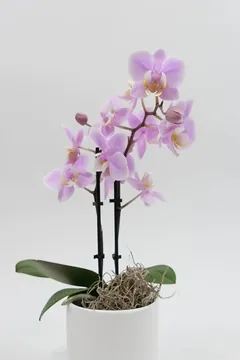
Phalaenopsis
- LightMoth Orchid grows best in bright, indirect light at 150 to…
- WaterWater Moth Orchid when the top of the medium feels dry or…
- ToxicitySafe for cats & dogs
- Mature sizeA mature plant stands about 1 to 2 ft /…
Moth Orchid is a popular flowering orchid with broad, leathery dark green leaves. Long arching spikes carry elegant blooms in many colors and patterns. The flowers often remain attractive for an extended period, making this orchid a common indoor display plant. It suits growers who can provide filtered light, an airy bark mix, and careful watering based on root color rather than a rigid calendar.
Full care guide →
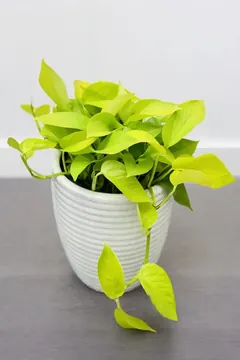
Epipremnum aureum
- LightNeon Pothos prefers bright, indirect light but tolerates…
- WaterLet Neon Pothos become almost dry before watering again…
- ToxicityToxic to pets
- Mature size4 m, with an eventual spread of 3 to 6…
Neon Pothos is a trailing or climbing vine grown for its vivid neon-green leaves. Its bright foliage adds color without flowers and looks striking in hanging baskets or on a support. The plant tolerates lower light, though useful indirect light keeps growth fuller and the color stronger. It suits many indoor spaces, but regular soil checks are important because prolonged wetness can damage its roots.
Full care guide →
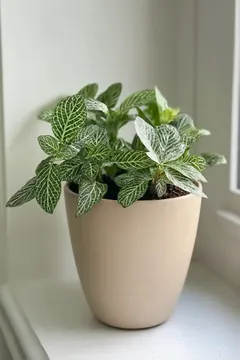
Fittonia albivenis
- LightNerve Plant prefers bright, indirect light at 150 to 250…
- WaterKeep Nerve Plant soil consistently moist, but never soggy…
- ToxicitySafe for cats & dogs
- Mature sizeIt stays low at 6 to 8 in / 15 to 20 cm…
Nerve Plant is a small evergreen perennial with low, creeping stems. Its leaves display a vivid network of white, red, or pink veins against darker foliage. The compact habit works well in terrariums, shallow pots, and small indoor displays. It prefers steady moisture and high humidity, so it needs more attention than a drought-tolerant plant. Choose it for bold leaf detail rather than height or flowers.
Full care guide →
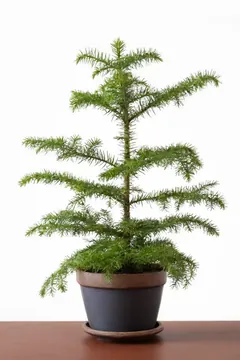
Araucaria heterophylla
- LightNorfolk Island Pine prefers bright, indirect light at 150…
- WaterWater Norfolk Island Pine when the topsoil feels dry. Check…
- ToxicitySafe for cats & dogs
- Mature sizeIt may eventually reach 6 to 8 ft / 1
Norfolk Island Pine is an evergreen conifer with soft foliage arranged on evenly spaced, feathery branches. Its symmetrical tiers create the outline of a small traditional tree. Indoors, it is often used as a living Christmas tree alternative, but it can remain a year-round foliage plant. It suits bright rooms with moderate humidity and space for a broad, upright specimen as it matures.
Full care guide →

Chamaedorea elegans
- LightThe Parlour Palm prefers bright, indirect light but…
- WaterKeep the Parlour Palm evenly moist, but never leave its…
- ToxicitySafe for cats & dogs
- Mature sizeIndoors, it can reach 3 to 6 feet / 0
The Parlour Palm is a compact indoor palm with soft, light green fronds. Mature plants may develop tiny yellow flowers followed by black fruits. Its manageable size and easy care suit homes and offices. It also tolerates lower light than many palms. People often grow it for its graceful foliage and reputation as an air-purifying plant.
Full care guide →
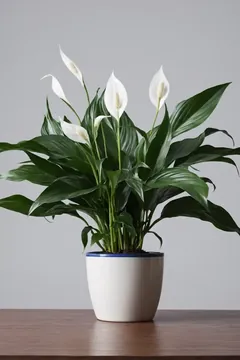
Spathiphyllum
- LightPeace Lily performs best in bright, indirect light…
- WaterKeep Peace Lily soil consistently moist without making it…
- ToxicityToxic to pets
- Mature sizeDepending on the variety, it may grow 1…
The Peace Lily is a leafy tropical grown for glossy, dark green foliage and upright white spathes. These flower-like structures are modified leaves surrounding the true flowers. Its full shape works well on floors, desks, and shaded indoor displays. It is easy to maintain when moisture stays steady, though its toxicity makes careful placement important in homes with pets or young children.
Full care guide →
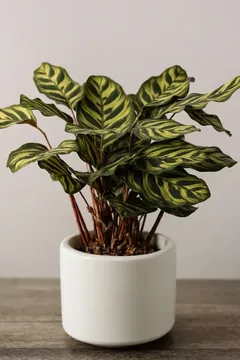
Goeppertia makoyana
- LightThe Peacock Plant needs bright, indirect light at 150 to…
- WaterKeep the Peacock Plant's mix consistently moist, but not…
- ToxicitySafe for cats & dogs
- Mature sizeExpect a height of 1 to 2 ft / 30 to 60…
The Peacock Plant is grown for broad, pale green leaves marked with dark feather-like patterns. Each leaf has a rich reddish-purple underside, adding color when the foliage moves. Its layered markings make it useful as a compact statement plant. It suits growers who can provide stable moisture, warm temperatures, and moderate humidity without exposing the leaves to harsh sun.
Full care guide →
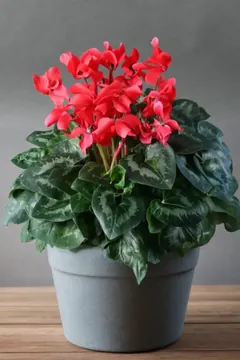
Cyclamen persicum
- LightPersian Cyclamen grows best in bright, indirect light…
- WaterWater Persian Cyclamen when the topsoil feels dry. Check…
- ToxicityToxic to pets
- Mature sizeIt eventually reaches 6 to 19 inches /…
Persian Cyclamen is a tuberous perennial valued for fragrant flowers from fall through late spring. Its dark green, heart-shaped leaves often carry silver or gray marbling. The flowers and patterned foliage make it useful for cool indoor displays. It suits growers who can provide bright filtered light, careful watering, and cooler conditions than most tropical houseplants prefer.
Full care guide →
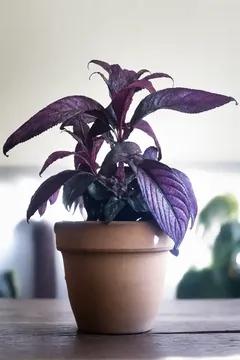
Strobilanthes dyerianus
- LightPersian Shield keeps its strongest color in bright…
- WaterWater Persian Shield when the topsoil feels dry. Check the…
- ToxicityNot ASPCA-listed
- Mature sizeIndoors, it may grow 3 to 4 ft / 90 to…
Persian Shield is a foliage plant prized for its intense metallic color. Long, deep green leaves develop an iridescent purple sheen that shifts with the light. Its upright form and bold surface color create a strong indoor accent. It suits growers who can provide bright filtered light, regular moisture, and moderate humidity while keeping the foliage away from harsh direct sun.
Full care guide →
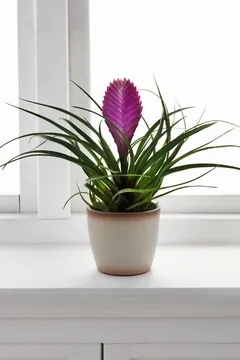
Tillandsia cyanea
- LightPink Quill needs bright, indirect light between 150 and 250…
- WaterPink Quill absorbs much of its water through its foliage…
- ToxicitySafe for cats & dogs
- Mature sizesee care guide
Pink Quill is a small evergreen air plant with arching green leaves and a flat, long-lasting pink bract. Its shape resembles a decorative quill. Violet flowers emerge from the bract during summer. The plant needs no conventional soil, so it works well on mounts, in coarse media, or as part of a compact indoor display with bright filtered light.
Full care guide →
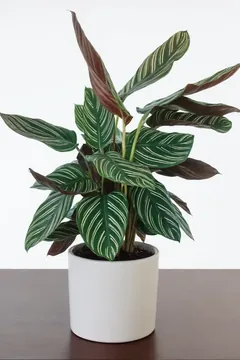
Goeppertia ornata
- LightPinstripe Calathea prefers bright, indirect light measuring…
- WaterKeep Pinstripe Calathea soil evenly moist without…
- ToxicitySafe for cats & dogs
- Mature sizeIt reaches 1 to 2 ft / 30 to 60 cm tall…
Pinstripe Calathea has dark green leaves traced with fine pink stripes. The patterned foliage moves through the day and often lifts at night, which gives it the familiar prayer plant effect. Its upright leaves make a strong display without requiring a large footprint. It suits indoor growers who can maintain steady moisture, warm conditions, and filtered light around its sensitive foliage.
Full care guide →
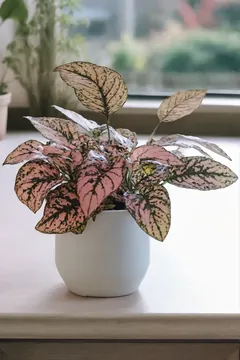
Hypoestes phyllostachya
- LightPolka Dot Plant develops its best color in bright, indirect…
- WaterWater the Polka Dot Plant when the topsoil feels dry. Check…
- ToxicitySafe for cats & dogs
- Mature sizeIts eventual height is 1 to 2 ft / 30…
The Polka Dot Plant is a compact foliage plant known for brightly spotted leaves. Its colors include pink, white, and red, set against contrasting green veins. The low, leafy shape suits small pots, mixed displays, and terrariums. It is easy to grow when moisture remains steady. Regular light also helps prevent weak growth and keeps the leaf patterns vivid.
Full care guide →
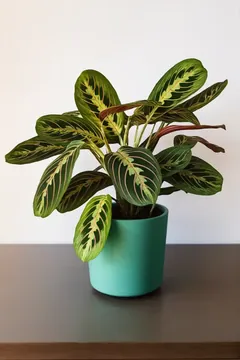
Maranta leuconeura
- LightPrayer Plant thrives in bright, indirect light from 150 to…
- WaterWater Prayer Plant when the topsoil feels dry. Check before…
- ToxicitySafe for cats & dogs
- Mature sizeIts height is usually 12 to 18 inches /…
Prayer Plant is a tropical foliage plant with bold patterns across low, spreading leaves. The leaves lift and fold upward at night, creating the effect of praying hands. Its changing posture and colorful markings make it appealing on shelves or in hanging displays. It suits growers who can supply warm temperatures, filtered light, regular moisture, and moderate humidity without leaving the roots waterlogged.
Full care guide →
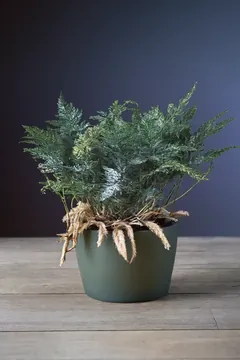
Davallia fejeensis
- LightRabbit’s Foot Fern prefers low to medium indirect light at…
- WaterKeep Rabbit’s Foot Fern evenly moist, but never leave its…
- ToxicitySafe for cats & dogs
- Mature size5 to 3 ft / 0
Rabbit’s Foot Fern is an evergreen fern grown for two distinct features. Its fine green fronds create a soft, lacy canopy. Fuzzy brown rhizomes creep across the pot and resemble small animal feet. It suits shelves, hanging pots, and shaded rooms. This easy fern is a good choice for growers who can provide steady moisture without leaving the soil waterlogged.
Full care guide →
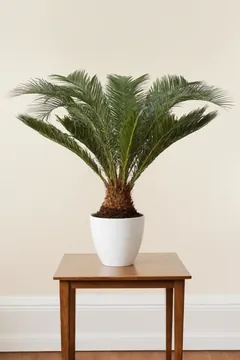
Cycas revoluta
- LightSago Palm prefers bright indirect light at 150 to 250…
- WaterAllow the soil to dry completely before watering Sago Palm…
- ToxicityToxic to pets
- Mature sizeA mature specimen may eventually stand…
Sago Palm is an evergreen cycad, not a true palm. It develops a balanced rosette of stiff, glossy, dark green leaves with a feather-like form. Growth is extremely slow, so it changes little from year to year indoors. The structured shape works well as a long-term floor plant. It suits patient growers, but its serious toxicity makes it unsuitable for homes where children or pets can reach it.
Full care guide →
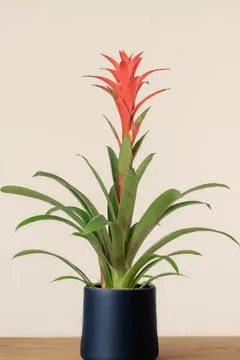
Guzmania lingulata
- LightScarlet Star prefers bright indirect light at 150 to 250…
- WaterKeep fresh water in the central cup of Scarlet Star. Flush…
- ToxicitySafe for cats & dogs
- Mature sizeA full rosette can reach 1 to 2 ft / 30…
Scarlet Star is a bromeliad that forms a central rosette of stiff, sword-shaped leaves. The overlapping bases create a cup that naturally holds water. A bright central bract, which is a modified leaf, provides the display commonly mistaken for a flower. Its tidy shape and long-lasting color suit tabletops and shelves. It is easy indoors when the cup stays fresh and the root mix remains airy.
Full care guide →
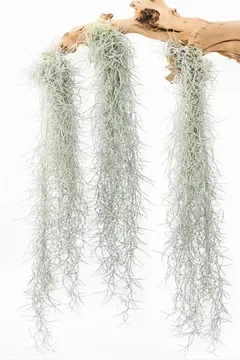
Tillandsia usneoides
- LightSpanish Moss prefers bright indirect light at 150 to 250…
- WaterSoak the entire Spanish Moss plant in rainwater for 20 to…
- ToxicitySafe for cats & dogs
- Mature sizeA hanging mass may spread about 12 to…
Spanish Moss is an epiphytic air plant with long, cascading strands of silvery-green foliage. It grows without soil and takes moisture from the air and regular soaking. Although often seen hanging from trees in tropical and subtropical areas, it is non-parasitic and does not feed on its support. Indoors, it suits hanging displays where air can move freely through the strands and excess water can drain away.
Full care guide →
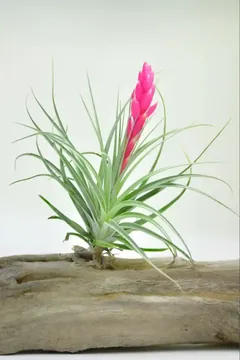
Tillandsia stricta
- LightSpotted Air Plant needs bright indirect light at 150 to 250…
- WaterSoak the entire Spotted Air Plant in rainwater for 20 to 30…
- ToxicityNot ASPCA-listed
- Mature sizeDepending on the form and conditions…
Spotted Air Plant is a clump-forming epiphyte that grows without potting soil. Its green to grayish-green leaves form a neat rosette and absorb moisture through their surfaces. In early summer, mature plants can produce bright red or pink flower spikes with blue flowers. This compact species suits mounted displays and small indoor collections. It is easy when given filtered light, weekly soaking, and enough airflow to dry properly.
Full care guide →
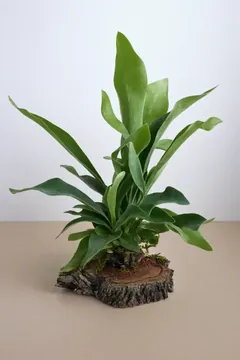
Platycerium bifurcatum
- LightStaghorn Fern grows best in bright indirect light at 150 to…
- WaterSoak the entire Staghorn Fern in rainwater for 20 to 30…
- ToxicitySafe for cats & dogs
- Mature sizesee care guide
Staghorn Fern is an epiphytic fern with two very different frond types. Flat, rounded sterile fronds cover its base and help gather moisture and nutrients. Large fertile fronds grow upward and divide into antler-like forks. Mature plants make striking wall-mounted displays, while young plants can begin in an epiphyte mix. This easy fern suits growers who can provide regular soaking, filtered light, humidity, and airflow.
Full care guide →
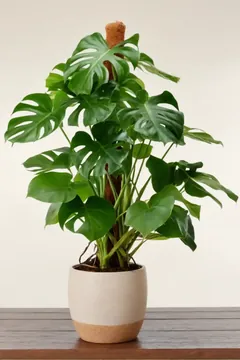
Monstera deliciosa
- LightSwiss Cheese Plant prefers bright, indirect light between…
- WaterWater Swiss Cheese Plant after the topsoil becomes dry to…
- ToxicityToxic to pets
- Mature sizeIndoors, it can reach 6 to 8 ft / 1
Swiss Cheese Plant is a tropical climbing vine with large, glossy green leaves. As the foliage matures, it forms deep splits and internal holes called fenestrations. A support allows the stems to climb and display larger leaves. This easy houseplant creates a bold indoor feature, but its eventual size needs planning. It suits a bright room where there is enough floor space and vertical support for mature growth.
Full care guide →
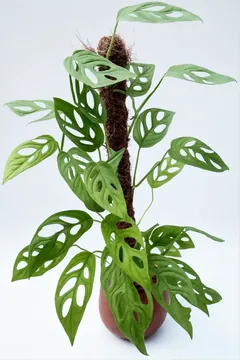
Monstera adansonii
- LightSwiss Cheese Vine grows well under bright, indirect light…
- WaterWater Swiss Cheese Vine when the topsoil feels dry. Check…
- ToxicityToxic to pets
- Mature sizeDepending on its support, it can grow 3…
Swiss Cheese Vine is a tropical climber with green leaves pierced by natural holes. These fenestrations give the foliage its familiar Swiss cheese appearance. The ‘Narrow Form’ has smooth, elongated leaves and a lighter visual texture. Stems can climb a support or trail from a hanging container. This easy houseplant suits smaller rooms better than larger Monsteras, though it still needs bright filtered light and regular pruning or guidance.
Full care guide →
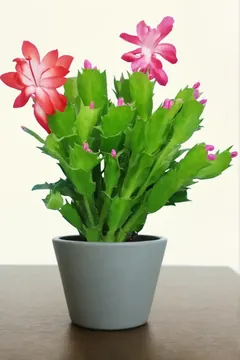
Schlumbergera truncata
- LightThanksgiving Cactus prefers bright, indirect light of 150…
- WaterWater Thanksgiving Cactus when the topsoil feels dry…
- ToxicitySafe for cats & dogs
- Mature sizeIts eventual height is 6 to 12 in / 15…
Thanksgiving Cactus is a tropical cactus grown for colorful tubular flowers that open around Thanksgiving. Instead of desert spines and rounded stems, it forms flat, linked segments with pointed edges that resemble crab claws. Its arching growth works well in pots and hanging containers. This easy houseplant offers seasonal flowers without needing desert-dry treatment. It prefers filtered light, regular drainage, and less water during slower winter growth.
Full care guide →
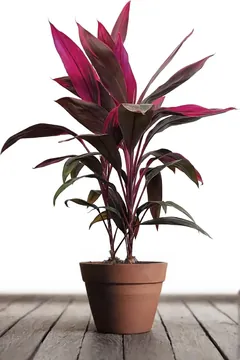
Cordyline fruticosa
- LightTi Plant favors bright, indirect light between 150 and 250…
- WaterWater Ti Plant after the top third of soil has dried. Avoid…
- ToxicityToxic to pets
- Mature sizeIndoors, its eventual height ranges…
Ti Plant is an evergreen tropical shrub with upright, sword-shaped leaves. Depending on the variety, its foliage may show green, red, purple, orange, pink, or cream tones. The bold leaves add height and color without relying on flowers. This easy to intermediate houseplant suits warm rooms with steady humidity and filtered light. It needs more careful watering than a drought-tolerant plant, especially when indoor conditions change.
Full care guide →
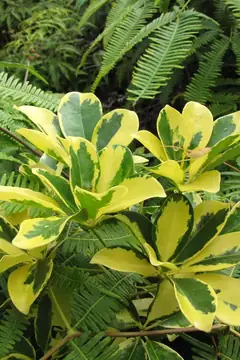
Schefflera arboricola (also listed as Heptapleurum arboricola)
- LightBright, indirect light, ideally three to four hours of…
- WaterWater deeply, then let the top 3 to 4 cm (about 1.5 in) dry…
- ToxicityToxic to pets
- Mature sizeIndoors in a container, 120 to 180 cm…
Umbrella Plant carries glossy leaflets arranged in a circle at the end of each stalk, like the ribs of an umbrella, on an upright woody stem. It is grown indoors as a small tree or bonsai that copes with ordinary rooms and can be kept to size by pruning.
Full care guide →
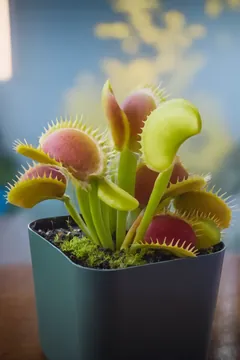
Dionaea muscipula
- LightVenus Flytrap needs bright, direct light measuring 250 to…
- WaterKeep the Venus Flytrap growing medium wet at all times…
- ToxicitySafe for cats & dogs
- Mature sizeA mature plant can measure 15 to 30 cm…
Venus Flytrap is a small carnivorous plant with a low rosette of flat green leaves. Each leaf ends in hinged lobes that form an insect-catching trap. When triggered, the lobes close around suitable prey. Its unusual feeding method makes it popular with curious growers, but it needs intense direct light and mineral-free water. It suits anyone prepared to keep the growing medium wet and avoid normal houseplant fertilizer.
Full care guide →
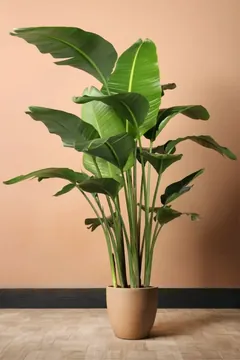
Strelitzia nicolai
- LightWhite Bird of Paradise prefers bright, indirect light at…
- WaterAllow the soil to become almost dry before watering White…
- ToxicityToxic to pets
- Mature sizeIndoors, it can reach 6 to 10 ft / 1
White Bird of Paradise is a large architectural houseplant with broad, glossy leaves shaped like paddles. Upright stems create a bold, tropical screen as the plant matures. Older specimens can produce white and blue flowers, though indoor blooming is rare. This easy to intermediate plant needs generous floor space, height, and bright filtered light. It suits a roomy home better than a crowded shelf or narrow windowsill.
Full care guide →
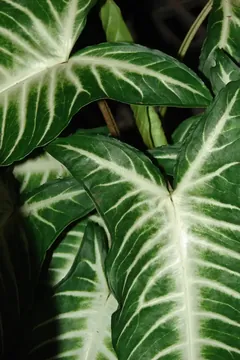
Phyllotaenium lindenii, long sold as Xanthosoma lindenii or Caladium lindenii
- LightBright, indirect light with an hour or two of gentle…
- WaterWater when the top 2 to 3 cm (about an inch) of mix dries…
- ToxicityTreat as toxic
- Mature sizeLeaf blades reach up to 60 cm (24 in)…
A tropical aroid with arrow-shaped, mid-green leaves marked by thick ivory veins, so each leaf looks hand painted. It grows from a creeping underground rhizome and is kept indoors as a foliage plant, with leaves rising on stalks that carry purple-black lengthwise stripes.
Full care guide →
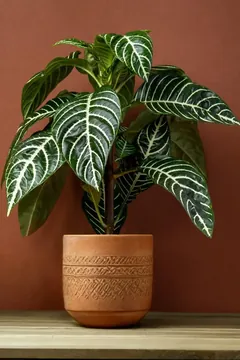
Aphelandra squarrosa
- LightZebra Plant prefers bright, indirect light in the 150 to…
- WaterKeep Zebra Plant soil consistently moist but never soggy…
- ToxicitySafe for cats & dogs
- Mature sizeIts eventual height is 2 to 4 ft / 0
Zebra Plant is a tropical evergreen shrub with dark green leaves crossed by bold white or yellow veins. The sharp contrast resembles zebra stripes and gives the plant year-round interest. Under suitable indoor conditions, upright spikes of bright yellow flowers may appear. This intermediate-care houseplant suits growers who can maintain even moisture, warmth, and humidity. It is less forgiving of dry soil and sudden environmental changes than many foliage plants.
Full care guide →
Common questions
Can plants grow in a bathroom without a window?
They need a suitable artificial light source if no usable natural light is available. Humidity cannot replace light.
Are all bathroom plants suited to very high humidity?
No. Check the individual plant page because moisture and airflow preferences differ, even within this collection.
What should I consider before placing a plant in a bathroom?
Assess light, ventilation, temperature changes, available space and whether the plant can be reached safely. Avoid positions where foliage stays wet or is repeatedly knocked.