6 indoor plants begin with E: Earth Star, Echeveria, Elephant Bush, Emerald Ripple Peperomia, English Ivy, European Fan Palm. Every entry below shows the facts you came for first: light, water, toxicity and mature size, with the full care guide one click away. 5 of them are safe for cats and dogs.
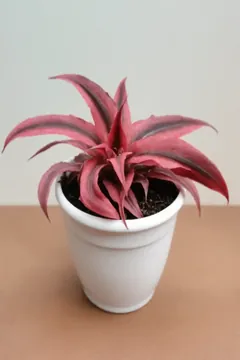
Cryptanthus bivittatus
- LightEarth Star shows its strongest color in bright indirect…
- WaterWater Earth Star when the topsoil feels dry. Apply water to…
- ToxicitySafe for cats & dogs
- Mature sizeIt remains only 3 to 6 in / 8 to 15 cm…
Earth Star is a compact bromeliad that forms a low, spreading rosette. Its strap-shaped leaves have toothed, wavy edges and may show pale green or pink stripes. Unlike tank bromeliads, it grows in soil and should not hold water in its center. Its small size, vivid patterns, and easy care make it useful for shelves, terrariums, and shallow containers.
Shop this plant
Full care guide →
Care notes
Earth Star shows its strongest color in bright indirect light at 150 to 250 μmol·m⁻²·s⁻¹. A PAR meter or PAR meter app can check the PPFD level.
- Position it about 5 ft / 1.5 m from a south, west, or east-facing window.
- Avoid giving the rosette a direct view of the sky. Filter direct rays with a sheer curtain.
- Too much sunlight can bleach the stripes or scorch the thin leaf edges.
- Too little light causes dull color and slower growth. Turn the container so the rosette receives even exposure.
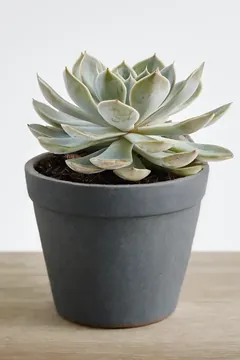
Echeveria
- LightEcheveria needs bright direct light at 250 to 1000…
- WaterAllow Echeveria soil to dry completely before watering…
- ToxicitySafe for cats & dogs
- Mature sizeMost indoor plants grow 6 to 12 in / 15…
Echeveria is a group of compact succulents that form neat leaf rosettes. Their fleshy, spoon-shaped leaves store water and may appear green, blue, gray, or red-edged. The geometric form suits sunny windowsills and small containers. It is an easy choice for growers who can provide strong light, sparse watering, and a gritty mix that dries quickly.
Shop this plant
Full care guide →
Care notes
Echeveria needs bright direct light at 250 to 1000 μmol·m⁻²·s⁻¹. Use a PAR meter or PAR meter app to measure this PPFD range.
- Provide 6+ hours of direct sunlight each day.
- Keep the plant within 2 ft / 60 cm of a south or southwest-facing window, with an unobstructed view of the sky.
- Too much intense light without gradual adjustment may scorch the leaves.
- Too little light causes stretched, loose rosettes. Grow lights can supplement short winter days when natural daylight hours are reduced.
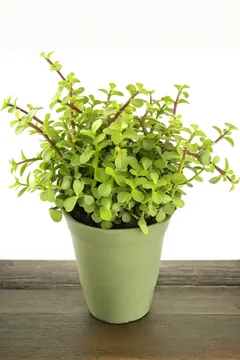
Portulacaria afra
- LightElephant Bush prefers bright indirect light at 150 to 250…
- WaterLet the soil dry completely before watering Elephant Bush…
- ToxicitySafe for cats & dogs
- Mature sizeIndoors, it may reach 2 to 4 ft / 0
Elephant Bush is a succulent shrub with small, fleshy oval leaves on reddish woody stems. Its flexible branches may trail from a basket or be pruned into a compact, tree-like form. The fine foliage also makes it useful for bonsai. It suits growers who want a forgiving plant but can still provide bright filtered light and let the soil dry fully between waterings.
Shop this plant
Full care guide →
Care notes
Elephant Bush prefers bright indirect light at 150 to 250 μmol·m⁻²·s⁻¹. A PAR meter or PAR meter app can measure this PPFD level.
- Place it around 5 ft / 1.5 m from a south, west, or east-facing window.
- The plant should not have a direct view of the sky. Use a sheer curtain to soften unavoidable direct sun.
- Too much intense sun without adjustment can scorch or discolor the leaves.
- Too little light leads to long, weak stems and sparse foliage. Rotate the container to promote balanced branching.
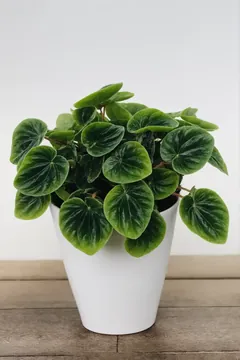
Peperomia caperata
- LightEmerald Ripple Peperomia prefers bright indirect light at…
- WaterWater Emerald Ripple Peperomia when the topsoil feels dry…
- ToxicitySafe for cats & dogs
- Mature sizeIts eventual height is 12 to 18 in / 30…
Emerald Ripple Peperomia is a compact evergreen perennial with heart-shaped leaves. Their deeply puckered surfaces catch the light and create a metallic sheen. The plant forms a tidy mound that fits easily on desks, shelves, and small tables. It is a good indoor choice for growers who want textured foliage without the space demands of a large floor plant.
Shop this plant
Full care guide →
Care notes
Emerald Ripple Peperomia prefers bright indirect light at 150 to 250 μmol·m⁻²·s⁻¹. A PAR meter or PAR meter app can confirm this PPFD range.
- Set it about 5 ft / 1.5 m from a south, west, or east-facing window.
- Keep the foliage from having a direct view of the sky. Filter unavoidable direct sun with a sheer curtain.
- Too much sunlight may scorch the puckered leaves or fade their color.
- Too little light causes slow, stretched growth. Rotate the plant regularly so its compact mound remains even.
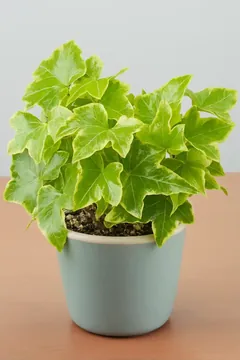
Hedera helix
- LightEnglish Ivy prefers medium to bright indirect light at 150…
- WaterWater English Ivy when the topsoil feels dry to the touch…
- ToxicityToxic to pets
- Mature sizesee care guide
English Ivy is a climbing or trailing vine with glossy, lobed leaves. Cultivars offer many leaf shapes and combinations of green, white, gray, or yellow. Its flexible stems can spill from baskets or climb a support. It suits growers who can provide cool conditions, bright filtered light, and regular pruning. Its toxic foliage makes careful placement important in homes with children or pets.
Shop this plant
Full care guide →
Care notes
English Ivy prefers medium to bright indirect light at 150 to 200 μmol·m⁻²·s⁻¹. Use a PAR meter or PAR meter app to check this PPFD range.
- Position it about 6 ft / 1.8 m from a south, west, or east-facing window.
- The leaves should not have a direct view of the sky. Use a sheer curtain when direct sunlight is unavoidable.
- Too much sun can scorch the foliage, especially on variegated forms.
- Too little light causes sparse growth and weaker variegation. Rotate hanging pots so all stems receive similar exposure.
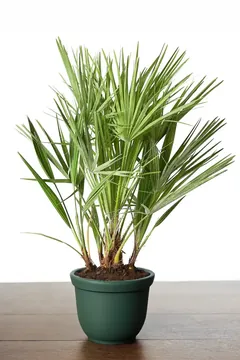
Chamaerops humilis
- LightEuropean Fan Palm needs bright direct light at 250 to 1000…
- WaterWater European Fan Palm when the topsoil feels dry. Check…
- ToxicitySafe for cats & dogs
- Mature sizeIndoors, it can reach 4 to 6 ft / 1
European Fan Palm can grow as a multi-trunked shrub or be trained as a small single-trunk tree. Its fan-shaped fronds divide into long, narrow leaflets, creating a bold architectural outline. Strong sunlight and a wide temperature tolerance make it useful for very bright rooms. Its slow growth also helps it remain manageable in a large indoor container for many years.
Shop this plant
Full care guide →
Care notes
European Fan Palm needs bright direct light at 250 to 1000 μmol·m⁻²·s⁻¹. A PAR meter or PAR meter app can measure this PPFD range.
- Provide 6+ hours of direct sunlight each day.
- Place it within 2 ft / 60 cm of a south or southwest-facing window. The fronds should have an unobstructed view of the sky.
- Too much intense sun after a sudden move may scorch unadjusted foliage.
- Too little light slows growth and produces weaker fronds. Grow lights can supplement natural light during shorter winter days.
Questions about plants that start with E
How many indoor plants start with E?
6, as listed on this page.
Is Earth Star safe for cats and dogs?
Safe for cats & dogs. Earth Star is considered non-toxic to people, cats, and dogs. However, the supplied facts do not confirm an ASPCA safety ruling, so it cannot be called pet safe on that basis. Keep pets from chewing its toothed leaves, which may still cause minor physical irritation.
How much light does an Earth Star need?
Earth Star shows its strongest color in bright indirect light at 150 to 250 μmol·m⁻²·s⁻¹. A PAR meter or PAR meter app can check the PPFD level.Position it about 5 ft / 1.5 m from a south, west, or east-facing window. Avoid giving the rosette a direct view of the sky. Filter direct rays with a sheer
How do I know which of these plants suits my room?
Sort by the facts strip: low-light plants for north-facing rooms, pet-safe names if you have a cat or dog, and the smaller species for shelves and desks.