This collection of indoor succulents and cacti includes 32 plants with water-storing growth or care patterns associated with drier conditions. It suits readers with bright spaces who prefer to let potting mix dry appropriately between waterings, while still following each species rather than one rigid routine. Aloe Vera, Bunny Ears Cactus, Burro's Tail and Echeveria are among the listed members. Some entries prefer bright direct light, while others, including Fishbone Cactus and Christmas Cactus, favour bright indirect conditions. Use the plant profiles to compare light, watering and care level, and choose a free-draining setup that fits the needs of the individual plant.
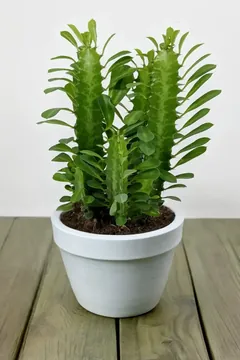
Euphorbia trigona
- LightAfrican Milk Tree prefers bright, indirect light at 150 to…
- WaterLet the potting mix dry completely before watering African…
- ToxicityToxic to pets
- Mature sizeIndoors, it can eventually reach 6 to 9…
African Milk Tree is a tall succulent with upright, branching stems. Each stem has three angled sides, raised ridges, and small leaves that do not last long. Mature plants may also produce small white flowers. Its sculptural shape works well in bright rooms with limited floor space. It is easy to maintain when given strong filtered light, dry soil, and careful handling.
Full care guide →
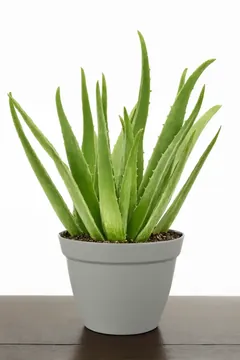
Aloe vera
- LightAloe Vera needs bright, direct light between 250 to 1000…
- WaterAllow Aloe Vera's soil to dry completely before watering…
- ToxicityToxic to pets
- Mature sizeIndoors, it can grow 1 to 2 ft / 30 to…
Aloe Vera is a sturdy succulent that forms a rosette of thick green leaves. Each fleshy leaf has small spikes along its edges and stores water for dry periods. Its clean shape works well on sunny windowsills and in bright rooms. It is easy to grow when given strong light, a draining mix, and infrequent watering. Owners should also consider its toxicity before placing it near pets or children.
Full care guide →
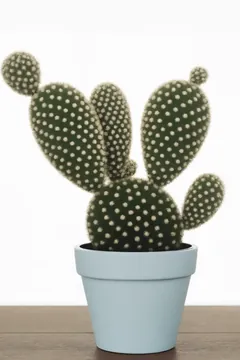
Opuntia microdasys
- LightBunny Ears Cactus needs bright direct light at 250 to 1000…
- WaterLet the potting mix dry completely before watering Bunny…
- ToxicityCheck toxicity
- Mature sizeIt eventually grows 1 to 2 ft / 30 to…
Bunny Ears Cactus grows upright from flattened pads that cluster in ear-like pairs. Older specimens can develop a branching, tree-like outline and may produce funnel-shaped flowers. The pads carry many fine glochids rather than harmless fuzz, so careful handling is essential. This cactus suits sunny rooms and growers who prefer infrequent watering. Keep it away from busy walkways, children, and animals that might brush against it.
Full care guide →
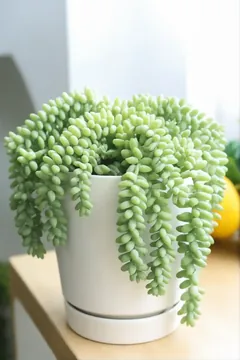
Sedum morganianum
- LightBurro's Tail prefers bright indirect light at 150 to 250…
- WaterAllow the soil to dry completely before watering Burro's…
- ToxicitySafe for cats & dogs
- Mature sizeThe plant spreads about 10 to 12 in /…
Burro's Tail is a trailing succulent with long stems packed tightly with bluish-green leaves. Each fleshy leaf has a rounded tear-drop shape and stores water for dry periods. Mature stems may carry clusters of small, star-shaped flowers. The plant looks best spilling from a hanging pot or high shelf. It suits bright rooms and infrequent watering, but the leaves detach easily when bumped or handled.
Full care guide →
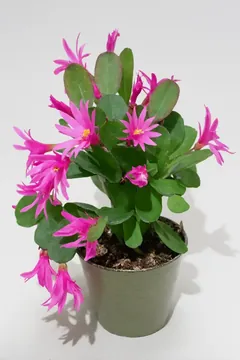
Schlumbergera bridgesii
- LightChristmas Cactus performs best in bright indirect light of…
- WaterWater Christmas Cactus when the topsoil feels dry. Although…
- ToxicitySafe for cats & dogs
- Mature sizeIt can reach 1 to 2 ft / 30 to 60 cm…
Christmas Cactus is a tropical jungle cactus rather than a desert species. It forms long, flat stems made from linked segments, with bright flowers appearing near the tips. Blooms may be red, pink, or white and usually arrive around the winter holidays. It is easy to grow indoors and works well in pots where its arching stems can hang freely.
Full care guide →
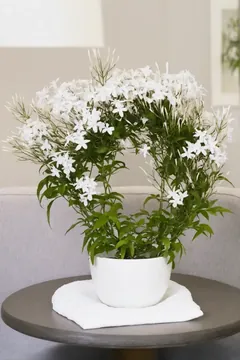
Trachelospermum jasminoides
- LightConfederate Jasmine grows best in bright indirect light of…
- WaterWater Confederate Jasmine when the topsoil feels dry. Check…
- ToxicitySafe for cats & dogs
- Mature sizeThe plant may spread 3 to 4 ft / 0
Confederate Jasmine is an evergreen climber with glossy dark green leaves and twining stems. Its foliage often turns deep bronze-red during winter. Clusters of strongly fragrant white flowers appear from mid to late summer. Indoors, it needs support and room to climb, but rewards steady care with a leafy screen and seasonal scent.
Full care guide →
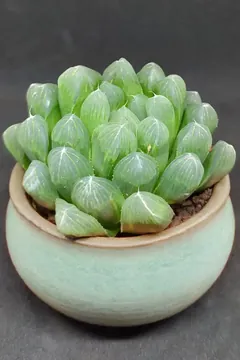
Haworthia cooperi
- LightCooper’s Haworthia prefers bright indirect light of 150 to…
- WaterLet the soil dry out completely before watering Cooper’s…
- ToxicitySafe for cats & dogs
- Mature sizesee care guide
Cooper’s Haworthia is a small succulent that forms tidy clumps of fleshy leaves. Each triangular leaf sits within a compact rosette, often showing a translucent tip that lets light enter. Its limited size makes it useful on windowsills, desks, or narrow shelves. It is easy to maintain when given filtered light, gritty soil, and long drying periods.
Full care guide →
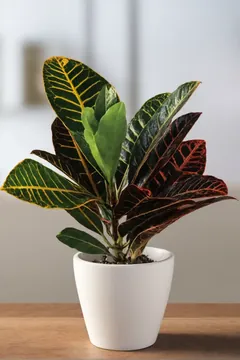
Codiaeum variegatum
- LightCroton Plant needs bright indirect light of 150 to 250…
- WaterWater Croton Plant when the topsoil feels dry. Check the…
- ToxicityToxic to pets
- Mature sizeIndoors, it may reach 3 to 8 ft / 0
Croton Plant is an upright shrub grown for large, leathery leaves with bold variegation. Its foliage may combine green with vivid yellow, red, orange, or other warm tones. The strong color makes it a striking indoor focal point. It needs more consistent light, warmth, and moisture than many easy houseplants, so it best suits attentive growers.
Full care guide →
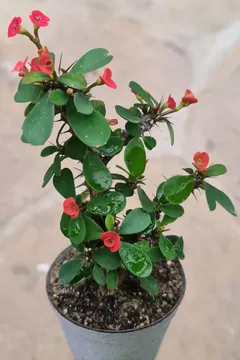
Euphorbia milii
- LightCrown of Thorns needs bright direct light of 250 to 1000…
- WaterAllow Crown of Thorns soil to dry out completely between…
- ToxicityToxic to pets
- Mature sizeIt can reach 2 to 3 ft / 60 to 90 cm…
Crown of Thorns is a woody succulent shrub with thick, spiny stems. Small flowers are surrounded by colorful bracts that create most of the display. Its upright form and tolerance for dry soil make it manageable in sunny indoor spaces. Growers must place it carefully because both the sharp spines and irritating milky sap can cause injury.
Full care guide →
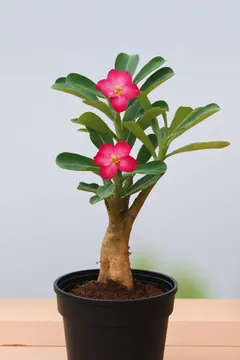
Adenium obesum
- LightDesert Rose needs bright direct light at 250 to 1000…
- WaterLet the potting mix dry completely before watering Desert…
- ToxicityToxic to pets
- Mature sizeIndoors, it can eventually stand 3 to 6…
Desert Rose is a succulent shrub with a thick, swollen base called a caudex. Glossy green leaves grow from its branching stems. Trumpet-shaped blooms appear in pink, red, or white. Its sculptural form and colorful flowers make it an appealing indoor specimen. It suits growers who can provide strong sun, careful watering, and a warm location.
Full care guide →
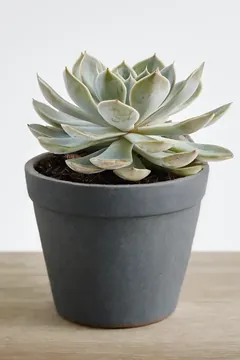
Echeveria
- LightEcheveria needs bright direct light at 250 to 1000…
- WaterAllow Echeveria soil to dry completely before watering…
- ToxicitySafe for cats & dogs
- Mature sizeMost indoor plants grow 6 to 12 in / 15…
Echeveria is a group of compact succulents that form neat leaf rosettes. Their fleshy, spoon-shaped leaves store water and may appear green, blue, gray, or red-edged. The geometric form suits sunny windowsills and small containers. It is an easy choice for growers who can provide strong light, sparse watering, and a gritty mix that dries quickly.
Full care guide →
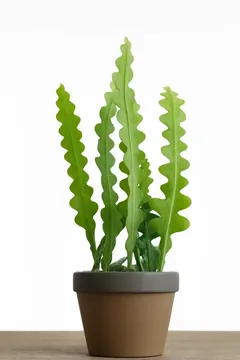
Epiphyllum anguliger
- LightFishbone Cactus prefers bright indirect light at 150 to 250…
- WaterWater Fishbone Cactus when the topsoil feels dry. Although…
- ToxicitySafe for cats & dogs
- Mature sizeIts trailing growth can reach 1 to 2 ft…
Fishbone Cactus is an epiphytic cactus with long, flattened stems that trail from its container. Deep, regular lobes give each stem the outline of a fish skeleton. Unlike desert cacti, it prefers filtered light and somewhat more moisture and humidity. Its cascading habit makes it well suited to hanging baskets, high shelves, and containers where the patterned stems can remain visible.
Full care guide →
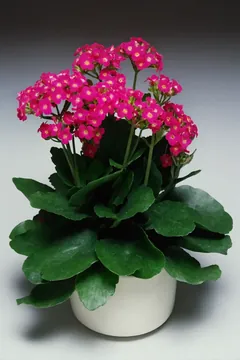
Kalanchoe blossfeldiana
- LightFlaming Katy grows best in bright, indirect light measuring…
- WaterWater Flaming Katy after the surface soil becomes dry…
- ToxicityToxic to pets
- Mature sizeA mature plant stands about 12 to 18 in…
Flaming Katy is a compact, branching succulent with shiny green foliage and dense flower clusters. Its vivid blooms add lasting color without taking up much room. The fleshy leaves store water, so it handles occasional missed watering better than constantly wet soil. It suits bright indoor spaces and growers who want a small flowering plant with simple seasonal care.
Full care guide →
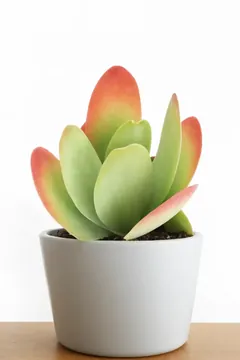
Kalanchoe thyrsiflora
- LightFlapjack Plant needs bright, indirect light in the range of…
- WaterLet the Flapjack Plant's soil dry completely before…
- ToxicityToxic to pets
- Mature sizeIts eventual height is 12 to 18 in / 30…
Flapjack Plant is a perennial succulent built around a low basal rosette. Its large, fleshy leaves are round to wedge-shaped, with greyish-green surfaces and red-toned margins. The bold leaf form gives it a sculptural look indoors. It is easy to manage when given bright filtered light, lean soil and long dry periods between thorough waterings.
Full care guide →
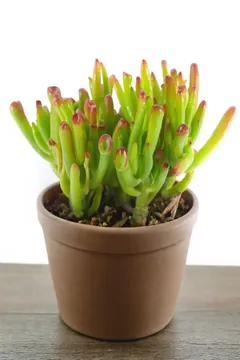
Crassula ovata
- LightGollum Jade grows best with bright, indirect light at 150…
- WaterAllow Gollum Jade soil to dry completely before the next…
- ToxicityToxic to pets
- Mature sizeIts eventual height is 1 to 2 ft / 30…
Gollum Jade is a branching evergreen succulent with several sturdy stems. Its thick leaves are long, tubular and finger-like, giving the plant its distinctive character. Stored water in the foliage helps it withstand dry periods. With age, the stems become more tree-like. It is suited to bright indoor rooms and growers who prefer watering deeply but infrequently.
Full care guide →
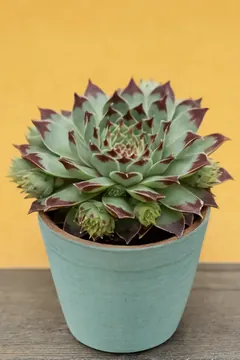
Sempervivum tectorum
- LightHouseleek needs bright, indirect light in the range of 150…
- WaterLet Houseleek soil dry completely before watering. Test…
- ToxicityNot ASPCA-listed
- Mature sizeRosettes stand 4 to 6 in / 10 to 15 cm…
Houseleek is a low, mat-forming succulent made of tight rosettes. Each rosette contains fleshy, pointed leaves and produces offsets around its base. In summer, mature growth may send up a stalk bearing star-shaped pink or red flowers. The plant stays short and suits a sunny indoor collection, especially where fast drainage and long dry intervals can be provided.
Full care guide →
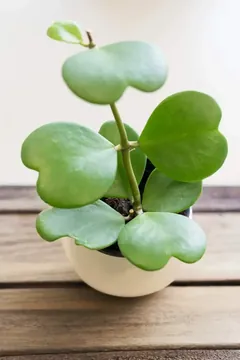
Hoya kerrii
- LightHoya Hearts prefers bright, indirect light at 150 to 250…
- WaterAllow Hoya Hearts soil to dry completely before watering…
- ToxicitySafe for cats & dogs
- Mature sizeMature vines can reach 6 to 10 ft / 1
Hoya Hearts is a succulent vine with thick leaves shaped like hearts. Mature plants carry the leaves along climbing or trailing stems, while single-leaf cuttings are also commonly seen. The waxy foliage stores moisture and remains attractive between growth periods. This hoya suits a bright room and a patient grower, since it develops slowly and needs its potting mix to dry fully.
Full care guide →
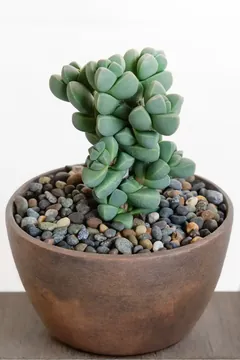
Corpuscularia lehmannii
- LightIce Plant prefers bright, indirect light measuring 150 to…
- WaterAllow Ice Plant soil to dry completely before watering…
- ToxicitySafe for cats & dogs
- Mature sizesee care guide
Ice Plant is a compact succulent with plump, angular leaves that have a distinctive triangular shape. The green foliage grows in close pairs and gives the plant a geometric look. Bright yellow, daisy-like flowers may appear in spring or summer. Its small size works well on a bright sill or plant shelf, provided the soil can dry fully between waterings.
Full care guide →
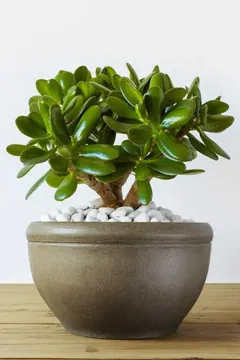
Crassula ovata
- LightJade plant prefers bright, indirect light measuring 150 to…
- WaterAllow Jade plant soil to become completely dry before…
- ToxicityToxic to pets
- Mature sizeIts eventual height is 3 to 6 ft / 90…
Jade plant is a long-lived succulent with glossy, oval green leaves and thick stems that become woody over time. Older plants can develop a miniature tree or bonsai-like shape without complex training. Its foliage stores water, making frequent irrigation unnecessary. It suits a bright indoor position and a grower who prefers allowing soil to dry fully before each deep watering.
Full care guide →
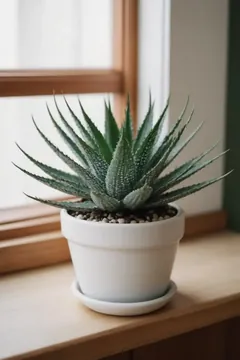
Aristaloe aristata
- LightLace Aloe grows in bright, indirect light at 150 to 250…
- WaterLet the Lace Aloe potting mix dry completely before…
- ToxicityNot ASPCA-listed
- Mature sizeIt eventually reaches 12 to 18 in / 30…
Lace Aloe is a compact, hardy succulent that forms rosettes of dark green leaves. Small white bumps decorate the foliage, while toothed edges create a textured outline. Under suitable conditions, orange-red tubular flowers appear during summer. This easy plant suits a sunny indoor collection and growers who prefer letting the potting mix dry fully between deep waterings.
Full care guide →
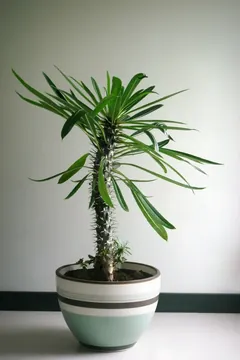
Pachypodium lamerei
- LightMadagascar Palm needs bright, direct light at 250 to 1000…
- WaterAllow Madagascar Palm soil to dry completely before…
- ToxicityNot ASPCA-listed
- Mature sizeIts mature spread remains much narrower…
Madagascar Palm is a succulent rather than a true palm. It develops a thick, swollen caudex that forms its trunk, with sharp spines along the surface. A crown of dark green leaves grows at the top. Its dramatic upright shape suits a bright floor position, but it needs careful handling, strong direct light, and room to reach a substantial indoor height.
Full care guide →
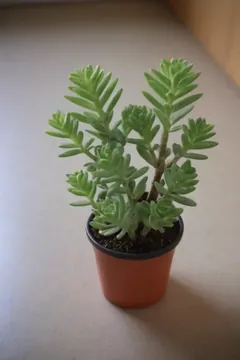
Crassula tetragona
- LightMiniature Pine Tree grows best in bright, indirect light at…
- WaterAllow the soil around Miniature Pine Tree to dry out…
- ToxicitySafe for cats & dogs
- Mature sizeIt can reach 3 feet / 1 m tall and…
Miniature Pine Tree is a succulent rather than a true pine. Its fleshy, triangular leaves resemble short pine needles, while older stems turn woody and form a small tree-like shape. Mature plants may produce small white or cream flowers during spring and summer. It suits sunny indoor displays and growers who prefer letting soil dry fully between waterings. Pruning can help preserve its branching form.
Full care guide →
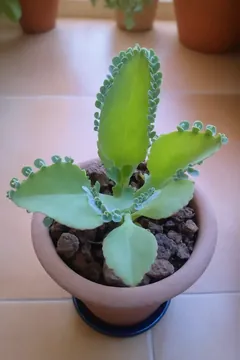
Kalanchoe daigremontiana
- LightMother of Thousands prefers bright, indirect light at 150…
- WaterAllow the soil around Mother of Thousands to dry out…
- ToxicityToxic to pets
- Mature sizeIt can reach 2 to 3 ft / 60 to 90 cm…
Mother of Thousands is a succulent with upright, lance-shaped leaves and scalloped edges. Tiny plantlets form along those edges and drop readily, allowing the plant to spread into nearby pots. The leaves are emerald green, and small grayish-lavender flowers may appear in winter. It is easy to propagate and tolerate dry soil, but its toxicity and prolific plantlets require careful placement around children, pets, and other containers.
Full care guide →
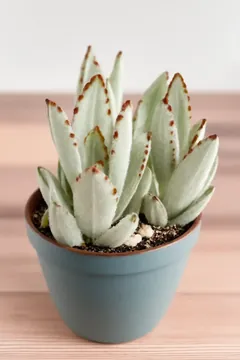
Kalanchoe tomentosa
- LightPanda Plant prefers bright, indirect light at 150 to 250…
- WaterAllow Panda Plant soil to dry out completely before…
- ToxicityToxic to pets
- Mature sizeIts eventual height is 1 to 2 ft / 30…
Panda Plant is a succulent with thick, velvety leaves in soft greyish-green. Fine hairs cover the foliage, while scalloped edges add darker detail. It may produce small bell-shaped flowers in red, pink, yellow, or orange, though blooming is rare indoors. This plant suits bright rooms and growers who prefer infrequent watering. Its tactile foliage is appealing, but the toxic leaves must stay away from children and pets.
Full care guide →
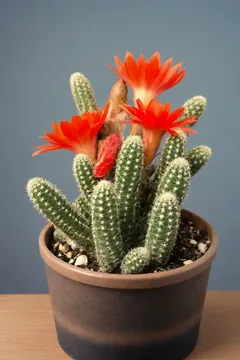
Echinopsis chamaecereus
- LightPeanut Cactus needs bright, direct light between 250 and…
- WaterLet the Peanut Cactus soil dry completely before watering…
- ToxicityNot ASPCA-listed
- Mature sizesee care guide
The Peanut Cactus is a small succulent that forms spreading clumps of short, finger-like stems. Their shape gives the plant its common name. Mature clumps can produce vivid orange or red flowers during spring and summer. Its modest height suits sunny windowsills and compact displays. It is easy to manage when given strong light, gritty soil, and careful watering.
Full care guide →
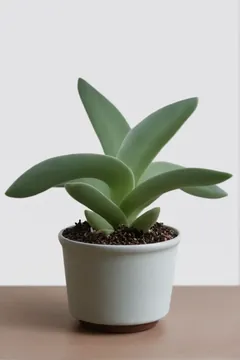
Crassula falcata
- LightPropeller Plant needs bright, direct light from 250 to 1000…
- WaterLet Propeller Plant soil dry completely before watering…
- ToxicitySafe for cats & dogs
- Mature sizeIt reaches 1 to 2 ft / 30 to 60 cm tall
Propeller Plant is a succulent with thick, grayish-green leaves arranged in a spiral around upright stems. Their opposing shape resembles a propeller. Mature plants may develop clusters of tiny red flowers during summer. Its geometric foliage suits sunny windows and succulent collections. It is easy to maintain when given strong light, fast-draining soil, and complete drying between waterings.
Full care guide →
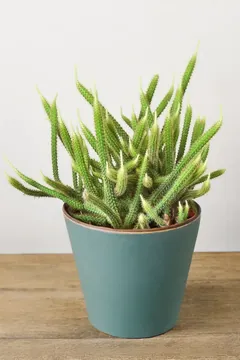
Aporocactus flagelliformis
- LightRattail Cactus needs bright direct light at 250 to 1000…
- WaterLet the potting mix dry completely before watering Rattail…
- ToxicitySafe for cats & dogs
- Mature sizeIts hanging stems can reach an eventual…
Rattail Cactus forms slender, whip-like stems that trail over the edge of a pot or hanging basket. Short spines cover each long green stem. In spring and summer, established plants can produce vivid pink or red tubular flowers. It suits sunny indoor spaces and growers who prefer a drought-tolerant plant. Its hanging stems need room to extend without being handled often.
Full care guide →
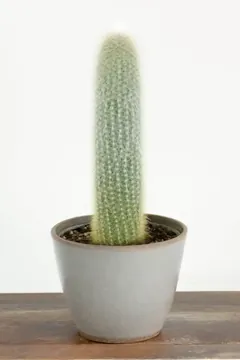
Cleistocactus strausii
- LightSilver Torch requires bright direct light at 250 to 1000…
- WaterLet the soil dry completely before watering Silver Torch…
- ToxicityNot ASPCA-listed
- Mature sizeIndoors, established columns can reach…
Silver Torch is a columnar cactus with slender silver-grey stems covered by dense, short white spines. Mature specimens may produce deep red-magenta flowers during spring and summer. Its upright form brings height without broad foliage, although older clumps eventually need substantial room. This cactus suits bright, dry indoor sites and growers who prefer infrequent watering. The sharp covering makes careful placement and handling important.
Full care guide →
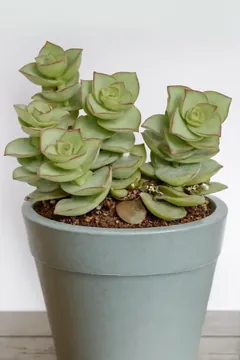
Crassula perforata
- LightString of Buttons prefers bright indirect light but…
- WaterAllow the soil to dry completely before watering String of…
- ToxicityToxic to pets
- Mature sizeIts stems can create an eventual height…
String of Buttons is a trailing succulent with plump blue-green leaves arranged closely along cascading stems. The small, rounded leaves resemble stacked buttons and create a geometric texture. It works well in hanging containers or near a shelf edge where the stems can spread. This easy plant suits growers who can offer filtered light and let the soil dry completely. Its toxicity makes careful indoor placement necessary.
Full care guide →
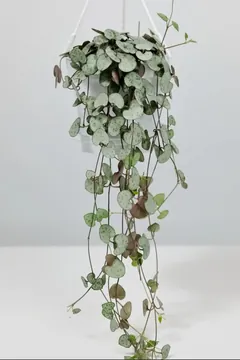
Ceropegia woodii
- LightString of Hearts grows best in bright, indirect light…
- WaterLet the potting mix dry completely before watering String…
- ToxicitySafe for cats & dogs
- Mature sizeIts trailing stems eventually measure 1…
String of Hearts is a trailing succulent grown for its long, cascading stems. Each stem carries plump, heart-shaped leaves with green upper surfaces. Pinkish-purple coloring appears beneath the leaves and along the stems. Its flowing habit suits hanging baskets, tall shelves, and plant stands. This easy-care choice works well for anyone who can provide bright filtered light and let the soil dry fully between waterings.
Full care guide →
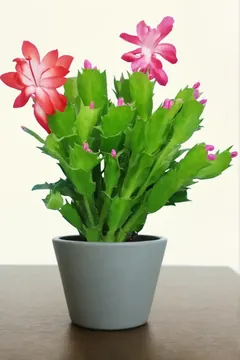
Schlumbergera truncata
- LightThanksgiving Cactus prefers bright, indirect light of 150…
- WaterWater Thanksgiving Cactus when the topsoil feels dry…
- ToxicitySafe for cats & dogs
- Mature sizeIts eventual height is 6 to 12 in / 15…
Thanksgiving Cactus is a tropical cactus grown for colorful tubular flowers that open around Thanksgiving. Instead of desert spines and rounded stems, it forms flat, linked segments with pointed edges that resemble crab claws. Its arching growth works well in pots and hanging containers. This easy houseplant offers seasonal flowers without needing desert-dry treatment. It prefers filtered light, regular drainage, and less water during slower winter growth.
Full care guide →
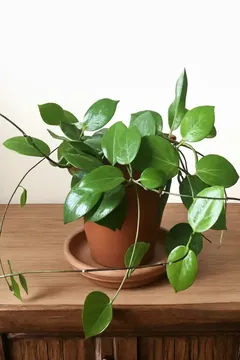
Hoya carnosa
- LightWax Plant prefers bright, indirect light from 150 to 250…
- WaterWater Wax Plant when the topsoil feels dry. Its thick…
- ToxicitySafe for cats & dogs
- Mature sizeIts eventual height is listed as 1 to 2…
Wax Plant is a climbing or trailing vine with thick, glossy leaves that have a polished look. Mature plants can form rounded clusters of sweet-smelling, star-shaped flowers. The flexible stems may be trained on a support or allowed to trail. This easy houseplant appeals to growers who want lasting foliage with the chance of fragrant blooms. It performs best with bright filtered light and careful, moderate watering.
Full care guide →
Common questions
How often should indoor succulents be watered?
Water according to the species and how thoroughly its mix has dried, not a fixed calendar. Light, pot size, mix and season all affect drying time.
Do all indoor succulents need direct sun?
No. Echeveria and Bunny Ears Cactus need bright direct light, while Fishbone Cactus and Christmas Cactus prefer bright indirect light.
Why is my succulent becoming soft or stretched?
Soft growth may indicate excess moisture or root trouble, while stretched growth often points to insufficient light. Check both the roots and the growing position before making changes.