LightBird of Paradise needs bright direct light at 250 to 1000…
WaterLet most of the potting mix dry before watering Bird of…
ToxicitySafe for cats & dogs
Mature sizeIndoors, it eventually reaches 3 to 6…
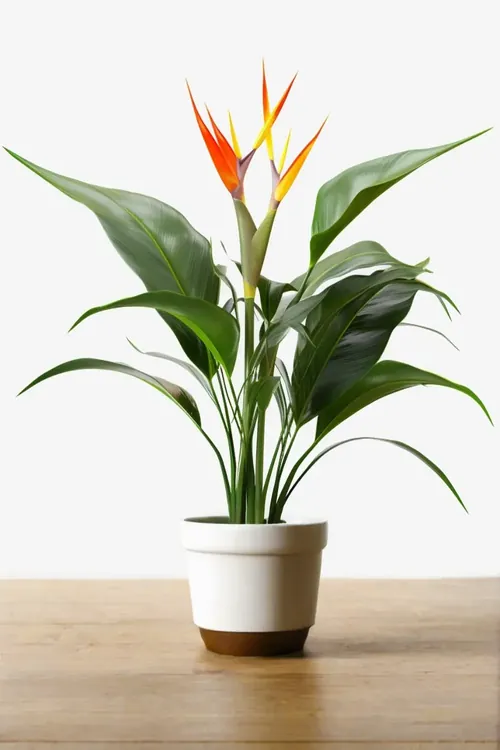
Bird of Paradise is a bold tropical plant with broad, glossy, dark green leaves shaped like banana foliage. Mature plants can produce vivid orange and blue flowers that resemble birds in flight. Its upright form adds height and structure indoors. Grow it if you have strong sunlight, generous floor space, and patience for flowering. Large leaves may need occasional cleaning to show their natural shine.
Let most of the potting mix dry before watering Bird of Paradise again. Check several depths with a knitting needle or chopstick rather than judging only the surface. Use room temperature rainwater, distilled water, or reverse osmosis water.
Water deeply until it flows through the drainage holes. Let the pot empty fully before returning it to a saucer or decorative planter.
A container with drainage holes is essential. Standing water can suffocate roots and lead to root rot.
Water much less during winter, when active growth slows.
Limp leaves and crispy edges can signal a prolonged dry spell. Constantly wet soil is more dangerous than brief dryness.
Soil
Use an organic all-purpose potting mix that holds some moisture but drains freely. The pot must have open drainage holes, since dense or waterlogged soil can damage the roots.
DIY mix: combine 3 parts coir with 1 part pumice.
Finish with a light top dressing of worm castings for organic matter and nutrients.
Feeding
Apply an organic all-purpose fertilizer every 2 to 4 weeks from March to October. Follow the label and avoid using more than directed. Feed only moist soil to reduce root damage. Stop regular feeding outside these months, when Bird of Paradise is growing more slowly.
Temperature & humidity
Keep Bird of Paradise at 65 to 80°F / 18 to 27°C. Protect it from cold drafts and sharp temperature changes. Humidity of 60% or higher supports its large tropical leaves. Lower humidity may contribute to dry or crispy edges, especially near heating or cooling vents.
What to expect
Bird of Paradise takes about 5 to 7 years to mature. Indoors, it eventually reaches 3 to 6 ft / 1 to 1.8 m tall. Its spread is about 2 to 3 ft / 0.6 to 1 m. Growth takes time, and flowering usually requires maturity plus very bright light.
Varieties & cultivars
Strelitzia nicolai: This relative has blue-green leaves and large white, bird-like flowers. It can reach 10 ft / 3 m indoors.
Strelitzia reginae ‘Hummingbird’: A compact cultivar reaching 2 to 3 ft / 0.6 to 1 m. Its orange flowers are smaller, but they appear more often.
Strelitzia nicolai ‘Giant’: This large selection may reach 15 ft / 4.5 m indoors. It needs strong light and substantial room.
Strelitzia kranssana ‘Aurea’: Green leaves carry creamy yellow stripes. The flowers are smaller and orange.
Bird of Paradise: questions
Is Bird of Paradise toxic to cats and dogs?
The ASPCA lists Bird of Paradise as toxic to cats and dogs. Keep its flowers, leaves, and seeds away from pets. It is considered non-toxic to people, but eating plant material is…
How much light does Bird of Paradise need?
Bird of Paradise needs bright direct light at 250 to 1000 μmol·m⁻²·s⁻¹ PPFD. Give it 6+ hours of direct sun each day. - Placement: keep it within 2 ft / 60 cm of a south or southwest-facing window. It should have a clear view of the sky. - Measurement: a PAR meter or PAR meter app can check…
How often should I water Bird of Paradise?
Let most of the potting mix dry before watering Bird of Paradise again. Check several depths with a knitting needle or chopstick rather than judging only the surface. Use room temperature rainwater, distilled water, or reverse osmosis water. - Water deeply until it flows through the drainage holes…
How big does Bird of Paradise get?
Mature size indoors: Indoors, it eventually reaches 3 to 6….