This collection of large indoor plants covers 58 choices for adding height, broad foliage or a strong focal point to a spacious room. It suits readers furnishing living areas, bright halls and other places with enough room for a plant to develop without crowding furniture or walkways. African Milk Tree, Areca Palm, Banana Plant and Bird of Paradise are among the included members. Their light needs range from bright indirect conditions to bright direct light, and their care levels also differ. Check each plant page for its own requirements, then consider the available floor space, ceiling clearance and window exposure before choosing a prominent specimen.
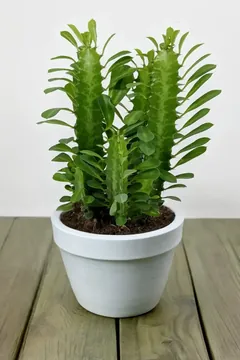
Euphorbia trigona
- LightAfrican Milk Tree prefers bright, indirect light at 150 to…
- WaterLet the potting mix dry completely before watering African…
- ToxicityToxic to pets
- Mature sizeIndoors, it can eventually reach 6 to 9…
African Milk Tree is a tall succulent with upright, branching stems. Each stem has three angled sides, raised ridges, and small leaves that do not last long. Mature plants may also produce small white flowers. Its sculptural shape works well in bright rooms with limited floor space. It is easy to maintain when given strong filtered light, dry soil, and careful handling.
Full care guide →
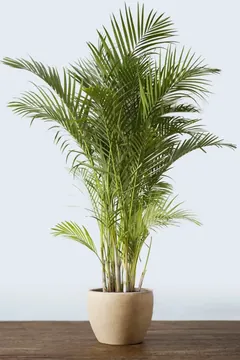
Dypsis lutescens
- LightAreca Palm thrives in bright, indirect light measuring 150…
- WaterWater Areca Palm when the topsoil feels dry. Check below…
- ToxicitySafe for cats & dogs
- Mature sizeIndoors, it can reach 6 to 10 feet / 1
Areca Palm grows as a dense clump of smooth, ringed trunks with a golden-yellow tone. Long, arching fronds divide into narrow green leaflets, creating a soft, feathery look similar to bamboo. It can become a large floor plant and needs room to spread. This palm suits bright interiors where moisture remains steady. Dry air, excess salts, and poor drainage can damage the leaf tips.
Full care guide →
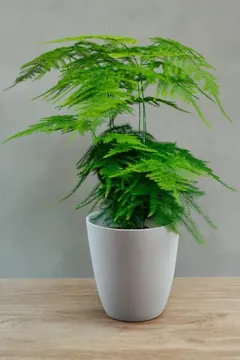
Asparagus setaceus
- LightAsparagus Fern grows best in bright, indirect light…
- WaterKeep Asparagus Fern evenly moist, but do not leave the…
- ToxicityToxic to pets
- Mature sizeDepending on support and pruning, it…
Asparagus Fern has fine, lacy foliage carried on long arching or trailing stems. Although it resembles a fern, it belongs to the asparagus family. Its airy shape works in hanging baskets, tabletop pots, or larger floor displays. It is fairly easy to grow with steady moisture and filtered light. Mature stems may become long and tangled, while dry conditions can make the delicate foliage shed.
Full care guide →
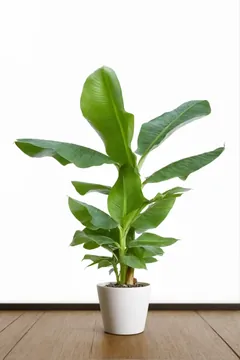
Musa acuminata
- LightBanana Plant prefers bright, indirect light between 150 to…
- WaterKeep Banana Plant's soil consistently moist, but never…
- ToxicitySafe for cats & dogs
- Mature sizeIndoors, it may grow 6 to 8 feet / 1
Banana Plant is a large tropical perennial with huge, glossy leaves shaped like paddles. The foliage rises from a sturdy central form and gives a room a bold canopy. Mature indoor plants may produce orange or purple flowers followed by small, inedible bananas. It needs generous space, warmth, humidity, and steady moisture. Its fast, substantial growth suits bright rooms better than cramped shelves or narrow walkways.
Full care guide →
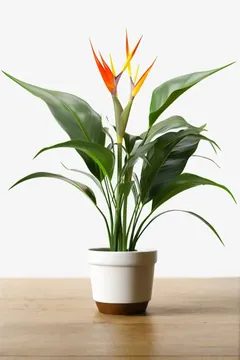
Strelitzia reginae
- LightBird of Paradise needs bright direct light at 250 to 1000…
- WaterLet most of the potting mix dry before watering Bird of…
- ToxicitySafe for cats & dogs
- Mature sizeIndoors, it eventually reaches 3 to 6…
Bird of Paradise is a bold tropical plant with broad, glossy, dark green leaves shaped like banana foliage. Mature plants can produce vivid orange and blue flowers that resemble birds in flight. Its upright form adds height and structure indoors. Grow it if you have strong sunlight, generous floor space, and patience for flowering. Large leaves may need occasional cleaning to show their natural shine.
Full care guide →
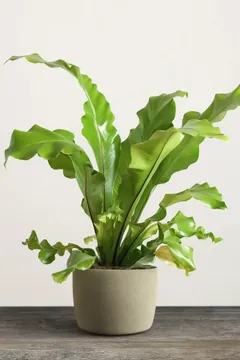
Asplenium nidus
- LightBird’s Nest Fern prefers medium to bright indirect light at…
- WaterKeep the mix evenly moist for Bird’s Nest Fern, but never…
- ToxicitySafe for cats & dogs
- Mature sizeThe fern may eventually stand 3 to 6 ft…
Bird’s Nest Fern forms a neat rosette of bright green, sword-shaped fronds. New growth rises from the central crown and gradually opens outward. Its smooth, undivided leaves give it a cleaner look than many feathery ferns. This plant suits shelves, tables, and shaded rooms with steady warmth. It is manageable for beginners who can provide consistent moisture without soaking the crown or roots.
Full care guide →
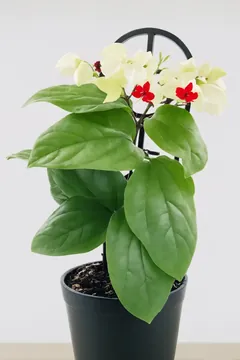
Clerodendrum thomsoniae
- LightBleeding Heart Vine performs best in bright indirect light…
- WaterKeep Bleeding Heart Vine evenly moist, but never leave its…
- ToxicityNot ASPCA-listed
- Mature sizeIts stems may reach 6 to 10 ft / 1
Bleeding Heart Vine is an evergreen climber with glossy green leaves and showy, heart-shaped flowers. Its contrasting blooms appear in clusters and stand out clearly against the foliage. Flexible stems can climb a support or be trained around a frame. This plant suits growers who want a flowering indoor vine and can provide filtered light, steady moisture, and regular shaping as the stems lengthen.
Full care guide →
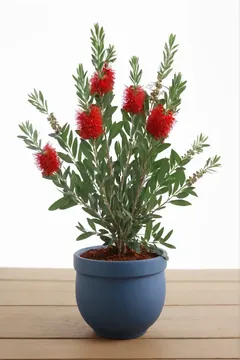
Callistemon citrinus
- LightBottle Brush Plant requires bright direct light at 250 to…
- WaterKeep Bottle Brush Plant soil consistently moist, but not…
- ToxicitySafe for cats & dogs
- Mature sizeIndoors, it may eventually reach 3 to 6…
Bottle Brush Plant is an evergreen shrub with narrow leaves that release a lemon scent. Its dense, cylindrical flower spikes resemble brushes used to clean bottles. The colorful blooms create the plant’s main display, while woody growth gives it a small-shrub form. Indoors, it suits a bright window and needs room for branching. Choose it if you can provide long periods of direct sun and regular shaping.
Full care guide →
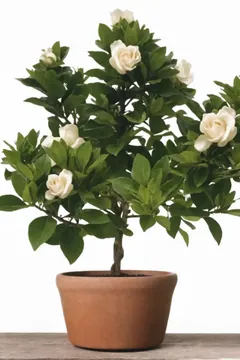
Gardenia jasminoides
- LightCape Jasmine needs bright indirect light at 150 to 250…
- WaterKeep Cape Jasmine soil consistently moist, but not soggy…
- ToxicityToxic to pets
- Mature sizeIndoors, it may eventually reach 3 to 6…
Cape Jasmine is a compact, bushy evergreen shrub with glossy green leaves. Its fragrant white flowers provide the main attraction and stand out against the dark foliage. The plant can become a refined indoor specimen when its light, moisture, acidity, warmth, and humidity remain stable. It suits experienced growers who enjoy fragrant blooms and do not mind monitoring conditions closely. Sudden environmental changes can affect buds and leaves.
Full care guide →
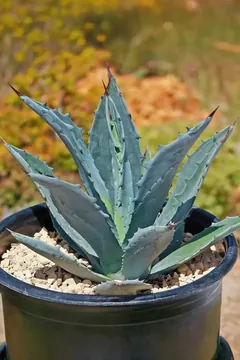
Agave americana
- LightCentury Plant needs bright direct light at 250 to 1000…
- WaterAllow Century Plant soil to dry completely before watering…
- ToxicityToxic to pets
- Mature sizeEventual size is 3 to 6 ft / 0
Century Plant is a large rosette-forming succulent with thick, sword-shaped leaves. The grey-green foliage has sharp tips and spiny edges, creating a bold architectural outline. It stores water in its leaves and tolerates long dry periods. Indoors, it suits a very sunny, spacious location where people and pets cannot brush against it. The plant can live for decades, but its eventual size demands planning.
Full care guide →
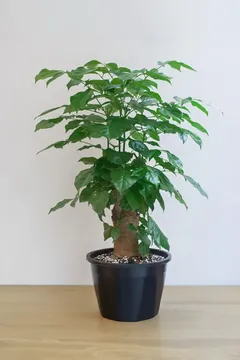
Radermachera sinica
- LightThe China Doll Plant needs bright direct light measuring…
- WaterKeep the China Doll Plant evenly moist, but never leave its…
- ToxicitySafe for cats & dogs
- Mature sizeIt can reach 4 to 6 ft / 1
The China Doll Plant is a compact evergreen tree with a dense, bushy shape. Its glossy emerald leaves are compound, with deeply veined leaflets that give the canopy a fine texture. Indoors, it suits growers who want the look of a small tree without a broad spread. It is fairly easy, but stable light and moisture help prevent leaf drop.
Full care guide →
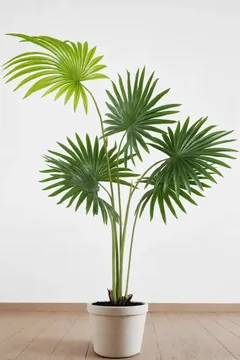
Livistona chinensis
- LightChinese Fan Palm grows best in bright indirect light of 150…
- WaterWater the Chinese Fan Palm when the topsoil feels dry…
- ToxicitySafe for cats & dogs
- Mature sizeIt may eventually reach 6 to 10 feet / 1
The Chinese Fan Palm has large, glossy fronds divided into broad fan-like sections. A mature frond can measure up to 2 ft / 60 cm across, creating a bold tropical outline. Indoors, it becomes a substantial floor plant without needing complicated care. It suits bright rooms with enough space for its widening crown and arching foliage.
Full care guide →
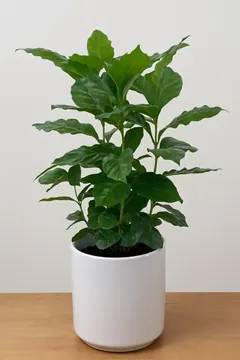
Coffea arabica
- LightCoffee Plant needs bright indirect light of 150 to 250…
- WaterKeep Coffee Plant soil consistently moist but not soggy…
- ToxicityToxic to pets
- Mature sizeIt can grow 3 to 6 ft / 1 to 2 m tall…
Coffee Plant is an evergreen shrub with glossy green leaves and a neat, upright form. Mature specimens may produce fragrant white flowers followed by red fruits called coffee cherries. It brings rich foliage and an unusual crop plant story indoors. Care is moderately demanding because the roots need steady moisture, while the leaves prefer bright filtered light and higher humidity.
Full care guide →
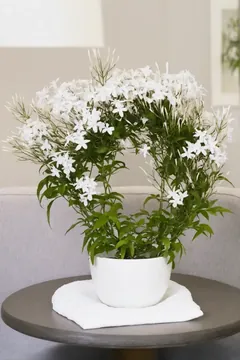
Trachelospermum jasminoides
- LightConfederate Jasmine grows best in bright indirect light of…
- WaterWater Confederate Jasmine when the topsoil feels dry. Check…
- ToxicitySafe for cats & dogs
- Mature sizeThe plant may spread 3 to 4 ft / 0
Confederate Jasmine is an evergreen climber with glossy dark green leaves and twining stems. Its foliage often turns deep bronze-red during winter. Clusters of strongly fragrant white flowers appear from mid to late summer. Indoors, it needs support and room to climb, but rewards steady care with a leafy screen and seasonal scent.
Full care guide →
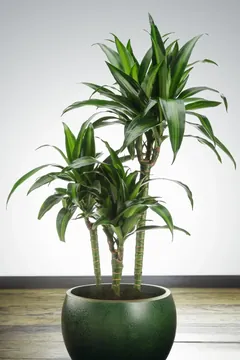
Dracaena fragrans
- LightCorn Plant prefers medium to bright indirect light of 150…
- WaterWater Corn Plant when the topsoil feels dry. Check with a…
- ToxicityToxic to pets
- Mature sizeIt can reach 6 to 8 ft / 1
Corn Plant is an upright indoor tree with one or more sturdy trunks. Long, sword-shaped leaves emerge in broad tufts and resemble the foliage of corn stalks. Its strong vertical form works well as a floor plant in homes or offices. It is fairly forgiving, though careful watering and filtered light reduce brown tips and leaf loss.
Full care guide →
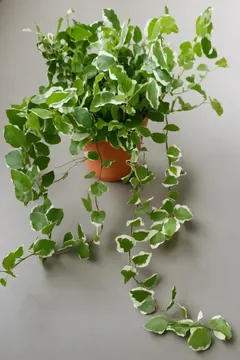
Ficus pumila
- LightCreeping Fig grows in medium to bright indirect light of…
- WaterWater Creeping Fig when the topsoil feels dry. Check before…
- ToxicityToxic to pets
- Mature sizeSupported vines can reach 10 to 15 ft /…
Creeping Fig is a vigorous vine with small, glossy green leaves and a fast growth habit. Adhesive aerial rootlets let its stems cling tightly to walls, supports, and other surfaces. Indoors, it can trail from a pot or cover a frame, but regular pruning keeps it manageable. It suits growers who want dense greenery and can guide its spreading stems.
Full care guide →
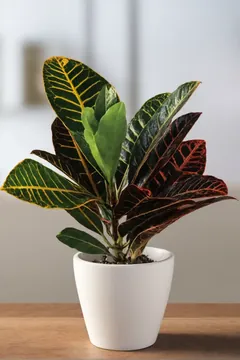
Codiaeum variegatum
- LightCroton Plant needs bright indirect light of 150 to 250…
- WaterWater Croton Plant when the topsoil feels dry. Check the…
- ToxicityToxic to pets
- Mature sizeIndoors, it may reach 3 to 8 ft / 0
Croton Plant is an upright shrub grown for large, leathery leaves with bold variegation. Its foliage may combine green with vivid yellow, red, orange, or other warm tones. The strong color makes it a striking indoor focal point. It needs more consistent light, warmth, and moisture than many easy houseplants, so it best suits attentive growers.
Full care guide →
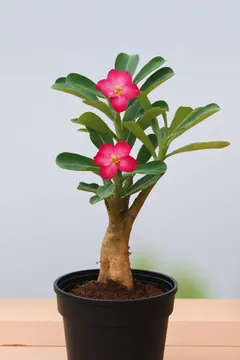
Adenium obesum
- LightDesert Rose needs bright direct light at 250 to 1000…
- WaterLet the potting mix dry completely before watering Desert…
- ToxicityToxic to pets
- Mature sizeIndoors, it can eventually stand 3 to 6…
Desert Rose is a succulent shrub with a thick, swollen base called a caudex. Glossy green leaves grow from its branching stems. Trumpet-shaped blooms appear in pink, red, or white. Its sculptural form and colorful flowers make it an appealing indoor specimen. It suits growers who can provide strong sun, careful watering, and a warm location.
Full care guide →
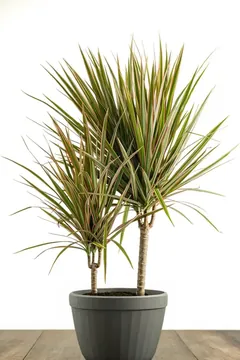
Dracaena marginata
- LightDragon Tree grows best in bright indirect light at 150 to…
- WaterWater Dragon Tree when the top half of the soil has dried…
- ToxicityToxic to pets
- Mature sizeIts eventual spread is 2 to 3 ft / 0
Dragon Tree is an upright houseplant with one or several slender trunks. Narrow, sword-shaped leaves form tufts near the tops, and red edges add subtle color. Its tall, spare outline works well where floor space is limited. It is widely grown for its easy care, tree-like shape, and ability to serve as a strong vertical accent indoors.
Full care guide →
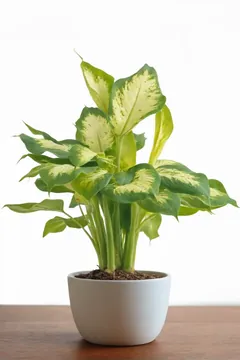
Dieffenbachia
- LightDumb Cane prefers bright indirect light at 150 to 250…
- WaterWater Dumb Cane once the topsoil feels dry. Check the…
- ToxicityToxic to pets
- Mature sizeIts eventual height is 3 to 6 ft / 0
Dumb Cane is a tropical perennial valued for its broad, patterned foliage. Depending on the selection, its leaves combine green with cream or white. The bold markings brighten rooms without requiring direct sun. It develops an upright, leafy form that can become a sizable floor plant. Grow it only where its toxic foliage will remain safely beyond the reach of children and pets.
Full care guide →
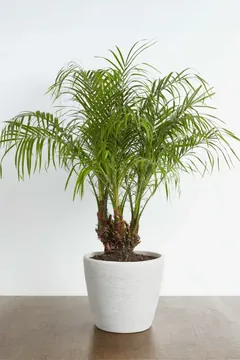
Phoenix roebelenii
- LightDwarf Date Palm needs bright indirect light at 150 to 250…
- WaterWater Dwarf Date Palm when the topsoil feels dry. Check the…
- ToxicitySafe for cats & dogs
- Mature sizeIndoors, it can reach 6 to 8 ft / 1
Dwarf Date Palm is a slow-growing palm with a slim trunk and a full crown of dark green fronds. Each frond arches outward and carries many fine, feathery leaflets. Its graceful shape brings a tropical look to bright indoor spaces. It suits growers who can provide steady moisture, filtered light, and enough room for the spreading crown.
Full care guide →
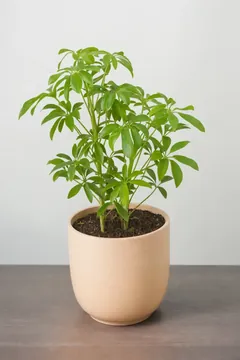
Schefflera arboricola
- LightDwarf Umbrella Tree grows best in bright indirect light at…
- WaterWater Dwarf Umbrella Tree when the topsoil feels dry. Test…
- ToxicityToxic to pets
- Mature sizeIndoors, it can grow 4 to 8 ft / 1
Dwarf Umbrella Tree is a glossy-leaved houseplant with leaflets that spread like the ribs of an umbrella. Its finger-like foliage forms a dense canopy above branching stems. It can grow as a bushy floor plant or be trained into a small tree shape. This plant suits growers who can offer bright filtered light and regular care without keeping the soil constantly wet.
Full care guide →
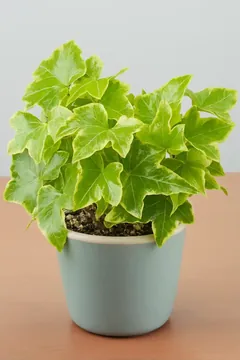
Hedera helix
- LightEnglish Ivy prefers medium to bright indirect light at 150…
- WaterWater English Ivy when the topsoil feels dry to the touch…
- ToxicityToxic to pets
- Mature sizesee care guide
English Ivy is a climbing or trailing vine with glossy, lobed leaves. Cultivars offer many leaf shapes and combinations of green, white, gray, or yellow. Its flexible stems can spill from baskets or climb a support. It suits growers who can provide cool conditions, bright filtered light, and regular pruning. Its toxic foliage makes careful placement important in homes with children or pets.
Full care guide →
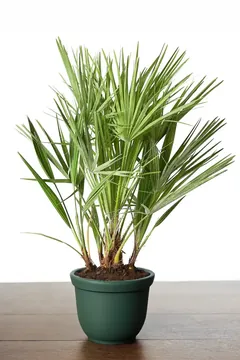
Chamaerops humilis
- LightEuropean Fan Palm needs bright direct light at 250 to 1000…
- WaterWater European Fan Palm when the topsoil feels dry. Check…
- ToxicitySafe for cats & dogs
- Mature sizeIndoors, it can reach 4 to 6 ft / 1
European Fan Palm can grow as a multi-trunked shrub or be trained as a small single-trunk tree. Its fan-shaped fronds divide into long, narrow leaflets, creating a bold architectural outline. Strong sunlight and a wide temperature tolerance make it useful for very bright rooms. Its slow growth also helps it remain manageable in a large indoor container for many years.
Full care guide →
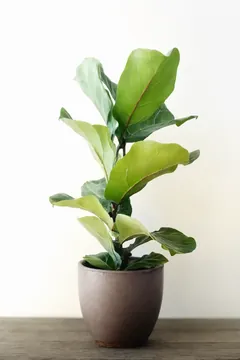
Ficus lyrata
- LightFiddle Leaf Fig needs bright indirect light at 150 to 250…
- WaterDuring active growth, water Fiddle Leaf Fig when the top…
- ToxicityToxic to pets
- Mature sizeIndoors, it can grow 6 to 10 ft / 1
Fiddle Leaf Fig is an upright, single-stemmed indoor tree with large, glossy leaves. Their broad shape narrows through the middle, resembling a fiddle. Deep green foliage and a strong vertical form make it a dramatic floor plant. It suits experienced growers who can provide consistent light, careful watering, stable warmth, and enough room for its broad canopy.
Full care guide →
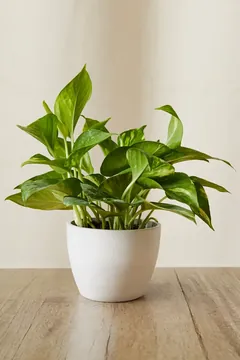
Epipremnum aureum
- LightGolden Pothos prefers bright, indirect light between 150…
- WaterLet Golden Pothos become almost dry before watering. Test…
- ToxicityToxic to pets
- Mature sizeIts eventual spread is 2 to 3 ft / 0
Golden Pothos is a flexible climbing or trailing houseplant with glossy, heart-shaped foliage. Its green leaves are usually streaked or splashed with yellow and cream. The vines can hang from a shelf or climb a support, making the plant useful in many room layouts. It tolerates some missed care, but brighter filtered light keeps growth fuller and preserves the colorful leaf pattern.
Full care guide →
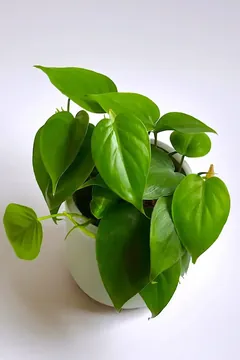
Philodendron hederaceum
- LightHeartleaf Philodendron prefers medium to bright indirect…
- WaterWater Heartleaf Philodendron when the topsoil feels dry…
- ToxicityToxic to pets
- Mature sizesee care guide
Heartleaf Philodendron is an evergreen tropical vine with glossy, heart-shaped leaves in several shades of green. Its flexible stems can trail from a shelf or climb a support. The plant adapts well to ordinary indoor rooms and responds to basic pruning. It suits beginners who want easy foliage, provided the roots receive drainage and the leaves are protected from harsh direct sun.
Full care guide →
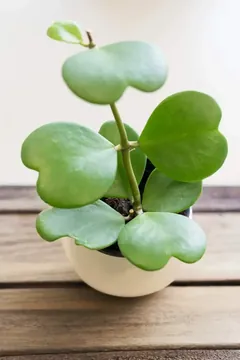
Hoya kerrii
- LightHoya Hearts prefers bright, indirect light at 150 to 250…
- WaterAllow Hoya Hearts soil to dry completely before watering…
- ToxicitySafe for cats & dogs
- Mature sizeMature vines can reach 6 to 10 ft / 1
Hoya Hearts is a succulent vine with thick leaves shaped like hearts. Mature plants carry the leaves along climbing or trailing stems, while single-leaf cuttings are also commonly seen. The waxy foliage stores moisture and remains attractive between growth periods. This hoya suits a bright room and a patient grower, since it develops slowly and needs its potting mix to dry fully.
Full care guide →
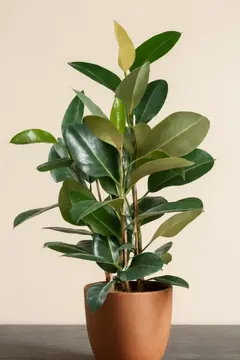
Ficus elastica
- LightIndian Rubber Tree grows best in bright, indirect light at…
- WaterWater Indian Rubber Tree when the topsoil becomes dry to…
- ToxicityToxic to pets
- Mature sizeIts eventual height is 6 to 10 ft / 1
Indian Rubber Tree is a tropical evergreen from Southeast Asia. It develops large, glossy leaves with a thick, leathery feel and a strong upright framework. Young plants fit easily into indoor displays, while older specimens become substantial floor plants. It suits growers who want bold foliage and can provide stable warmth, bright filtered light, drainage and enough room for long-term growth.
Full care guide →
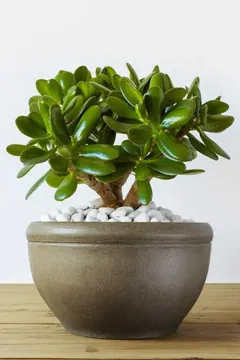
Crassula ovata
- LightJade plant prefers bright, indirect light measuring 150 to…
- WaterAllow Jade plant soil to become completely dry before…
- ToxicityToxic to pets
- Mature sizeIts eventual height is 3 to 6 ft / 90…
Jade plant is a long-lived succulent with glossy, oval green leaves and thick stems that become woody over time. Older plants can develop a miniature tree or bonsai-like shape without complex training. Its foliage stores water, making frequent irrigation unnecessary. It suits a bright indoor position and a grower who prefers allowing soil to dry fully before each deep watering.
Full care guide →
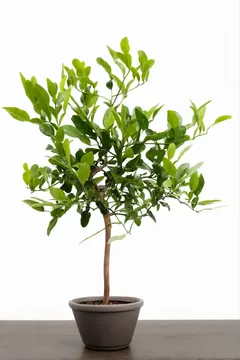
Citrus hystrix
- LightKaffir Lime grows best in bright, indirect light measuring…
- WaterWater Kaffir Lime after the topsoil becomes dry to the…
- ToxicityNot ASPCA-listed
- Mature size5 m, with a spread of 3 to 4 ft / 0
Kaffir Lime is an evergreen citrus shrub grown indoors for its glossy, double leaves and strong citrus scent. Small, bumpy fruits may follow fragrant white flowers when care is suitable. The aromatic foliage is its main indoor attraction. This plant suits growers who can provide bright light, careful watering, and enough room for a compact shrub.
Full care guide →
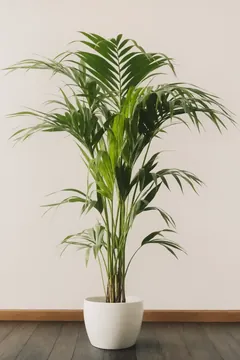
Howea forsteriana
- LightKentia Palm favors bright, indirect light between 150 and…
- WaterWater Kentia Palm when the topsoil is dry to the touch…
- ToxicityNot ASPCA-listed
- Mature sizeA mature specimen can reach 6 to 10…
Kentia Palm is a tall indoor palm with arching fronds and glossy, dark green leaflets. Its graceful outline brings height and soft texture to a room without dense, bushy foliage. It tolerates lower light better than many palms, although growth becomes slower there. This resilient plant suits growers who want a substantial floor specimen and can give it space to mature.
Full care guide →
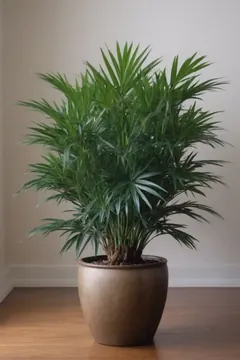
Rhapis excelsa
- LightLady Palm prefers bright, indirect light between 150 and…
- WaterWater Lady Palm after the topsoil feels dry. Check the mix…
- ToxicityNot ASPCA-listed
- Mature sizesee care guide
Lady Palm is a shade-tolerant palm that grows as a cluster of slender stems. Large, glossy leaves divide into broad fan-shaped segments, creating a full and orderly outline. Its upright form works well as a floor plant where softer tropical foliage is wanted. This easy palm suits indoor growers who can offer indirect light, regular watering, and enough space for a wide clump.
Full care guide →
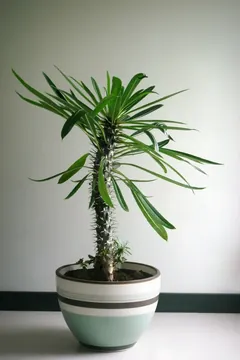
Pachypodium lamerei
- LightMadagascar Palm needs bright, direct light at 250 to 1000…
- WaterAllow Madagascar Palm soil to dry completely before…
- ToxicityNot ASPCA-listed
- Mature sizeIts mature spread remains much narrower…
Madagascar Palm is a succulent rather than a true palm. It develops a thick, swollen caudex that forms its trunk, with sharp spines along the surface. A crown of dark green leaves grows at the top. Its dramatic upright shape suits a bright floor position, but it needs careful handling, strong direct light, and room to reach a substantial indoor height.
Full care guide →
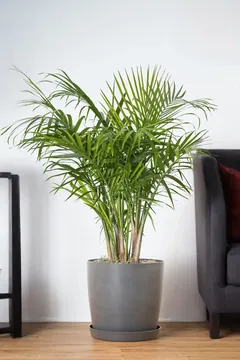
Ravenea rivularis
- LightMajesty Palm grows best in bright, indirect light at 150 to…
- WaterKeep Majesty Palm soil consistently moist without making it…
- ToxicityNot ASPCA-listed
- Mature sizeIts broad fronds may create a mature…
Majesty Palm is a tropical palm with large, feathery fronds that form a graceful indoor canopy. It comes from Madagascar, where it naturally grows near riverbanks and across swampy lowlands. That background explains its preference for steady moisture and humid air. This intermediate plant suits a roomy, bright position and a grower prepared to monitor both watering and humidity closely.
Full care guide →
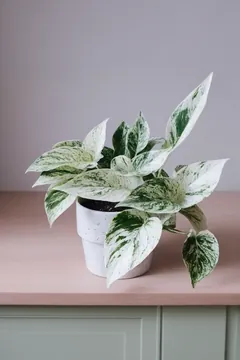
Epipremnum aureum
- LightMarble Queen Pothos needs medium to bright indirect light…
- WaterWater Marble Queen Pothos after the topsoil becomes dry to…
- ToxicityToxic to pets
- Mature sizeIts eventual spread is 2 to 3 ft / 0
Marble Queen Pothos is a trailing or climbing houseplant with heart-shaped foliage. Each leaf carries a different blend of green and creamy white marbling. Its long vines suit hanging baskets, shelves, or a climbing support. It tolerates normal indoor conditions, though the pale areas need useful light. Choose it for bold variegation and flexible growth, but keep it away from children and pets.
Full care guide →
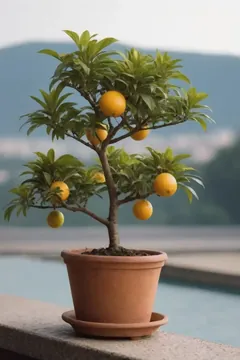
Citrus
- LightMeyer Lemon Tree needs bright direct light at 250 to 1000…
- WaterWater a Meyer Lemon Tree when the topsoil feels dry. Check…
- ToxicityToxic to pets
- Mature sizeIts eventual indoor height is 5 to 10…
Meyer Lemon Tree is a compact evergreen citrus with glossy dark green leaves and some spines. Fragrant white blossoms can develop into rounded orange-yellow fruit. Its lemons taste sweeter and less acidic than common lemons. The tree can grow in a large indoor container, but fruiting demands abundant direct sun. It suits growers who can provide a bright window, seasonal feeding, and room for a small tree.
Full care guide →
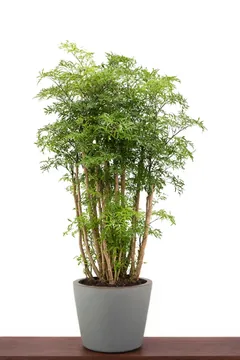
Polyscias fruticosa
- LightMing Aralia grows best in bright, indirect light at 150 to…
- WaterKeep Ming Aralia’s soil consistently moist, but never…
- ToxicityToxic to pets
- Mature sizeIndoors, it may reach 6 to 8 ft / 1
Ming Aralia is an elegant indoor tree with glossy leaves divided into many fern-like segments. Its narrow trunk often twists and may be sold braided for added structure. The airy foliage gives rooms a soft, finely textured look without forming a broad canopy. It needs steadier moisture and humidity than many easy houseplants, so it best suits growers who check soil regularly and avoid sudden changes.
Full care guide →
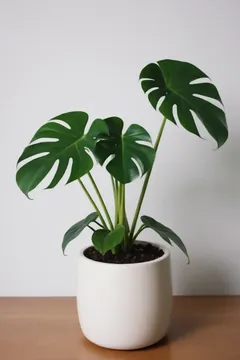
Rhaphidophora tetrasperma
- LightMini Monstera prefers bright, indirect light measuring 150…
- WaterWater Mini Monstera when the topsoil feels dry. Check the…
- ToxicityToxic to pets
- Mature sizeSupported vines can grow 6 to 10 ft / 1
Mini Monstera is a fast-climbing tropical vine with glossy green leaves and deep natural splits. Its foliage resembles a smaller Monstera deliciosa, though the plants are not the same species. The vine benefits from a pole, trellis, or other vertical support. It suits growers who want a dramatic climber without the huge leaves of a mature Swiss Cheese Plant, but its sap and foliage are toxic.
Full care guide →
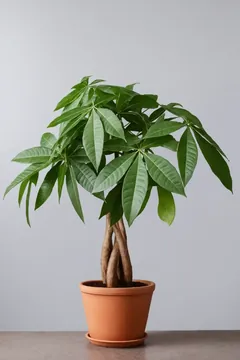
Pachira aquatica
- LightMoney Tree prefers bright, indirect light at 150 to 250…
- WaterWater Money Tree once the topsoil feels dry. Check the soil…
- ToxicitySafe for cats & dogs
- Mature sizeIt eventually reaches 3 to 6 ft / 0
Money Tree is a small indoor tree with glossy leaves divided into hand-like clusters. Several young trunks are often braided to create the familiar decorative form. The plant is linked with prosperity and good luck, making it a common gift. It grows well in bright filtered light and fits floor pots or large tabletops while young. Choose it for tropical foliage, an upright shape, and manageable indoor care.
Full care guide →
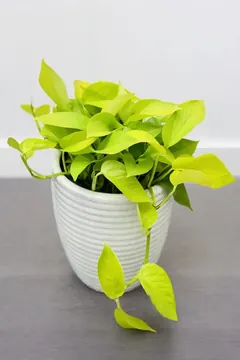
Epipremnum aureum
- LightNeon Pothos prefers bright, indirect light but tolerates…
- WaterLet Neon Pothos become almost dry before watering again…
- ToxicityToxic to pets
- Mature size4 m, with an eventual spread of 3 to 6…
Neon Pothos is a trailing or climbing vine grown for its vivid neon-green leaves. Its bright foliage adds color without flowers and looks striking in hanging baskets or on a support. The plant tolerates lower light, though useful indirect light keeps growth fuller and the color stronger. It suits many indoor spaces, but regular soil checks are important because prolonged wetness can damage its roots.
Full care guide →
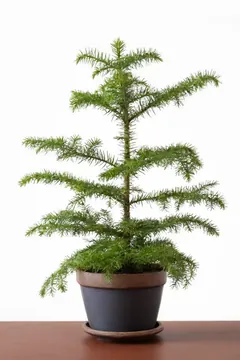
Araucaria heterophylla
- LightNorfolk Island Pine prefers bright, indirect light at 150…
- WaterWater Norfolk Island Pine when the topsoil feels dry. Check…
- ToxicitySafe for cats & dogs
- Mature sizeIt may eventually reach 6 to 8 ft / 1
Norfolk Island Pine is an evergreen conifer with soft foliage arranged on evenly spaced, feathery branches. Its symmetrical tiers create the outline of a small traditional tree. Indoors, it is often used as a living Christmas tree alternative, but it can remain a year-round foliage plant. It suits bright rooms with moderate humidity and space for a broad, upright specimen as it matures.
Full care guide →
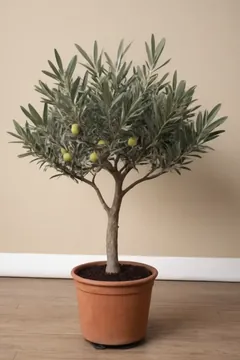
Olea europaea
- LightOlive Tree needs bright direct light at 250 to 1000…
- WaterAllow the soil around an Olive Tree to become almost dry…
- ToxicitySafe for cats & dogs
- Mature sizeIt may grow 3 to 6 ft / 1 to 2 m tall…
Olive Tree is an evergreen with narrow, lance-shaped leaves in silvery green. As it ages, the trunk develops a twisted, gnarled look that gives the plant strong character. A container-grown tree can produce small olives with proper care, although indoor fruiting is uncommon. It needs abundant direct sun and suits growers with a bright south-facing window, low humidity, and enough space for a woody specimen.
Full care guide →
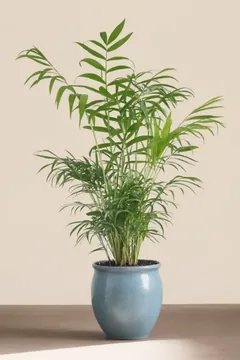
Chamaedorea elegans
- LightThe Parlour Palm prefers bright, indirect light but…
- WaterKeep the Parlour Palm evenly moist, but never leave its…
- ToxicitySafe for cats & dogs
- Mature sizeIndoors, it can reach 3 to 6 feet / 0
The Parlour Palm is a compact indoor palm with soft, light green fronds. Mature plants may develop tiny yellow flowers followed by black fruits. Its manageable size and easy care suit homes and offices. It also tolerates lower light than many palms. People often grow it for its graceful foliage and reputation as an air-purifying plant.
Full care guide →
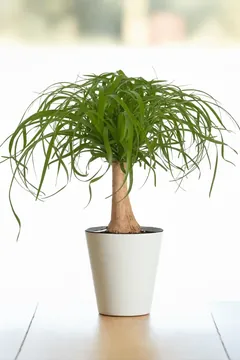
Beaucarnea recurvata
- LightPonytail Palm prefers bright, indirect light between 150…
- WaterAllow Ponytail Palm soil to dry completely before watering…
- ToxicitySafe for cats & dogs
- Mature sizeIndoors, it may reach 6 to 10 feet / 1
Ponytail Palm is a tree-like succulent rather than a true palm. Its swollen base, called a caudex, stores water. Long, narrow leaves arch from the top and droop like a ponytail. The sculptural form suits bright rooms and requires less frequent watering than tropical palms. It is a good choice for growers comfortable letting soil dry fully between waterings.
Full care guide →
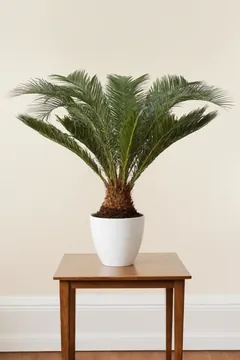
Cycas revoluta
- LightSago Palm prefers bright indirect light at 150 to 250…
- WaterAllow the soil to dry completely before watering Sago Palm…
- ToxicityToxic to pets
- Mature sizeA mature specimen may eventually stand…
Sago Palm is an evergreen cycad, not a true palm. It develops a balanced rosette of stiff, glossy, dark green leaves with a feather-like form. Growth is extremely slow, so it changes little from year to year indoors. The structured shape works well as a long-term floor plant. It suits patient growers, but its serious toxicity makes it unsuitable for homes where children or pets can reach it.
Full care guide →
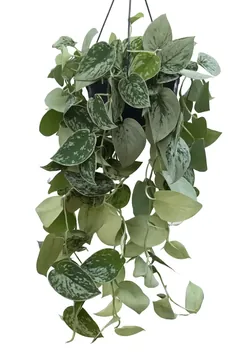
Scindapsus pictus
- LightSatin Pothos grows best in bright indirect light at 150 to…
- WaterWater Satin Pothos when the topsoil feels dry. Check below…
- ToxicityToxic to pets
- Mature sizeIts climbing or trailing stems can…
Satin Pothos is a trailing vine with soft-looking, heart-shaped leaves. The dark green foliage has a velvety surface and silvery-grey splashes that catch the light. Stems can trail from a shelf or hanging planter, or climb a support. It is easy to grow when drainage is good. This plant suits beginners seeking patterned foliage, but it must be kept away from children and pets because it is toxic.
Full care guide →
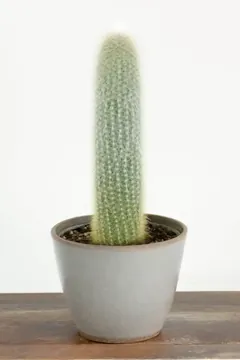
Cleistocactus strausii
- LightSilver Torch requires bright direct light at 250 to 1000…
- WaterLet the soil dry completely before watering Silver Torch…
- ToxicityNot ASPCA-listed
- Mature sizeIndoors, established columns can reach…
Silver Torch is a columnar cactus with slender silver-grey stems covered by dense, short white spines. Mature specimens may produce deep red-magenta flowers during spring and summer. Its upright form brings height without broad foliage, although older clumps eventually need substantial room. This cactus suits bright, dry indoor sites and growers who prefer infrequent watering. The sharp covering makes careful placement and handling important.
Full care guide →
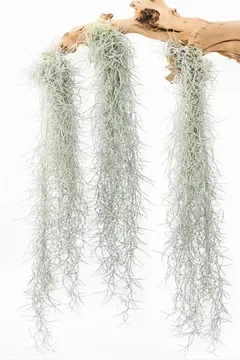
Tillandsia usneoides
- LightSpanish Moss prefers bright indirect light at 150 to 250…
- WaterSoak the entire Spanish Moss plant in rainwater for 20 to…
- ToxicitySafe for cats & dogs
- Mature sizeA hanging mass may spread about 12 to…
Spanish Moss is an epiphytic air plant with long, cascading strands of silvery-green foliage. It grows without soil and takes moisture from the air and regular soaking. Although often seen hanging from trees in tropical and subtropical areas, it is non-parasitic and does not feed on its support. Indoors, it suits hanging displays where air can move freely through the strands and excess water can drain away.
Full care guide →
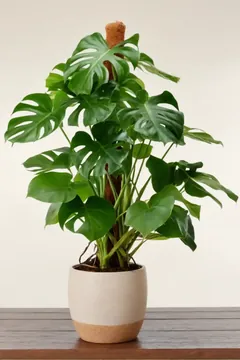
Monstera deliciosa
- LightSwiss Cheese Plant prefers bright, indirect light between…
- WaterWater Swiss Cheese Plant after the topsoil becomes dry to…
- ToxicityToxic to pets
- Mature sizeIndoors, it can reach 6 to 8 ft / 1
Swiss Cheese Plant is a tropical climbing vine with large, glossy green leaves. As the foliage matures, it forms deep splits and internal holes called fenestrations. A support allows the stems to climb and display larger leaves. This easy houseplant creates a bold indoor feature, but its eventual size needs planning. It suits a bright room where there is enough floor space and vertical support for mature growth.
Full care guide →
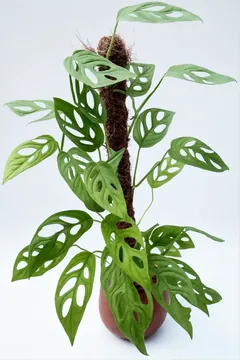
Monstera adansonii
- LightSwiss Cheese Vine grows well under bright, indirect light…
- WaterWater Swiss Cheese Vine when the topsoil feels dry. Check…
- ToxicityToxic to pets
- Mature sizeDepending on its support, it can grow 3…
Swiss Cheese Vine is a tropical climber with green leaves pierced by natural holes. These fenestrations give the foliage its familiar Swiss cheese appearance. The ‘Narrow Form’ has smooth, elongated leaves and a lighter visual texture. Stems can climb a support or trail from a hanging container. This easy houseplant suits smaller rooms better than larger Monsteras, though it still needs bright filtered light and regular pruning or guidance.
Full care guide →
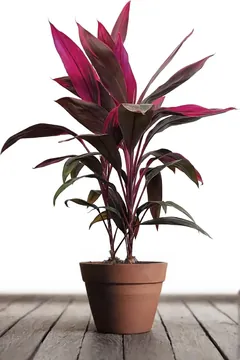
Cordyline fruticosa
- LightTi Plant favors bright, indirect light between 150 and 250…
- WaterWater Ti Plant after the top third of soil has dried. Avoid…
- ToxicityToxic to pets
- Mature sizeIndoors, its eventual height ranges…
Ti Plant is an evergreen tropical shrub with upright, sword-shaped leaves. Depending on the variety, its foliage may show green, red, purple, orange, pink, or cream tones. The bold leaves add height and color without relying on flowers. This easy to intermediate houseplant suits warm rooms with steady humidity and filtered light. It needs more careful watering than a drought-tolerant plant, especially when indoor conditions change.
Full care guide →
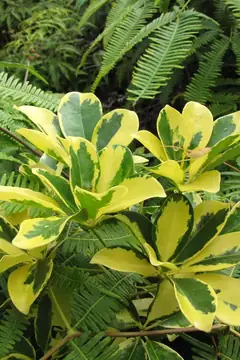
Schefflera arboricola (also listed as Heptapleurum arboricola)
- LightBright, indirect light, ideally three to four hours of…
- WaterWater deeply, then let the top 3 to 4 cm (about 1.5 in) dry…
- ToxicityToxic to pets
- Mature sizeIndoors in a container, 120 to 180 cm…
Umbrella Plant carries glossy leaflets arranged in a circle at the end of each stalk, like the ribs of an umbrella, on an upright woody stem. It is grown indoors as a small tree or bonsai that copes with ordinary rooms and can be kept to size by pruning.
Full care guide →
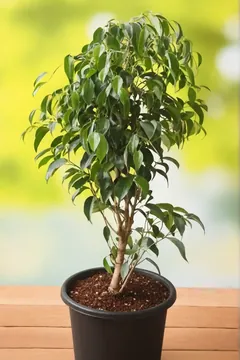
Ficus benjamina
- LightWeeping Fig prefers bright, indirect light at 150 to 250…
- WaterWater Weeping Fig when the topsoil feels dry. Aim for a…
- ToxicityToxic to pets
- Mature sizeIts eventual height is 6 to 10 ft / 1
Weeping Fig is an indoor tree with glossy, oval leaves and long branches that arch downward. Its fine foliage and branching form create a softer outline than many broad-leaved tropical plants. A mature specimen can become a substantial floor plant. This intermediate-care tree suits growers who can provide steady filtered light and consistent conditions. It may need careful placement because changes in light, watering, or temperature can stress the foliage.
Full care guide →
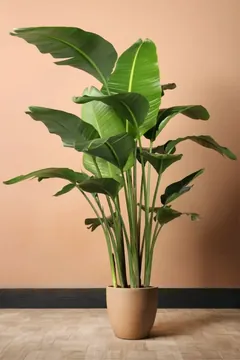
Strelitzia nicolai
- LightWhite Bird of Paradise prefers bright, indirect light at…
- WaterAllow the soil to become almost dry before watering White…
- ToxicityToxic to pets
- Mature sizeIndoors, it can reach 6 to 10 ft / 1
White Bird of Paradise is a large architectural houseplant with broad, glossy leaves shaped like paddles. Upright stems create a bold, tropical screen as the plant matures. Older specimens can produce white and blue flowers, though indoor blooming is rare. This easy to intermediate plant needs generous floor space, height, and bright filtered light. It suits a roomy home better than a crowded shelf or narrow windowsill.
Full care guide →
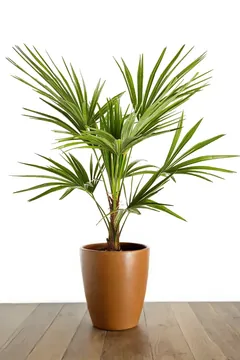
Trachycarpus fortunei
- LightWindmill Palm grows best in bright, indirect light at 150…
- WaterWater Windmill Palm when the topsoil feels dry. Check below…
- ToxicitySafe for cats & dogs
- Mature sizeIndoors, its eventual height is 6 to 8…
Windmill Palm is an evergreen palm with broad, fan-shaped leaves in deep green. Its trunk develops a dark, fibrous covering that adds texture below the canopy. Indoors, the upright form creates a strong floor-level accent without broad branching stems. This easy-care palm suits a bright room with enough height for long-term growth. It needs filtered light, a freely draining palm mix, and regular checks for dry topsoil.
Full care guide →
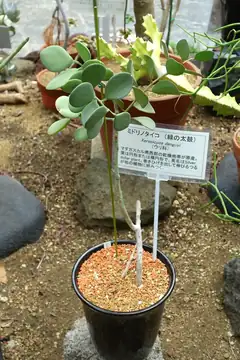
Xerosicyos danguyi
- LightVery bright light with at least four hours of direct sun at…
- WaterSoak the pot until water runs from the drainage holes, then…
- ToxicityNot ASPCA-listed
- Mature sizeStems can reach 5 m (16 ft) in habitat…
Silver Dollar Vine is a climbing succulent with flat, round, silver-green leaves about the size of a coin, spaced along thin grey stems. It comes from dry parts of Madagascar and is grown indoors for the coin-shaped foliage and its habit of trailing from a shelf or climbing a frame.
Full care guide →

Yucca gigantea
- LightYucca Plant prefers bright, indirect light measuring 150 to…
- WaterLet the potting mix dry completely before watering Yucca…
- ToxicityToxic to pets
- Mature sizeIndoors, it can eventually stand 6 to…
Yucca Plant forms a sturdy, palm-like trunk topped by rosettes of stiff, sword-shaped leaves. Its upright structure brings height to a room without a wide, branching canopy. The sharp-looking foliage creates a strong architectural effect. This easy houseplant suits bright interiors and growers who prefer infrequent watering. It can become a large floor specimen, so allow enough vertical space and keep the pointed leaves away from busy walkways.
Full care guide →
Common questions
Where should I place a large indoor plant?
Choose a position with the light required by the species and enough space around its foliage. Avoid locations where the pot or leaves obstruct regular movement.
Do all large indoor plants need direct sun?
No. Bird of Paradise needs bright direct light, while Areca Palm and Chinese Fan Palm favour bright indirect light.
Which listed large plants have an Easy care level?
African Milk Tree, Century Plant and Chinese Fan Palm are among the listed plants marked Easy.