This collection of small indoor plants features 14 compact choices for shelves, desks, windowsills and other places where space is limited. It suits flat dwellers, office workers and collectors who want varied foliage or form without starting with a large floor plant. Air Plant, Baby Rubber Plant, Cooper’s Haworthia and Lemon Button Fern are among the included members. Their compact size does not mean identical care: some prefer bright indirect light, while others have different moisture and humidity needs. Use each plant profile to compare light and care level, and allow enough room for future growth rather than choosing a container or position based only on the plant’s current size.
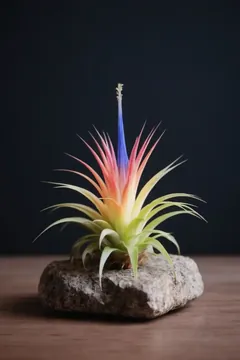
Tillandsia ionantha
- LightAir Plant prefers bright, indirect light at 150 to 250…
- WaterAir Plant needs a complete soak rather than conventional…
- ToxicitySafe for cats & dogs
- Mature sizeIt may grow 6 to 8 in / 15 to 20 cm…
Air Plant is a small bromeliad that forms a tidy rosette without growing in soil. Its narrow, silvery-green leaves absorb moisture and nutrients from the air. The foliage turns red as flowering approaches, adding seasonal color. It suits open displays, mounted arrangements, and small spaces. Care is simple if the plant receives bright filtered light, regular soaking, and enough airflow to dry fully afterward.
Full care guide →
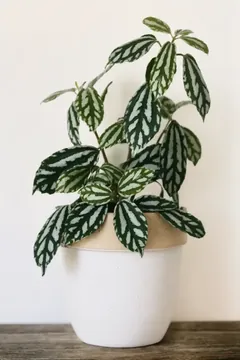
Pilea cadierei
- LightAluminum Plant prefers bright, indirect light between 150…
- WaterWater Aluminum Plant when the topsoil feels dry. Check the…
- ToxicitySafe for cats & dogs
- Mature sizeIt reaches about 1 ft / 30 cm tall and…
Aluminum Plant is a compact evergreen perennial with bushy, upright growth. Its green leaves carry bright silver markings that resemble brushed metal. Stems may spread or droop as they lengthen, making the plant useful in pots or mixed displays. It is easy to maintain under stable indoor conditions. Regular pinching keeps growth dense, while filtered light preserves the strong contrast in its patterned foliage.
Full care guide →
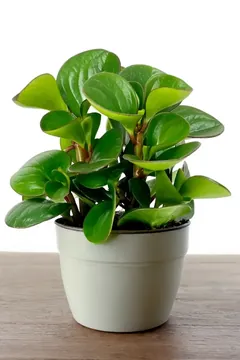
Peperomia obtusifolia
- LightBaby Rubber Plant prefers bright, indirect light between…
- WaterWater Baby Rubber Plant when the topsoil feels dry. Check…
- ToxicitySafe for cats & dogs
- Mature sizesee care guide
Baby Rubber Plant is a compact houseplant with thick, glossy leaves shaped like rounded spoons. The fleshy foliage stores some moisture, helping the plant handle an occasional missed watering. Its tidy, upright form fits shelves, desks, and small rooms. It is easy to maintain under bright filtered light and normal indoor conditions. Several cultivars add white, yellow, or lime markings to the leaves.
Full care guide →
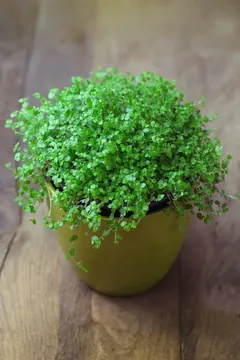
Soleirolia soleirolii
- LightBaby’s Tears prefers bright, indirect light measuring 150…
- WaterKeep Baby’s Tears consistently moist, but not soggy. Check…
- ToxicitySafe for cats & dogs
- Mature sizesee care guide
Baby’s Tears is a mat-forming tropical perennial with countless small leaves. Each round or bean-shaped leaf grows on a short, fleshy stem, creating a dense carpet. The plant spills gently over pot edges and also suits humid terrariums. It is easy to grow when moisture never swings too far. Dry soil can damage the fine growth quickly, while poor drainage may cause stems and roots to rot.
Full care guide →
Haworthia cooperi
- LightCooper’s Haworthia prefers bright indirect light of 150 to…
- WaterLet the soil dry out completely before watering Cooper’s…
- ToxicitySafe for cats & dogs
- Mature sizesee care guide
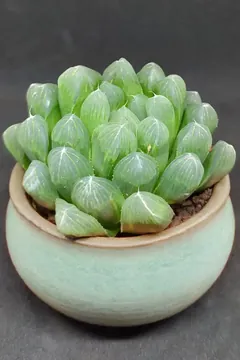
Cooper’s Haworthia is a small succulent that forms tidy clumps of fleshy leaves. Each triangular leaf sits within a compact rosette, often showing a translucent tip that lets light enter. Its limited size makes it useful on windowsills, desks, or narrow shelves. It is easy to maintain when given filtered light, gritty soil, and long drying periods.
Full care guide →
Cryptanthus bivittatus
- LightEarth Star shows its strongest color in bright indirect…
- WaterWater Earth Star when the topsoil feels dry. Apply water to…
- ToxicitySafe for cats & dogs
- Mature sizeIt remains only 3 to 6 in / 8 to 15 cm…
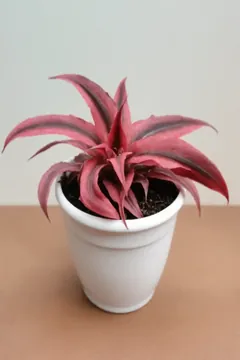
Earth Star is a compact bromeliad that forms a low, spreading rosette. Its strap-shaped leaves have toothed, wavy edges and may show pale green or pink stripes. Unlike tank bromeliads, it grows in soil and should not hold water in its center. Its small size, vivid patterns, and easy care make it useful for shelves, terrariums, and shallow containers.
Full care guide →
Episcia cupreata
- LightFlame Violet prefers bright indirect light at 150 to 250…
- WaterWater Flame Violet when the topsoil feels dry to the touch…
- ToxicitySafe for cats & dogs
- Mature sizeIt stays 4 to 8 in / 10 to 20 cm tall…
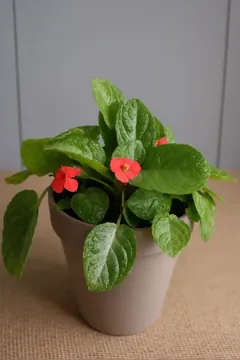
Flame Violet is a trailing evergreen perennial that forms rosettes of soft, velvety leaves. Its stems cascade over container edges, while bright red, funnel-shaped flowers add color. Under suitable conditions, blooming can continue throughout the year. The plant works well in hanging baskets but suits growers who can provide warm air, raised humidity, bright filtered light, and careful watering.
Full care guide →
Corpuscularia lehmannii
- LightIce Plant prefers bright, indirect light measuring 150 to…
- WaterAllow Ice Plant soil to dry completely before watering…
- ToxicitySafe for cats & dogs
- Mature sizesee care guide
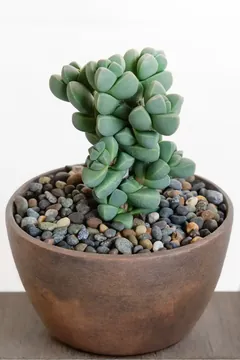
Ice Plant is a compact succulent with plump, angular leaves that have a distinctive triangular shape. The green foliage grows in close pairs and gives the plant a geometric look. Bright yellow, daisy-like flowers may appear in spring or summer. Its small size works well on a bright sill or plant shelf, provided the soil can dry fully between waterings.
Full care guide →
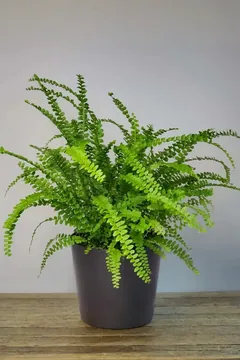
Nephrolepis cordifolia
- LightLemon Button Fern grows best in medium to bright indirect…
- WaterKeep Lemon Button Fern consistently moist without making…
- ToxicityNot ASPCA-listed
- Mature sizesee care guide
Lemon Button Fern is a small fern with a compact outline and rows of rounded, button-like leaflets. Crushing the fronds releases a faint lemon scent. Its modest size works well on shelves, desks, or other areas where a large fern would spread too far. This easy plant suits growers who can keep the mix moist without leaving it saturated.
Full care guide →
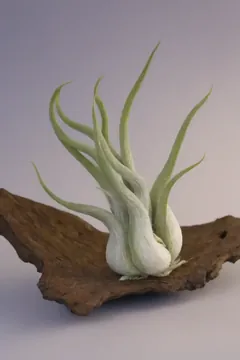
Tillandsia caput-medusae
- LightMedusa’s Head prefers bright, indirect light at 150 to 250…
- WaterMedusa’s Head absorbs moisture through its leaves rather…
- ToxicitySafe for cats & dogs
- Mature sizeA mature plant is usually 6 to 8 in /…
Medusa’s Head is a soil-free air plant with silvery-green leaves that curl and twist outward. Their snake-like form gives the plant its memorable common name. A vivid pink flower can appear during summer. Its small size works well on mounted displays, shelves, or open terrariums. It is easy to place, but regular soaking and good air movement remain important for healthy growth.
Full care guide →
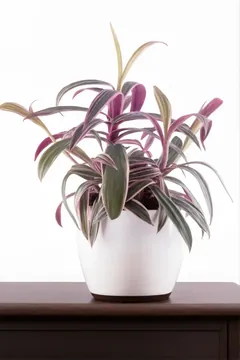
Tradescantia spathacea
- LightMoses in the Cradle prefers bright, indirect light at 150…
- WaterKeep the soil around Moses in the Cradle consistently moist…
- ToxicityToxic to pets
- Mature sizesee care guide
Moses in the Cradle is an evergreen perennial that forms upright rosettes of long, sword-shaped leaves. Their upper surfaces are glossy green, while the undersides are rich purple. Small white flowers with three petals appear inside purple, boat-like bracts among the foliage. The plant offers strong color without relying on blooms and stays compact enough for windowsills, tables, or mixed indoor displays.
Full care guide →
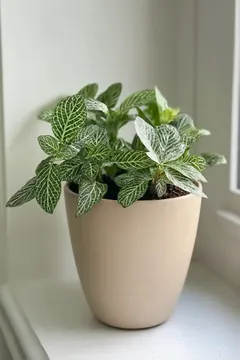
Fittonia albivenis
- LightNerve Plant prefers bright, indirect light at 150 to 250…
- WaterKeep Nerve Plant soil consistently moist, but never soggy…
- ToxicitySafe for cats & dogs
- Mature sizeIt stays low at 6 to 8 in / 15 to 20 cm…
Nerve Plant is a small evergreen perennial with low, creeping stems. Its leaves display a vivid network of white, red, or pink veins against darker foliage. The compact habit works well in terrariums, shallow pots, and small indoor displays. It prefers steady moisture and high humidity, so it needs more attention than a drought-tolerant plant. Choose it for bold leaf detail rather than height or flowers.
Full care guide →
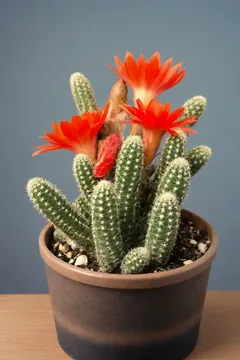
Echinopsis chamaecereus
- LightPeanut Cactus needs bright, direct light between 250 and…
- WaterLet the Peanut Cactus soil dry completely before watering…
- ToxicityNot ASPCA-listed
- Mature sizesee care guide
The Peanut Cactus is a small succulent that forms spreading clumps of short, finger-like stems. Their shape gives the plant its common name. Mature clumps can produce vivid orange or red flowers during spring and summer. Its modest height suits sunny windowsills and compact displays. It is easy to manage when given strong light, gritty soil, and careful watering.
Full care guide →
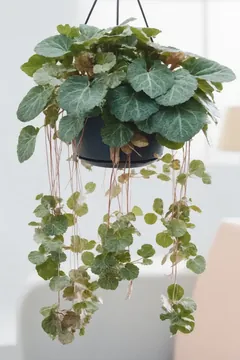
Saxifraga stolonifera
- LightStrawberry Begonia prefers bright indirect light at 150 to…
- WaterWater Strawberry Begonia when the top third of its soil has…
- ToxicitySafe for cats & dogs
- Mature sizeIts low foliage reaches 3 to 9 in / 7
Strawberry Begonia forms low rosettes of rounded, hairy leaves. The upper surfaces are dark green with silver markings, while the undersides are reddish. Slender stems carry tiny white, star-shaped flowers in summer. The plant also produces trailing growth that works well near a pot edge. Despite its common name, it is not a true begonia. It suits growers who can balance filtered light with moderate, even moisture.
Full care guide →
Common questions
Which small indoor plants on this list are marked Easy?
Aluminum Plant, Baby Rubber Plant, Cooper’s Haworthia and Lemon Button Fern are among the entries marked Easy.
Can small indoor plants stay in tiny pots?
Not indefinitely. Repot when roots, drainage or drying behaviour show that the current container no longer supports healthy growth.
Where can I display a small houseplant?
Use a stable shelf, desk or windowsill that provides the plant’s required light. Keep foliage away from damaging heat, cold glass and frequent knocks.