14 indoor plants begin with B: Baby Rubber Plant, Baby’s Tears, Banana Plant, Bird of Paradise, Bird’s Nest Fern, Black Bat Flower. Every entry below shows the facts you came for first: light, water, toxicity and mature size, with the full care guide one click away. 10 of them are safe for cats and dogs.
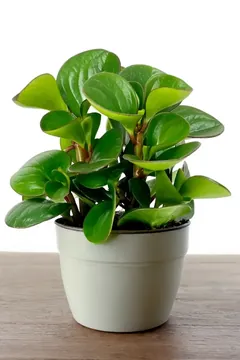
Peperomia obtusifolia
- LightBaby Rubber Plant prefers bright, indirect light between…
- WaterWater Baby Rubber Plant when the topsoil feels dry. Check…
- ToxicitySafe for cats & dogs
- Mature sizesee care guide
Baby Rubber Plant is a compact houseplant with thick, glossy leaves shaped like rounded spoons. The fleshy foliage stores some moisture, helping the plant handle an occasional missed watering. Its tidy, upright form fits shelves, desks, and small rooms. It is easy to maintain under bright filtered light and normal indoor conditions. Several cultivars add white, yellow, or lime markings to the leaves.
Shop this plant
Full care guide →
Care notes
Baby Rubber Plant prefers bright, indirect light between 150 to 250 μmol·m⁻²·s⁻¹.
- Place it 5 ft / 1.5 m from a south, west, or east-facing window, without a direct view of the sky.
- Filter unavoidable sun with a sheer curtain. Harsh direct rays can bleach or scorch the thick leaves.
- Too little light causes slower growth, long stems, and weaker variegation.
- Use a PAR meter or PAR meter app to measure photosynthetically active radiation as PPFD (μmol·m⁻²·s⁻¹).
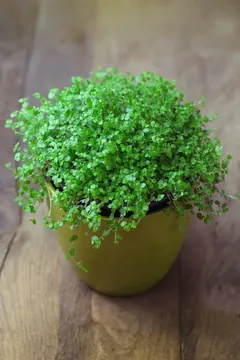
Soleirolia soleirolii
- LightBaby’s Tears prefers bright, indirect light measuring 150…
- WaterKeep Baby’s Tears consistently moist, but not soggy. Check…
- ToxicitySafe for cats & dogs
- Mature sizesee care guide
Baby’s Tears is a mat-forming tropical perennial with countless small leaves. Each round or bean-shaped leaf grows on a short, fleshy stem, creating a dense carpet. The plant spills gently over pot edges and also suits humid terrariums. It is easy to grow when moisture never swings too far. Dry soil can damage the fine growth quickly, while poor drainage may cause stems and roots to rot.
Shop this plant
Full care guide →
Care notes
Baby’s Tears prefers bright, indirect light measuring 150 to 250 μmol·m⁻²·s⁻¹.
- Set it 5 ft / 1.5 m from a south, west, or east-facing window, without a direct view of the sky.
- Use a sheer curtain if sunlight reaches the foliage. Strong direct rays can scorch and dry the tiny leaves.
- Too little light produces loose, thin growth and may weaken variegated coloring.
- A PAR meter or PAR meter app can measure photosynthetically active radiation as PPFD (μmol·m⁻²·s⁻¹).
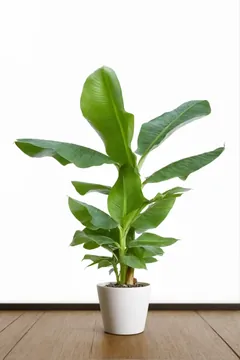
Musa acuminata
- LightBanana Plant prefers bright, indirect light between 150 to…
- WaterKeep Banana Plant's soil consistently moist, but never…
- ToxicitySafe for cats & dogs
- Mature sizeIndoors, it may grow 6 to 8 feet / 1
Banana Plant is a large tropical perennial with huge, glossy leaves shaped like paddles. The foliage rises from a sturdy central form and gives a room a bold canopy. Mature indoor plants may produce orange or purple flowers followed by small, inedible bananas. It needs generous space, warmth, humidity, and steady moisture. Its fast, substantial growth suits bright rooms better than cramped shelves or narrow walkways.
Shop this plant
Full care guide →
Care notes
Banana Plant prefers bright, indirect light between 150 to 250 μmol·m⁻²·s⁻¹.
- Position it 5 ft / 1.5 m from a south, west, or east-facing window, without a direct view of the sky.
- Filter unavoidable direct sunlight with a sheer curtain. Harsh exposure may scorch the broad leaves.
- Too little light slows growth and can produce smaller, weaker foliage.
- A PAR meter or PAR meter app can measure photosynthetically active radiation as PPFD (μmol·m⁻²·s⁻¹).
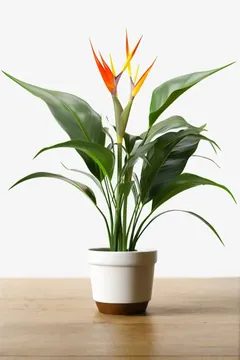
Strelitzia reginae
- LightBird of Paradise needs bright direct light at 250 to 1000…
- WaterLet most of the potting mix dry before watering Bird of…
- ToxicitySafe for cats & dogs
- Mature sizeIndoors, it eventually reaches 3 to 6…
Bird of Paradise is a bold tropical plant with broad, glossy, dark green leaves shaped like banana foliage. Mature plants can produce vivid orange and blue flowers that resemble birds in flight. Its upright form adds height and structure indoors. Grow it if you have strong sunlight, generous floor space, and patience for flowering. Large leaves may need occasional cleaning to show their natural shine.
Shop this plant
Full care guide →
Care notes
Bird of Paradise needs bright direct light at 250 to 1000 μmol·m⁻²·s⁻¹ PPFD. Give it 6+ hours of direct sun each day.
- Placement: keep it within 2 ft / 60 cm of a south or southwest-facing window. It should have a clear view of the sky.
- Measurement: a PAR meter or PAR meter app can check photosynthetically active radiation.
- Too much light: sudden exposure may scorch leaves, so increase direct sun gradually.
- Too little light: growth weakens and flowering becomes less likely. Grow lights can help during shorter winter days.
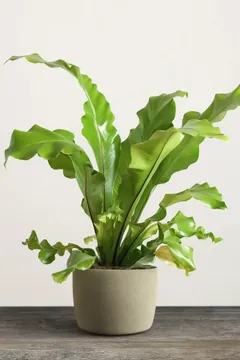
Asplenium nidus
- LightBird’s Nest Fern prefers medium to bright indirect light at…
- WaterKeep the mix evenly moist for Bird’s Nest Fern, but never…
- ToxicitySafe for cats & dogs
- Mature sizeThe fern may eventually stand 3 to 6 ft…
Bird’s Nest Fern forms a neat rosette of bright green, sword-shaped fronds. New growth rises from the central crown and gradually opens outward. Its smooth, undivided leaves give it a cleaner look than many feathery ferns. This plant suits shelves, tables, and shaded rooms with steady warmth. It is manageable for beginners who can provide consistent moisture without soaking the crown or roots.
Shop this plant
Full care guide →
Care notes
Bird’s Nest Fern prefers medium to bright indirect light at 150 to 200 μmol·m⁻²·s⁻¹ PPFD. Direct sun should not strike its tender fronds.
- Placement: set it about 6 ft / 1.8 m from a south, west or east-facing window, without a direct view of the sky.
- Filtering: use a sheer curtain if sunlight would otherwise reach the leaves.
- Measurement: check photosynthetically active radiation with a PAR meter or PAR meter app.
- Too much light can bleach or scorch fronds. Too little light slows new growth and may produce sparse foliage.
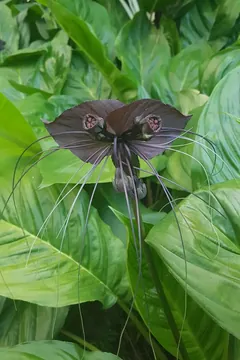
Tacca chantrieri
- LightBlack Bat Flower needs bright indirect light at 150 to 250…
- WaterBlack Bat Flower needs consistently moist soil, but its…
- ToxicityNot ASPCA-listed
- Mature sizeIts eventual height is 2 to 3 ft / 60…
Black Bat Flower is an upright perennial grown for its extraordinary blooms. Broad, dark bracts spread like a bat’s wings around the true flowers, while long whisker-like structures add drama. Green foliage creates a lush base beneath the blooms. This tropical plant appeals to collectors seeking an unusual flowering specimen. It is more demanding than a typical houseplant and needs stable warmth, moisture, humidity, and filtered light.
Shop this plant
Full care guide →
Care notes
Black Bat Flower needs bright indirect light at 150 to 250 μmol·m⁻²·s⁻¹ PPFD. Strong sun can damage its broad foliage.
- Placement: keep it about 5 ft / 1.5 m from a south, west or east-facing window. It should not have a direct view of the sky.
- Filtering: place a sheer curtain between the plant and any unavoidable direct sunlight.
- Measurement: a PAR meter or PAR meter app can measure photosynthetically active radiation.
- Too much light may scorch or bleach leaves. Too little light can weaken growth and reduce the chance of flowering.
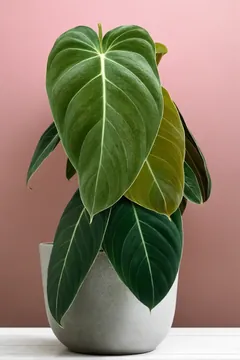
Philodendron melanochrysum
- LightBlack Gold Philodendron grows best in bright indirect light…
- WaterWater Black Gold Philodendron when the topsoil feels dry…
- ToxicityToxic to pets
- Mature sizeIts stated eventual height is 2 ft / 30…
Black Gold Philodendron is a climbing vine with large, heart-shaped leaves. The foliage has a soft velvet surface and deep green to nearly black coloring. Golden veins and highlights become more striking as leaves mature. Give the vine a support if you want larger foliage and a tidy upright shape. It suits collectors who can provide bright filtered light, warmth, humidity, and careful watering.
Shop this plant
Full care guide →
Care notes
Black Gold Philodendron grows best in bright indirect light at 150 to 250 μmol·m⁻²·s⁻¹ PPFD. Protect its dark, velvety leaves from direct sun.
- Placement: position it about 5 ft / 1.5 m from a south, west or east-facing window, without a clear view of the sky.
- Filtering: use a sheer curtain where direct sunlight cannot be avoided.
- Measurement: check photosynthetically active radiation with a PAR meter or PAR meter app.
- Too much light can fade or scorch foliage. Too little light produces slower growth, smaller leaves, and wider gaps along the vine.
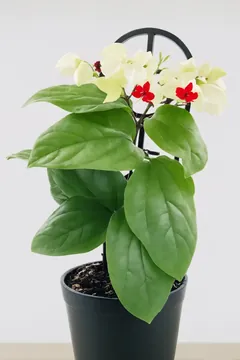
Clerodendrum thomsoniae
- LightBleeding Heart Vine performs best in bright indirect light…
- WaterKeep Bleeding Heart Vine evenly moist, but never leave its…
- ToxicityNot ASPCA-listed
- Mature sizeIts stems may reach 6 to 10 ft / 1
Bleeding Heart Vine is an evergreen climber with glossy green leaves and showy, heart-shaped flowers. Its contrasting blooms appear in clusters and stand out clearly against the foliage. Flexible stems can climb a support or be trained around a frame. This plant suits growers who want a flowering indoor vine and can provide filtered light, steady moisture, and regular shaping as the stems lengthen.
Shop this plant
Full care guide →
Care notes
Bleeding Heart Vine performs best in bright indirect light at 150 to 250 μmol·m⁻²·s⁻¹ PPFD. Filter intense sun to protect the leaves and flowers.
- Placement: set it about 5 ft / 1.5 m from a south, west or east-facing window. Avoid an unobstructed view of the sky.
- Filtering: hang a sheer curtain if direct rays would otherwise touch the plant.
- Measurement: use a PAR meter or PAR meter app to check photosynthetically active radiation.
- Too much light may scorch foliage. Too little light leads to weak vines and fewer flowers.
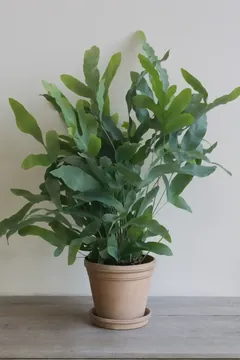
Phlebodium aureum
- LightBlue Star Fern prefers bright indirect light at 150 to 250…
- WaterKeep the soil consistently moist for Blue Star Fern, but do…
- ToxicityNot ASPCA-listed
- Mature sizeIt can eventually reach 2 to 3 feet /…
Blue Star Fern is an evergreen fern that spreads from creeping rhizomes and forms a broad clump. Its arching fronds have an unusual blue-green cast and softly divided outlines. The foliage looks less delicate than many traditional ferns. This easy indoor plant suits shelves, stands, or wide pots. It works well for growers who can maintain light moisture while keeping the rhizomes above dense, soggy soil.
Shop this plant
Full care guide →
Care notes
Blue Star Fern prefers bright indirect light at 150 to 250 μmol·m⁻²·s⁻¹ PPFD. Its blue-green fronds should be shielded from direct sun.
- Placement: keep it about 5 ft / 1.5 m from a south, west or east-facing window, without a direct view of the sky.
- Filtering: a sheer curtain can soften any unavoidable direct sunlight.
- Measurement: check photosynthetically active radiation with a PAR meter or PAR meter app.
- Too much light can bleach or crisp the fronds. Too little light reduces growth and may create a thin, open clump.
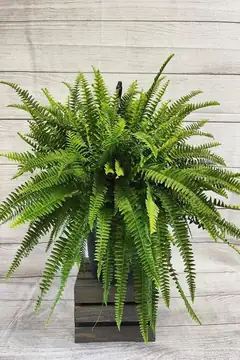
Nephrolepis exaltata
- LightBoston Fern needs bright indirect light at 150 to 250…
- WaterKeep Boston Fern soil consistently moist without leaving it…
- ToxicitySafe for cats & dogs
- Mature sizeIts fronds can stand or trail 1 to 3 ft…
Boston Fern forms a lush fountain of arching fronds covered with many fine leaflets. Mature foliage spills over the pot, making this fern useful on plant stands or in hanging planters. Its soft green texture adds volume without a rigid outline. It suits growers who enjoy full, cascading foliage and can maintain consistent moisture, filtered light, and moderate to high humidity throughout the year.
Shop this plant
Full care guide →
Care notes
Boston Fern needs bright indirect light at 150 to 250 μmol·m⁻²·s⁻¹ PPFD. Keep direct rays off its fine, sensitive fronds.
- Placement: position it about 5 ft / 1.5 m from a south, west or east-facing window. It should not see open sky directly.
- Filtering: use a sheer curtain where sunlight would otherwise fall on the leaves.
- Measurement: a PAR meter or PAR meter app can measure photosynthetically active radiation.
- Too much light causes bleaching and crisp patches. Too little light slows growth, thins the plant, and increases frond loss.
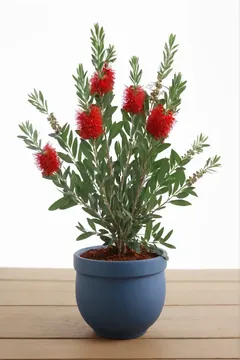
Callistemon citrinus
- LightBottle Brush Plant requires bright direct light at 250 to…
- WaterKeep Bottle Brush Plant soil consistently moist, but not…
- ToxicitySafe for cats & dogs
- Mature sizeIndoors, it may eventually reach 3 to 6…
Bottle Brush Plant is an evergreen shrub with narrow leaves that release a lemon scent. Its dense, cylindrical flower spikes resemble brushes used to clean bottles. The colorful blooms create the plant’s main display, while woody growth gives it a small-shrub form. Indoors, it suits a bright window and needs room for branching. Choose it if you can provide long periods of direct sun and regular shaping.
Shop this plant
Full care guide →
Care notes
Bottle Brush Plant requires bright direct light at 250 to 1000 μmol·m⁻²·s⁻¹ PPFD. Supply at least 6+ hours of direct sunlight daily.
- Placement: set it within 2 ft / 60 cm of a south or southwest-facing window. Keep its view of the sky unobstructed.
- Measurement: use a PAR meter or PAR meter app to assess photosynthetically active radiation.
- Too much light: established plants tolerate strong sun, but sudden exposure can scorch tender growth.
- Too little light: stems weaken and flowering declines. Grow lights can supplement the shorter daylight hours of winter.

Opuntia microdasys
- LightBunny Ears Cactus needs bright direct light at 250 to 1000…
- WaterLet the potting mix dry completely before watering Bunny…
- ToxicityCheck toxicity
- Mature sizeIt eventually grows 1 to 2 ft / 30 to…
Bunny Ears Cactus grows upright from flattened pads that cluster in ear-like pairs. Older specimens can develop a branching, tree-like outline and may produce funnel-shaped flowers. The pads carry many fine glochids rather than harmless fuzz, so careful handling is essential. This cactus suits sunny rooms and growers who prefer infrequent watering. Keep it away from busy walkways, children, and animals that might brush against it.
Shop this plant
Full care guide →
Care notes
Bunny Ears Cactus needs bright direct light at 250 to 1000 μmol·m⁻²·s⁻¹ PPFD. Provide 6+ hours of direct sunlight each day.
- Placement: keep it within 2 ft / 60 cm of a south or southwest-facing window, with a clear view of the sky.
- Measurement: use a PAR meter or PAR meter app to check photosynthetically active radiation.
- Too much light: a plant moved suddenly from shade may scorch, so increase exposure in stages.
- Too little light: pads become weak or stretched. Grow lights can provide support when winter daylight hours are shorter.
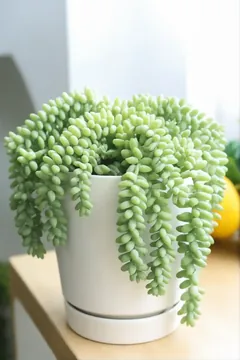
Sedum morganianum
- LightBurro's Tail prefers bright indirect light at 150 to 250…
- WaterAllow the soil to dry completely before watering Burro's…
- ToxicitySafe for cats & dogs
- Mature sizeThe plant spreads about 10 to 12 in /…
Burro's Tail is a trailing succulent with long stems packed tightly with bluish-green leaves. Each fleshy leaf has a rounded tear-drop shape and stores water for dry periods. Mature stems may carry clusters of small, star-shaped flowers. The plant looks best spilling from a hanging pot or high shelf. It suits bright rooms and infrequent watering, but the leaves detach easily when bumped or handled.
Shop this plant
Full care guide →
Care notes
Burro's Tail prefers bright indirect light at 150 to 250 μmol·m⁻²·s⁻¹ PPFD. Strong filtered light helps stems stay compact and full.
- Placement: hang or set it about 5 ft / 1.5 m from a south, west or east-facing window. Avoid a direct view of the sky.
- Filtering: use a sheer curtain if direct sunlight would reach the leaves.
- Measurement: a PAR meter or PAR meter app can check photosynthetically active radiation.
- Too much light may scorch unadapted leaves. Too little light causes stretched stems, loose spacing, and weaker color.
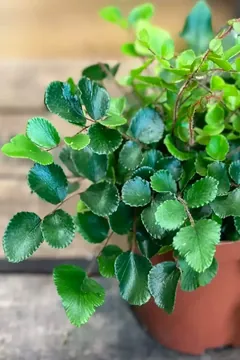
Pellaea rotundifolia
- LightButton Fern grows best in bright indirect light at 150 to…
- WaterWater Button Fern when the topsoil feels dry. Check below…
- ToxicitySafe for cats & dogs
- Mature sizeIts eventual height is 12 to 18 in / 30…
Button Fern is a compact fern with arching, wiry fronds lined by small, rounded leaflets. The neat buttons create a different texture from soft, feathery fern foliage. Its modest size works well on shelves, desks, and narrow plant stands. This plant suits growers who can offer bright filtered light and careful watering. It prefers some drying near the surface but should not endure a long, severe drought.
Shop this plant
Full care guide →
Care notes
Button Fern grows best in bright indirect light at 150 to 250 μmol·m⁻²·s⁻¹ PPFD. Its small leaflets need protection from harsh direct sun.
- Placement: keep it about 5 ft / 1.5 m from a south, west or east-facing window, without an open view of the sky.
- Filtering: use a sheer curtain if direct rays cannot otherwise be avoided.
- Measurement: check photosynthetically active radiation with a PAR meter or PAR meter app.
- Too much light can bleach or crisp the leaflets. Too little light slows growth and produces thin, sparse fronds.
Questions about plants that start with B
How many indoor plants start with B?
14, as listed on this page.
Is Baby Rubber Plant safe for cats and dogs?
Safe for cats & dogs. Baby Rubber Plant is considered non-toxic to people. The ASPCA lists Peperomia obtusifolia as non-toxic to cats and dogs. It is a lower-risk choice for pet-owning homes, but no houseplant should be encouraged as food. Potting mix, fertilizer, and large swallowed pieces can still cause problems.
How much light does a Baby Rubber Plant need?
Baby Rubber Plant prefers bright, indirect light between 150 to 250 μmol·m⁻²·s⁻¹.Place it 5 ft / 1.5 m from a south, west, or east-facing window, without a direct view of the sky. Filter unavoidable sun with a sheer curtain. Harsh direct rays can bleach or scorch the thick leaves. Too little light c
How do I know which of these plants suits my room?
Sort by the facts strip: low-light plants for north-facing rooms, pet-safe names if you have a cat or dog, and the smaller species for shelves and desks.