LightTi Plant favors bright, indirect light between 150 and 250…
WaterWater Ti Plant after the top third of soil has dried. Avoid…
ToxicityToxic to pets
Mature sizeIndoors, its eventual height ranges…
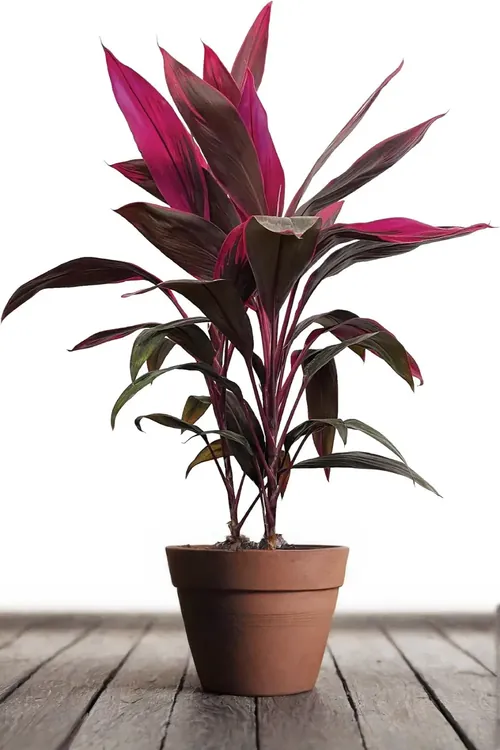
Ti Plant is an evergreen tropical shrub with upright, sword-shaped leaves. Depending on the variety, its foliage may show green, red, purple, orange, pink, or cream tones. The bold leaves add height and color without relying on flowers. This easy to intermediate houseplant suits warm rooms with steady humidity and filtered light. It needs more careful watering than a drought-tolerant plant, especially when indoor conditions change.
Care data checked 25 September 2026 · Dany · A-Z Plants
Light requirements
Ti Plant favors bright, indirect light between 150 and 250 μmol·m⁻²·s⁻¹. Good light helps colorful varieties retain their strongest leaf tones.
Place the plant 5 ft / 1.5m from a south, west or east-facing window.
Use a site without a direct view of the sky. Filter unavoidable direct sunlight through a sheer curtain.
Excess sun can scorch broad leaves. Poor light may weaken growth and dull colorful foliage.
Check photosynthetically active radiation as PPFD (μmol·m⁻²·s⁻¹) with a PAR meter or PAR meter app.
Watering
Water Ti Plant after the top third of soil has dried. Avoid letting the whole root ball remain dry for long, but never keep it continuously saturated.
Insert a knitting needle or chopstick at several depths to judge how much moisture remains.
Use room temperature rainwater, distilled water, or reverse osmosis water. Water evenly until runoff leaves the drainage holes.
Allow the pot to drain completely before returning it to a saucer or decorative planter. Drainage holes are essential because standing water can cause root rot.
Water considerably less in winter, when the plant is not actively growing. Long dry periods may cause curling and crispy leaf edges, especially in warm indoor air.
Soil
A specialty organic potting mix made for palms provides the drainage and structure Ti Plant needs. Use it in a container with open drainage holes so the roots receive air.
For a homemade mix, combine 2 parts Coir, 2 parts Coarse Sand, and 1 part Pumice.
Blend the ingredients well and avoid packing them tightly.
Feeding
Apply an organic all-purpose fertilizer every 2 to 4 weeks from March through October. Use the recommended strength and feed only moist soil. Do not increase the amount to deepen leaf color, and stop routine feeding during the slower winter months.
Temperature & humidity
Ti Plant prefers warmth between 64 and 95 °F / 18 to 35 °C. Maintain humidity within 40 to 60%. Keep the plant away from cold drafts and strong vent air, since sudden changes can damage the long leaf blades.
What to expect
Ti Plant can mature in about 2 years. Indoors, its eventual height ranges from 3 to 10 ft / 0.9 to 3 m. A mature specimen may spread 2 to 4 ft / 0.6 to 1.2 m.
Varieties & cultivars
C. fruticosa ‘Hawaiian Boy’: Dark purple to red foliage creates a strong upright display.
C. fruticosa ‘Florida Red’: Strap-like dark purple or red leaves carry red-pink variegation.
C. fruticosa ‘Candy Cane’: Green leaves have cream streaks and pink margins. This form looks best in dappled light.
C. fruticosa ‘Black Magic’: Deep purple-black foliage gives this cultivar its dramatic appearance.
C. fruticosa ‘Morning Sunshine’: Light green leaves are splashed with cream, purple, and pink.
Ti Plant: questions
Is Ti Plant toxic to cats and dogs?
Ti Plant is toxic to people and pets, including cats and dogs. Keep its colorful leaves away from children and animals that might chew them. Remove fallen material promptly and…
How much light does Ti Plant need?
Ti Plant favors bright, indirect light between 150 and 250 μmol·m⁻²·s⁻¹. Good light helps colorful varieties retain their strongest leaf tones. - Place the plant 5 ft / 1.5m from a south, west or east-facing window. - Use a site without a direct view of the sky. Filter unavoidable direct sunlight…
How often should I water Ti Plant?
Water Ti Plant after the top third of soil has dried. Avoid letting the whole root ball remain dry for long, but never keep it continuously saturated. - Insert a knitting needle or chopstick at several depths to judge how much moisture remains. - Use room temperature rainwater, distilled water, or…
How big does Ti Plant get?
Mature size indoors: Indoors, its eventual height ranges….