This collection of tropical indoor plants includes 36 choices valued for bold foliage, distinctive form or colourful flowers. It suits readers who can match a plant with the available warmth, light, moisture and space rather than assuming every tropical species wants identical conditions. African Mask Plant, Banana Plant, Cat Palm and Christmas Cactus are among the included members. Care levels range from Easy to Intermediate through Intermediate to Advanced, and light preferences vary from lower indirect levels to bright direct exposure. Use the individual profiles to compare requirements before choosing, especially if your room has dry air, strong seasonal temperature changes or limited window light.
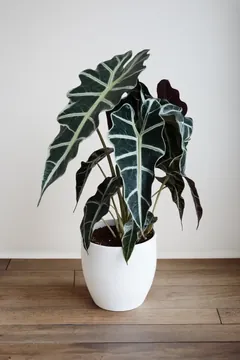
Alocasia × mortfontanensis
- LightAfrican Mask Plant grows best in bright, indirect light…
- WaterKeep African Mask Plant evenly moist, but never leave the…
- ToxicityToxic to pets
- Mature sizeIndoors, it can grow 2 to 3 ft / 60 to…
African Mask Plant is a bold tropical foliage plant with broad, glossy, arrow-shaped leaves. Deep green surfaces highlight strong silver-white veins. Its upright form brings structure and contrast to an indoor collection. It suits growers who can provide steady moisture, warmth, humidity, and filtered light. Care is more demanding than for many common houseplants, especially during winter dormancy.
Full care guide →
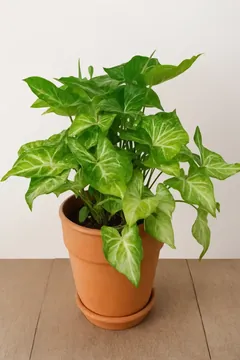
Syngonium podophyllum
- LightArrowhead Plant accepts low to medium light between 50 to…
- WaterKeep Arrowhead Plant consistently moist, but never soggy…
- ToxicityToxic to pets
- Mature sizeIt can reach 1 to 2 ft / 30 to 60 cm…
Arrowhead Plant is a tropical vine with glossy leaves that begin in a clear arrow shape. Foliage may be solid green or patterned with white, cream, or pink. Young plants stay compact, while older stems climb or trail. It is adaptable and easy to grow in lower indoor light. This plant suits shelves, hanging pots, or supports, but its toxic tissues require careful placement around pets and children.
Full care guide →
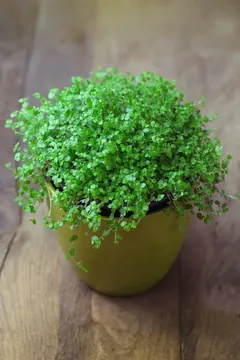
Soleirolia soleirolii
- LightBaby’s Tears prefers bright, indirect light measuring 150…
- WaterKeep Baby’s Tears consistently moist, but not soggy. Check…
- ToxicitySafe for cats & dogs
- Mature sizesee care guide
Baby’s Tears is a mat-forming tropical perennial with countless small leaves. Each round or bean-shaped leaf grows on a short, fleshy stem, creating a dense carpet. The plant spills gently over pot edges and also suits humid terrariums. It is easy to grow when moisture never swings too far. Dry soil can damage the fine growth quickly, while poor drainage may cause stems and roots to rot.
Full care guide →
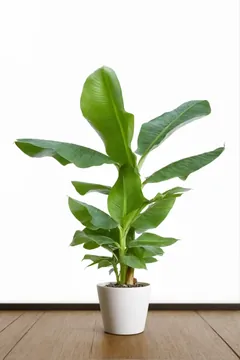
Musa acuminata
- LightBanana Plant prefers bright, indirect light between 150 to…
- WaterKeep Banana Plant's soil consistently moist, but never…
- ToxicitySafe for cats & dogs
- Mature sizeIndoors, it may grow 6 to 8 feet / 1
Banana Plant is a large tropical perennial with huge, glossy leaves shaped like paddles. The foliage rises from a sturdy central form and gives a room a bold canopy. Mature indoor plants may produce orange or purple flowers followed by small, inedible bananas. It needs generous space, warmth, humidity, and steady moisture. Its fast, substantial growth suits bright rooms better than cramped shelves or narrow walkways.
Full care guide →
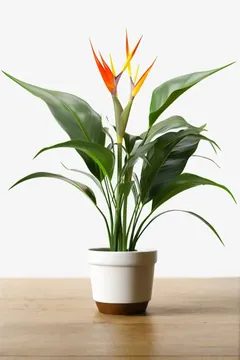
Strelitzia reginae
- LightBird of Paradise needs bright direct light at 250 to 1000…
- WaterLet most of the potting mix dry before watering Bird of…
- ToxicitySafe for cats & dogs
- Mature sizeIndoors, it eventually reaches 3 to 6…
Bird of Paradise is a bold tropical plant with broad, glossy, dark green leaves shaped like banana foliage. Mature plants can produce vivid orange and blue flowers that resemble birds in flight. Its upright form adds height and structure indoors. Grow it if you have strong sunlight, generous floor space, and patience for flowering. Large leaves may need occasional cleaning to show their natural shine.
Full care guide →
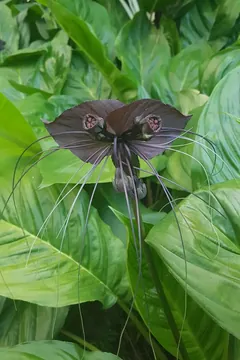
Tacca chantrieri
- LightBlack Bat Flower needs bright indirect light at 150 to 250…
- WaterBlack Bat Flower needs consistently moist soil, but its…
- ToxicityNot ASPCA-listed
- Mature sizeIts eventual height is 2 to 3 ft / 60…
Black Bat Flower is an upright perennial grown for its extraordinary blooms. Broad, dark bracts spread like a bat’s wings around the true flowers, while long whisker-like structures add drama. Green foliage creates a lush base beneath the blooms. This tropical plant appeals to collectors seeking an unusual flowering specimen. It is more demanding than a typical houseplant and needs stable warmth, moisture, humidity, and filtered light.
Full care guide →
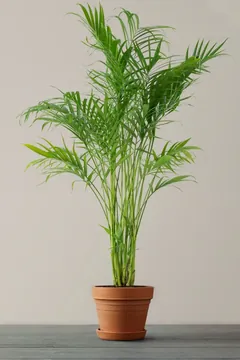
Chamaedorea cataractarum
- LightCat Palm prefers bright indirect light at 150 to 250…
- WaterWater Cat Palm when the topsoil feels dry. Check below the…
- ToxicitySafe for cats & dogs
- Mature sizeThe clump can spread 3 to 5 ft / 0
Cat Palm is a small, clustering palm with many arching, feathery fronds. Its bushy growth rises from the base rather than forming one tall, bare trunk. The foliage brings a soft tropical look to floors and broad plant stands. This palm suits a bright room with space for its widening crown. It needs more moisture and humidity than drought-tolerant palms, so regular checks are important.
Full care guide →
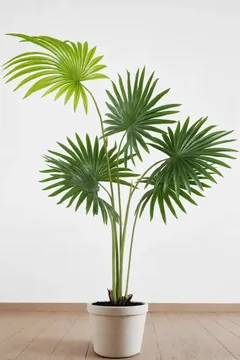
Livistona chinensis
- LightChinese Fan Palm grows best in bright indirect light of 150…
- WaterWater the Chinese Fan Palm when the topsoil feels dry…
- ToxicitySafe for cats & dogs
- Mature sizeIt may eventually reach 6 to 10 feet / 1
The Chinese Fan Palm has large, glossy fronds divided into broad fan-like sections. A mature frond can measure up to 2 ft / 60 cm across, creating a bold tropical outline. Indoors, it becomes a substantial floor plant without needing complicated care. It suits bright rooms with enough space for its widening crown and arching foliage.
Full care guide →
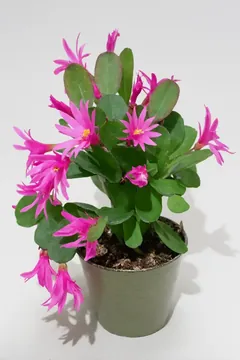
Schlumbergera bridgesii
- LightChristmas Cactus performs best in bright indirect light of…
- WaterWater Christmas Cactus when the topsoil feels dry. Although…
- ToxicitySafe for cats & dogs
- Mature sizeIt can reach 1 to 2 ft / 30 to 60 cm…
Christmas Cactus is a tropical jungle cactus rather than a desert species. It forms long, flat stems made from linked segments, with bright flowers appearing near the tips. Blooms may be red, pink, or white and usually arrive around the winter holidays. It is easy to grow indoors and works well in pots where its arching stems can hang freely.
Full care guide →
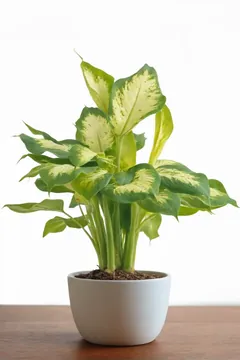
Dieffenbachia
- LightDumb Cane prefers bright indirect light at 150 to 250…
- WaterWater Dumb Cane once the topsoil feels dry. Check the…
- ToxicityToxic to pets
- Mature sizeIts eventual height is 3 to 6 ft / 0
Dumb Cane is a tropical perennial valued for its broad, patterned foliage. Depending on the selection, its leaves combine green with cream or white. The bold markings brighten rooms without requiring direct sun. It develops an upright, leafy form that can become a sizable floor plant. Grow it only where its toxic foliage will remain safely beyond the reach of children and pets.
Full care guide →
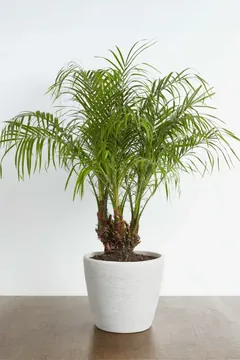
Phoenix roebelenii
- LightDwarf Date Palm needs bright indirect light at 150 to 250…
- WaterWater Dwarf Date Palm when the topsoil feels dry. Check the…
- ToxicitySafe for cats & dogs
- Mature sizeIndoors, it can reach 6 to 8 ft / 1
Dwarf Date Palm is a slow-growing palm with a slim trunk and a full crown of dark green fronds. Each frond arches outward and carries many fine, feathery leaflets. Its graceful shape brings a tropical look to bright indoor spaces. It suits growers who can provide steady moisture, filtered light, and enough room for the spreading crown.
Full care guide →

Alocasia gageana
- LightDwarf Elephant Ear prefers bright indirect light at 150 to…
- WaterWater Dwarf Elephant Ear when the topsoil becomes dry to…
- ToxicityToxic to pets
- Mature sizeIt can eventually reach 3 to 4 ft / 90…
Dwarf Elephant Ear is an evergreen perennial with broad leaves shaped like elephant ears. Each leaf rises on a green petiole, creating a full tropical clump. Its smaller scale makes it easier to place indoors than many large Alocasias. It suits attentive growers who can maintain warm conditions, high humidity, bright filtered light, and evenly managed soil moisture.
Full care guide →
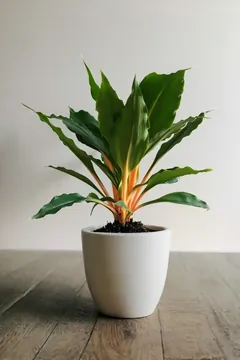
Chlorophytum orchidastrum
- LightFire Flash Plant prefers bright indirect light at 150 to…
- WaterWater Fire Flash Plant when the topsoil feels dry to the…
- ToxicitySafe for cats & dogs
- Mature sizeIt can grow 12 to 18 in / 30 to 45 cm…
Fire Flash Plant is a clumping houseplant with arching green leaves and vivid orange stems. Mature plants may send out long runners tipped with small plantlets called spiderettes. The contrast between green foliage and orange growth gives it a bright tropical look. Its manageable size and straightforward care suit shelves, stands, or tabletops with strong filtered light.
Full care guide →
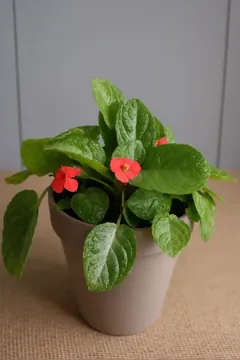
Episcia cupreata
- LightFlame Violet prefers bright indirect light at 150 to 250…
- WaterWater Flame Violet when the topsoil feels dry to the touch…
- ToxicitySafe for cats & dogs
- Mature sizeIt stays 4 to 8 in / 10 to 20 cm tall…
Flame Violet is a trailing evergreen perennial that forms rosettes of soft, velvety leaves. Its stems cascade over container edges, while bright red, funnel-shaped flowers add color. Under suitable conditions, blooming can continue throughout the year. The plant works well in hanging baskets but suits growers who can provide warm air, raised humidity, bright filtered light, and careful watering.
Full care guide →
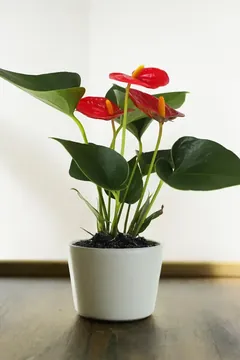
Anthurium andraeanum
- LightFlamingo Flower prefers bright, indirect light at 150 to…
- WaterWater Flamingo Flower once the topsoil feels dry. Test the…
- ToxicityToxic to pets
- Mature sizeIndoors, its eventual height is 1 to 2…
Flamingo Flower is an upright tropical plant that naturally grows as an epiphyte. It has broad, glossy leaves with a clear heart shape. Colorful spathes rise above the foliage and provide its main indoor display. This plant suits someone who can offer bright filtered light, an airy root mix and steady moisture without leaving the roots waterlogged.
Full care guide →
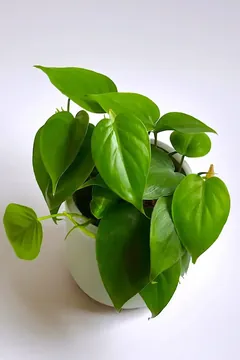
Philodendron hederaceum
- LightHeartleaf Philodendron prefers medium to bright indirect…
- WaterWater Heartleaf Philodendron when the topsoil feels dry…
- ToxicityToxic to pets
- Mature sizesee care guide
Heartleaf Philodendron is an evergreen tropical vine with glossy, heart-shaped leaves in several shades of green. Its flexible stems can trail from a shelf or climb a support. The plant adapts well to ordinary indoor rooms and responds to basic pruning. It suits beginners who want easy foliage, provided the roots receive drainage and the leaves are protected from harsh direct sun.
Full care guide →
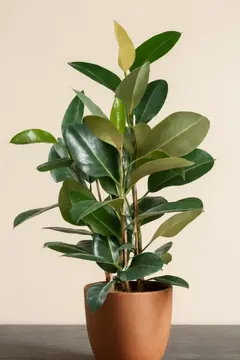
Ficus elastica
- LightIndian Rubber Tree grows best in bright, indirect light at…
- WaterWater Indian Rubber Tree when the topsoil becomes dry to…
- ToxicityToxic to pets
- Mature sizeIts eventual height is 6 to 10 ft / 1
Indian Rubber Tree is a tropical evergreen from Southeast Asia. It develops large, glossy leaves with a thick, leathery feel and a strong upright framework. Young plants fit easily into indoor displays, while older specimens become substantial floor plants. It suits growers who want bold foliage and can provide stable warmth, bright filtered light, drainage and enough room for long-term growth.
Full care guide →
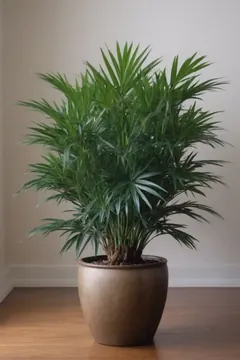
Rhapis excelsa
- LightLady Palm prefers bright, indirect light between 150 and…
- WaterWater Lady Palm after the topsoil feels dry. Check the mix…
- ToxicityNot ASPCA-listed
- Mature sizesee care guide
Lady Palm is a shade-tolerant palm that grows as a cluster of slender stems. Large, glossy leaves divide into broad fan-shaped segments, creating a full and orderly outline. Its upright form works well as a floor plant where softer tropical foliage is wanted. This easy palm suits indoor growers who can offer indirect light, regular watering, and enough space for a wide clump.
Full care guide →
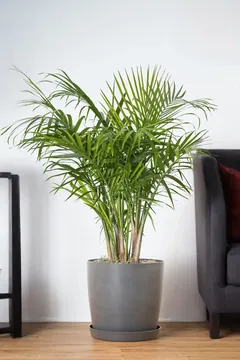
Ravenea rivularis
- LightMajesty Palm grows best in bright, indirect light at 150 to…
- WaterKeep Majesty Palm soil consistently moist without making it…
- ToxicityNot ASPCA-listed
- Mature sizeIts broad fronds may create a mature…
Majesty Palm is a tropical palm with large, feathery fronds that form a graceful indoor canopy. It comes from Madagascar, where it naturally grows near riverbanks and across swampy lowlands. That background explains its preference for steady moisture and humid air. This intermediate plant suits a roomy, bright position and a grower prepared to monitor both watering and humidity closely.
Full care guide →
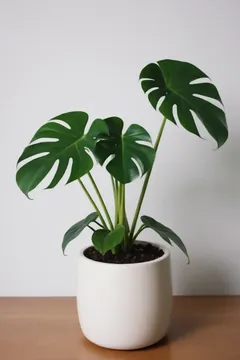
Rhaphidophora tetrasperma
- LightMini Monstera prefers bright, indirect light measuring 150…
- WaterWater Mini Monstera when the topsoil feels dry. Check the…
- ToxicityToxic to pets
- Mature sizeSupported vines can grow 6 to 10 ft / 1
Mini Monstera is a fast-climbing tropical vine with glossy green leaves and deep natural splits. Its foliage resembles a smaller Monstera deliciosa, though the plants are not the same species. The vine benefits from a pole, trellis, or other vertical support. It suits growers who want a dramatic climber without the huge leaves of a mature Swiss Cheese Plant, but its sap and foliage are toxic.
Full care guide →
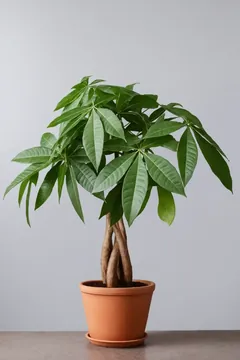
Pachira aquatica
- LightMoney Tree prefers bright, indirect light at 150 to 250…
- WaterWater Money Tree once the topsoil feels dry. Check the soil…
- ToxicitySafe for cats & dogs
- Mature sizeIt eventually reaches 3 to 6 ft / 0
Money Tree is a small indoor tree with glossy leaves divided into hand-like clusters. Several young trunks are often braided to create the familiar decorative form. The plant is linked with prosperity and good luck, making it a common gift. It grows well in bright filtered light and fits floor pots or large tabletops while young. Choose it for tropical foliage, an upright shape, and manageable indoor care.
Full care guide →
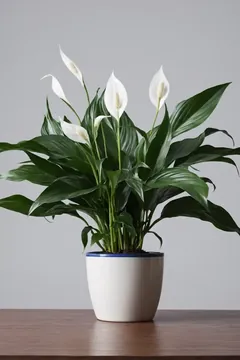
Spathiphyllum
- LightPeace Lily performs best in bright, indirect light…
- WaterKeep Peace Lily soil consistently moist without making it…
- ToxicityToxic to pets
- Mature sizeDepending on the variety, it may grow 1…
The Peace Lily is a leafy tropical grown for glossy, dark green foliage and upright white spathes. These flower-like structures are modified leaves surrounding the true flowers. Its full shape works well on floors, desks, and shaded indoor displays. It is easy to maintain when moisture stays steady, though its toxicity makes careful placement important in homes with pets or young children.
Full care guide →
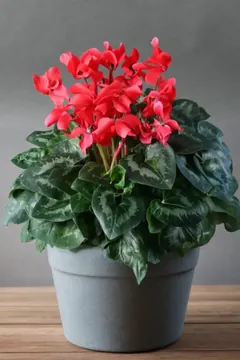
Cyclamen persicum
- LightPersian Cyclamen grows best in bright, indirect light…
- WaterWater Persian Cyclamen when the topsoil feels dry. Check…
- ToxicityToxic to pets
- Mature sizeIt eventually reaches 6 to 19 inches /…
Persian Cyclamen is a tuberous perennial valued for fragrant flowers from fall through late spring. Its dark green, heart-shaped leaves often carry silver or gray marbling. The flowers and patterned foliage make it useful for cool indoor displays. It suits growers who can provide bright filtered light, careful watering, and cooler conditions than most tropical houseplants prefer.
Full care guide →

Beaucarnea recurvata
- LightPonytail Palm prefers bright, indirect light between 150…
- WaterAllow Ponytail Palm soil to dry completely before watering…
- ToxicitySafe for cats & dogs
- Mature sizeIndoors, it may reach 6 to 10 feet / 1
Ponytail Palm is a tree-like succulent rather than a true palm. Its swollen base, called a caudex, stores water. Long, narrow leaves arch from the top and droop like a ponytail. The sculptural form suits bright rooms and requires less frequent watering than tropical palms. It is a good choice for growers comfortable letting soil dry fully between waterings.
Full care guide →
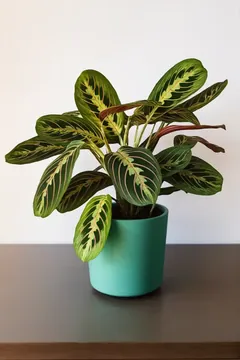
Maranta leuconeura
- LightPrayer Plant thrives in bright, indirect light from 150 to…
- WaterWater Prayer Plant when the topsoil feels dry. Check before…
- ToxicitySafe for cats & dogs
- Mature sizeIts height is usually 12 to 18 inches /…
Prayer Plant is a tropical foliage plant with bold patterns across low, spreading leaves. The leaves lift and fold upward at night, creating the effect of praying hands. Its changing posture and colorful markings make it appealing on shelves or in hanging displays. It suits growers who can supply warm temperatures, filtered light, regular moisture, and moderate humidity without leaving the roots waterlogged.
Full care guide →
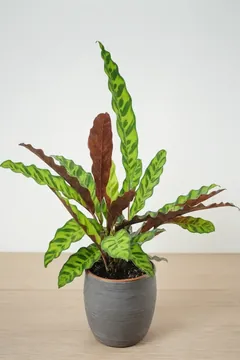
Goeppertia insignis
- LightRattlesnake Plant grows best in bright indirect light at…
- WaterKeep Rattlesnake Plant consistently moist without making…
- ToxicitySafe for cats & dogs
- Mature sizeAt full size, it stands about 1 to 2 ft…
Rattlesnake Plant is an evergreen foliage plant with long, lance-shaped leaves. Dark green markings lie over an olive-toned surface, while each leaf has a vivid purple underside. The bold contrast makes it useful as a decorative floor or tabletop plant. It suits growers who can maintain steady moisture, warm temperatures, and raised humidity. Its care is less forgiving than many common houseplants.
Full care guide →
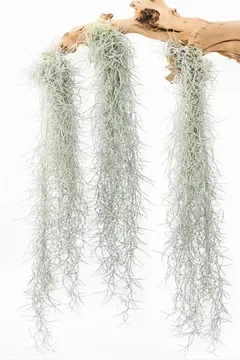
Tillandsia usneoides
- LightSpanish Moss prefers bright indirect light at 150 to 250…
- WaterSoak the entire Spanish Moss plant in rainwater for 20 to…
- ToxicitySafe for cats & dogs
- Mature sizeA hanging mass may spread about 12 to…
Spanish Moss is an epiphytic air plant with long, cascading strands of silvery-green foliage. It grows without soil and takes moisture from the air and regular soaking. Although often seen hanging from trees in tropical and subtropical areas, it is non-parasitic and does not feed on its support. Indoors, it suits hanging displays where air can move freely through the strands and excess water can drain away.
Full care guide →
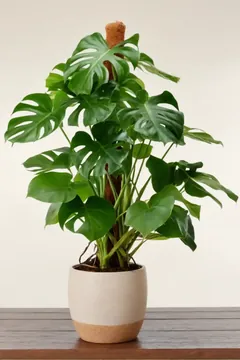
Monstera deliciosa
- LightSwiss Cheese Plant prefers bright, indirect light between…
- WaterWater Swiss Cheese Plant after the topsoil becomes dry to…
- ToxicityToxic to pets
- Mature sizeIndoors, it can reach 6 to 8 ft / 1
Swiss Cheese Plant is a tropical climbing vine with large, glossy green leaves. As the foliage matures, it forms deep splits and internal holes called fenestrations. A support allows the stems to climb and display larger leaves. This easy houseplant creates a bold indoor feature, but its eventual size needs planning. It suits a bright room where there is enough floor space and vertical support for mature growth.
Full care guide →
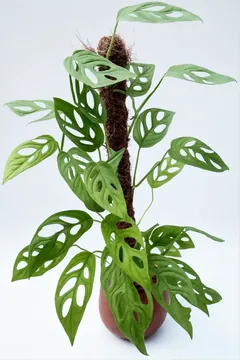
Monstera adansonii
- LightSwiss Cheese Vine grows well under bright, indirect light…
- WaterWater Swiss Cheese Vine when the topsoil feels dry. Check…
- ToxicityToxic to pets
- Mature sizeDepending on its support, it can grow 3…
Swiss Cheese Vine is a tropical climber with green leaves pierced by natural holes. These fenestrations give the foliage its familiar Swiss cheese appearance. The ‘Narrow Form’ has smooth, elongated leaves and a lighter visual texture. Stems can climb a support or trail from a hanging container. This easy houseplant suits smaller rooms better than larger Monsteras, though it still needs bright filtered light and regular pruning or guidance.
Full care guide →
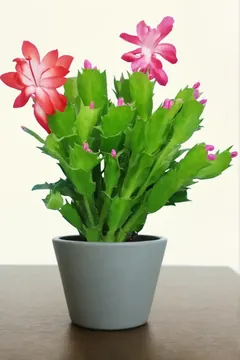
Schlumbergera truncata
- LightThanksgiving Cactus prefers bright, indirect light of 150…
- WaterWater Thanksgiving Cactus when the topsoil feels dry…
- ToxicitySafe for cats & dogs
- Mature sizeIts eventual height is 6 to 12 in / 15…
Thanksgiving Cactus is a tropical cactus grown for colorful tubular flowers that open around Thanksgiving. Instead of desert spines and rounded stems, it forms flat, linked segments with pointed edges that resemble crab claws. Its arching growth works well in pots and hanging containers. This easy houseplant offers seasonal flowers without needing desert-dry treatment. It prefers filtered light, regular drainage, and less water during slower winter growth.
Full care guide →
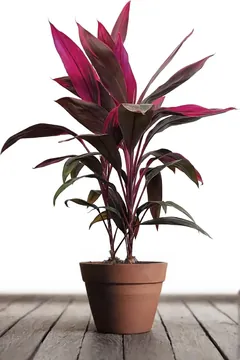
Cordyline fruticosa
- LightTi Plant favors bright, indirect light between 150 and 250…
- WaterWater Ti Plant after the top third of soil has dried. Avoid…
- ToxicityToxic to pets
- Mature sizeIndoors, its eventual height ranges…
Ti Plant is an evergreen tropical shrub with upright, sword-shaped leaves. Depending on the variety, its foliage may show green, red, purple, orange, pink, or cream tones. The bold leaves add height and color without relying on flowers. This easy to intermediate houseplant suits warm rooms with steady humidity and filtered light. It needs more careful watering than a drought-tolerant plant, especially when indoor conditions change.
Full care guide →
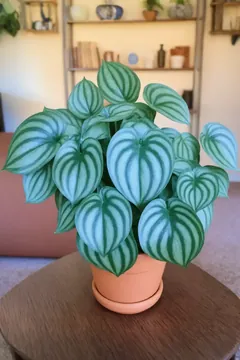
Peperomia argyreia
- LightWatermelon Peperomia prefers medium to bright indirect…
- WaterWater Watermelon Peperomia when the topsoil feels dry. Its…
- ToxicitySafe for cats & dogs
- Mature sizesee care guide
Watermelon Peperomia is a compact perennial houseplant with rounded leaves on upright stems. Green and silver bands run across the foliage, creating a pattern similar to watermelon rind. The leaf surface also has a subtle shimmer. Its small size works well on desks, shelves, and narrow windowsills. This easy plant suits growers who want bold foliage without the floor space or support required by a large tropical specimen.
Full care guide →
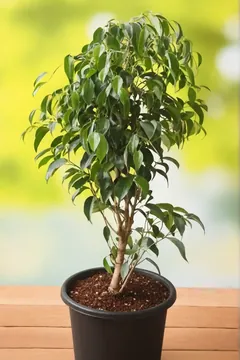
Ficus benjamina
- LightWeeping Fig prefers bright, indirect light at 150 to 250…
- WaterWater Weeping Fig when the topsoil feels dry. Aim for a…
- ToxicityToxic to pets
- Mature sizeIts eventual height is 6 to 10 ft / 1
Weeping Fig is an indoor tree with glossy, oval leaves and long branches that arch downward. Its fine foliage and branching form create a softer outline than many broad-leaved tropical plants. A mature specimen can become a substantial floor plant. This intermediate-care tree suits growers who can provide steady filtered light and consistent conditions. It may need careful placement because changes in light, watering, or temperature can stress the foliage.
Full care guide →
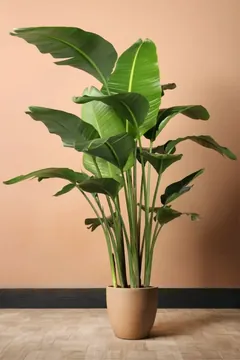
Strelitzia nicolai
- LightWhite Bird of Paradise prefers bright, indirect light at…
- WaterAllow the soil to become almost dry before watering White…
- ToxicityToxic to pets
- Mature sizeIndoors, it can reach 6 to 10 ft / 1
White Bird of Paradise is a large architectural houseplant with broad, glossy leaves shaped like paddles. Upright stems create a bold, tropical screen as the plant matures. Older specimens can produce white and blue flowers, though indoor blooming is rare. This easy to intermediate plant needs generous floor space, height, and bright filtered light. It suits a roomy home better than a crowded shelf or narrow windowsill.
Full care guide →
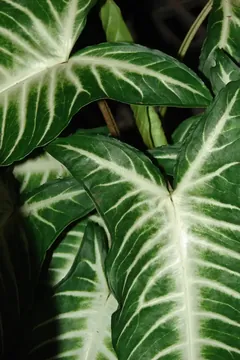
Phyllotaenium lindenii, long sold as Xanthosoma lindenii or Caladium lindenii
- LightBright, indirect light with an hour or two of gentle…
- WaterWater when the top 2 to 3 cm (about an inch) of mix dries…
- ToxicityTreat as toxic
- Mature sizeLeaf blades reach up to 60 cm (24 in)…
A tropical aroid with arrow-shaped, mid-green leaves marked by thick ivory veins, so each leaf looks hand painted. It grows from a creeping underground rhizome and is kept indoors as a foliage plant, with leaves rising on stalks that carry purple-black lengthwise stripes.
Full care guide →
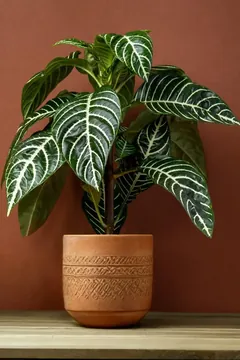
Aphelandra squarrosa
- LightZebra Plant prefers bright, indirect light in the 150 to…
- WaterKeep Zebra Plant soil consistently moist but never soggy…
- ToxicitySafe for cats & dogs
- Mature sizeIts eventual height is 2 to 4 ft / 0
Zebra Plant is a tropical evergreen shrub with dark green leaves crossed by bold white or yellow veins. The sharp contrast resembles zebra stripes and gives the plant year-round interest. Under suitable indoor conditions, upright spikes of bright yellow flowers may appear. This intermediate-care houseplant suits growers who can maintain even moisture, warmth, and humidity. It is less forgiving of dry soil and sudden environmental changes than many foliage plants.
Full care guide →
Common questions
Do tropical indoor plants all need high humidity?
No. Their preferences differ, so check the individual species page rather than applying one humidity target to the entire group.
Which listed tropical plants have an Easy care level?
Chinese Fan Palm and Christmas Cactus are among the included plants marked Easy.
Why are the leaves on my tropical plant turning brown?
Possible causes include watering problems, dry air, excess salts, unsuitable light or root stress. Inspect the plant and its conditions before changing several parts of the routine.