18 indoor plants begin with C: Cape Jasmine, Cape Sundew, Cast Iron Plant, Cat Palm, Century Plant, China Doll Plant. Every entry below shows the facts you came for first: light, water, toxicity and mature size, with the full care guide one click away. 9 of them are safe for cats and dogs.
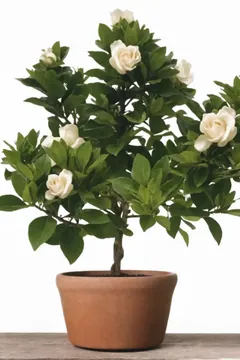
Gardenia jasminoides
- LightCape Jasmine needs bright indirect light at 150 to 250…
- WaterKeep Cape Jasmine soil consistently moist, but not soggy…
- ToxicityToxic to pets
- Mature sizeIndoors, it may eventually reach 3 to 6…
Cape Jasmine is a compact, bushy evergreen shrub with glossy green leaves. Its fragrant white flowers provide the main attraction and stand out against the dark foliage. The plant can become a refined indoor specimen when its light, moisture, acidity, warmth, and humidity remain stable. It suits experienced growers who enjoy fragrant blooms and do not mind monitoring conditions closely. Sudden environmental changes can affect buds and leaves.
Shop this plant
Full care guide →
Care notes
Cape Jasmine needs bright indirect light at 150 to 250 μmol·m⁻²·s⁻¹ PPFD. Good light supports dense growth and flower production.
- Placement: set it about 5 ft / 1.5 m from a south, west or east-facing window. It should not have a direct view of the sky.
- Filtering: use a sheer curtain where direct sunlight would otherwise strike the leaves.
- Measurement: a PAR meter or PAR meter app can check photosynthetically active radiation.
- Too much light can scorch foliage. Too little light causes weak growth, poor bud development, and fewer flowers.
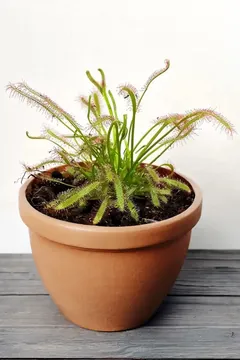
Drosera capensis
- LightCape Sundew needs bright direct light at 250 to 1000…
- WaterCape Sundew must remain wet at all times. Use only room…
- ToxicityNot ASPCA-listed
- Mature sizeIt eventually grows 6 to 12 in / 15 to…
Cape Sundew is a small carnivorous plant that forms a low rosette. Its narrow leaves carry sticky, tentacle-like glands that trap small insects. The glistening droplets give the foliage a jeweled appearance while helping the plant collect nutrients. This sundew suits sunny windows and growers willing to use mineral-free water. Unlike most houseplants, it needs permanently wet, nutrient-poor soil and should never receive standard fertilizer.
Shop this plant
Full care guide →
Care notes
Cape Sundew needs bright direct light at 250 to 1000 μmol·m⁻²·s⁻¹ PPFD. Give it 6+ hours of direct sunlight each day.
- Placement: keep it within 2 ft / 60 cm of a south or southwest-facing window. It should have an unobstructed view of the sky.
- Measurement: a PAR meter or PAR meter app can measure photosynthetically active radiation.
- Too much light: plants moved suddenly from shade may scorch, so increase exposure gradually.
- Too little light: leaves lose color and sticky dew production declines. Grow lights can help during shorter winter daylight hours.
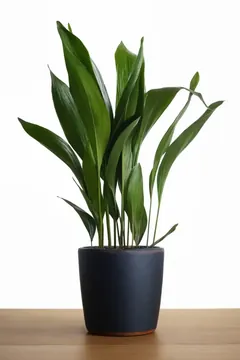
Aspidistra elatior
- LightCast Iron Plant tolerates low to medium indirect light at…
- WaterWater Cast Iron Plant when half of the soil has dried. Use…
- ToxicitySafe for cats & dogs
- Mature sizeIt eventually reaches 1 to 3 ft / 30 to…
Cast Iron Plant is an evergreen perennial that grows as a dense clump. Long, arching leaves have a deep green color, leathery texture, and simple upright shape. It is valued indoors because it tolerates lower light and occasional lapses in care better than many foliage plants. This slow, durable plant suits shaded rooms, quiet corners, and growers who prefer understated foliage over flowers or fast growth.
Shop this plant
Full care guide →
Care notes
Cast Iron Plant tolerates low to medium indirect light at 50 to 150 μmol·m⁻²·s⁻¹ PPFD. It works well where stronger-light plants struggle.
- Placement: keep it about 8 ft / 2.5 m from a north, east or west-facing window.
- Low-light test: the spot is suitable if you can comfortably read a book there without artificial lighting.
- Measurement: use a PAR meter or PAR meter app to check photosynthetically active radiation.
- Too much direct light can bleach or scorch leaves. Too little light slows an already gradual growth rate and may reduce new foliage.
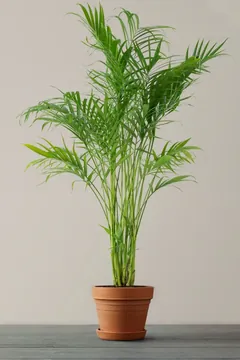
Chamaedorea cataractarum
- LightCat Palm prefers bright indirect light at 150 to 250…
- WaterWater Cat Palm when the topsoil feels dry. Check below the…
- ToxicitySafe for cats & dogs
- Mature sizeThe clump can spread 3 to 5 ft / 0
Cat Palm is a small, clustering palm with many arching, feathery fronds. Its bushy growth rises from the base rather than forming one tall, bare trunk. The foliage brings a soft tropical look to floors and broad plant stands. This palm suits a bright room with space for its widening crown. It needs more moisture and humidity than drought-tolerant palms, so regular checks are important.
Shop this plant
Full care guide →
Care notes
Cat Palm prefers bright indirect light at 150 to 250 μmol·m⁻²·s⁻¹ PPFD. Protect its feathery fronds from strong direct sunlight.
- Placement: set it about 5 ft / 1.5 m from a south, west or east-facing window. It should not have a clear view of the sky.
- Filtering: hang a sheer curtain if sunlight would otherwise reach the leaves.
- Measurement: a PAR meter or PAR meter app can check photosynthetically active radiation.
- Too much light may bleach or scorch fronds. Too little light slows growth and produces a thinner, weaker crown.
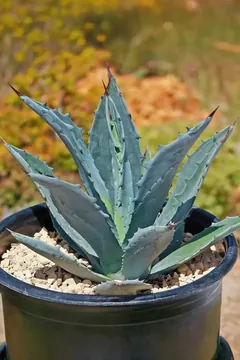
Agave americana
- LightCentury Plant needs bright direct light at 250 to 1000…
- WaterAllow Century Plant soil to dry completely before watering…
- ToxicityToxic to pets
- Mature sizeEventual size is 3 to 6 ft / 0
Century Plant is a large rosette-forming succulent with thick, sword-shaped leaves. The grey-green foliage has sharp tips and spiny edges, creating a bold architectural outline. It stores water in its leaves and tolerates long dry periods. Indoors, it suits a very sunny, spacious location where people and pets cannot brush against it. The plant can live for decades, but its eventual size demands planning.
Shop this plant
Full care guide →
Care notes
Century Plant needs bright direct light at 250 to 1000 μmol·m⁻²·s⁻¹ PPFD. Give it 6+ hours of direct sunlight every day.
- Placement: keep it within 2 ft / 60 cm of a south or southwest-facing window, with an unobstructed view of the sky.
- Measurement: use a PAR meter or PAR meter app to assess photosynthetically active radiation.
- Too much light: sudden exposure after shade may scorch the leaves, so acclimate the plant gradually.
- Too little light: growth stretches and the rosette loses its firm shape. Grow lights can supplement shorter winter daylight hours.
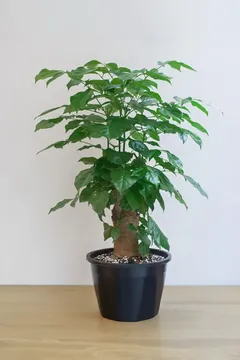
Radermachera sinica
- LightThe China Doll Plant needs bright direct light measuring…
- WaterKeep the China Doll Plant evenly moist, but never leave its…
- ToxicitySafe for cats & dogs
- Mature sizeIt can reach 4 to 6 ft / 1
The China Doll Plant is a compact evergreen tree with a dense, bushy shape. Its glossy emerald leaves are compound, with deeply veined leaflets that give the canopy a fine texture. Indoors, it suits growers who want the look of a small tree without a broad spread. It is fairly easy, but stable light and moisture help prevent leaf drop.
Shop this plant
Full care guide →
Care notes
The China Doll Plant needs bright direct light measuring 250 to 1000 μmol·m⁻²·s⁻¹. Give it 6+ hours of direct sunlight each day.
- Place it within 2 ft / 60 cm of a south or southwest-facing window. It should have a clear, unobstructed view of the sky.
- Too much light: sudden exposure may scorch leaves, so increase direct sun gradually.
- Too little light: growth weakens and leaves may drop. Grow lights can help during winter when daylight hours are shorter.
- A PAR meter or PAR meter app can measure PPFD in μmol·m⁻²·s⁻¹.
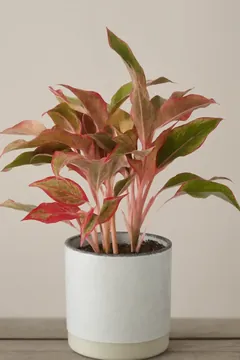
Aglaonema
- LightChinese Evergreen grows in low to medium indirect light of…
- WaterWater Chinese Evergreen after the topsoil feels dry. Check…
- ToxicityToxic to pets
- Mature sizeIt reaches about 12 to 18 in / 30 to 45…
Chinese Evergreen is a slow-growing, clump-forming houseplant valued for its lush patterned foliage. Depending on the cultivar, its leaves may show green, cream, silver, pink, or red markings. Its compact shape works well on desks, shelves, and shaded room corners. It tolerates lower light than many colorful plants, making it suitable for beginners who can avoid overwatering.
Shop this plant
Full care guide →
Care notes
Chinese Evergreen grows in low to medium indirect light of 50 to 150 μmol·m⁻²·s⁻¹. It can handle dimmer rooms better than many patterned plants.
- Place it about 8 ft / 2.5 m from a north, east, or west-facing window.
- A position is bright enough if you can comfortably read a book there without artificial lighting.
- Too much light: direct sun can bleach or scorch the leaves.
- Too little light: growth becomes slower and colorful markings may fade. A PAR meter or PAR meter app can check PPFD in μmol·m⁻²·s⁻¹.
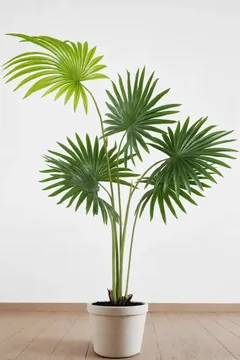
Livistona chinensis
- LightChinese Fan Palm grows best in bright indirect light of 150…
- WaterWater the Chinese Fan Palm when the topsoil feels dry…
- ToxicitySafe for cats & dogs
- Mature sizeIt may eventually reach 6 to 10 feet / 1
The Chinese Fan Palm has large, glossy fronds divided into broad fan-like sections. A mature frond can measure up to 2 ft / 60 cm across, creating a bold tropical outline. Indoors, it becomes a substantial floor plant without needing complicated care. It suits bright rooms with enough space for its widening crown and arching foliage.
Shop this plant
Full care guide →
Care notes
Chinese Fan Palm grows best in bright indirect light of 150 to 250 μmol·m⁻²·s⁻¹. Filter strong sun before it reaches the fronds.
- Place it around 5 ft / 1.5 m from a south, west, or east-facing window.
- The palm should not have a direct view of the sky. Use a sheer curtain if sunlight would otherwise strike the leaves.
- Too much light: harsh direct sun may bleach or scorch the fronds.
- Too little light: growth slows and new fronds may be weak. A PAR meter or PAR meter app can measure PPFD in μmol·m⁻²·s⁻¹.
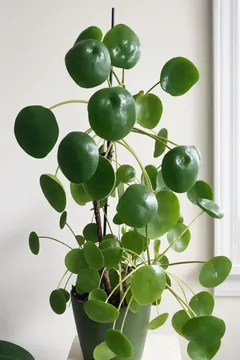
Pilea peperomioides
- LightChinese Money Plant prefers bright indirect light of 150 to…
- WaterWater Chinese Money Plant when the topsoil feels dry. Check…
- ToxicitySafe for cats & dogs
- Mature sizeIts eventual height is about 12 in / 30…
Chinese Money Plant is a compact evergreen perennial with round leaves held on slender stems. The disk-shaped foliage resembles small lily pads and gives the plant a clean, modern outline. It stays low enough for shelves, tables, and windowsills. This easy houseplant suits beginners, although balanced indirect light helps it maintain even, sturdy growth.
Shop this plant
Full care guide →
Care notes
Chinese Money Plant prefers bright indirect light of 150 to 250 μmol·m⁻²·s⁻¹. Balanced exposure helps its round leaves develop evenly.
- Place it about 5 ft / 1.5 m from a south, west, or east-facing window.
- It should not have a direct view of the sky. Filter unavoidable sunlight with a sheer curtain.
- Too much light: direct sun may fade, bleach, or scorch the leaves.
- Too little light: stems stretch and the plant leans toward the window. A PAR meter or PAR meter app can measure PPFD in μmol·m⁻²·s⁻¹.
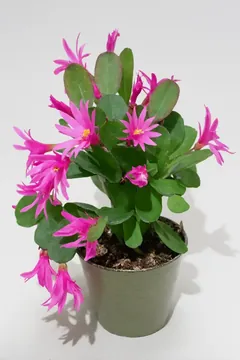
Schlumbergera bridgesii
- LightChristmas Cactus performs best in bright indirect light of…
- WaterWater Christmas Cactus when the topsoil feels dry. Although…
- ToxicitySafe for cats & dogs
- Mature sizeIt can reach 1 to 2 ft / 30 to 60 cm…
Christmas Cactus is a tropical jungle cactus rather than a desert species. It forms long, flat stems made from linked segments, with bright flowers appearing near the tips. Blooms may be red, pink, or white and usually arrive around the winter holidays. It is easy to grow indoors and works well in pots where its arching stems can hang freely.
Shop this plant
Full care guide →
Care notes
Christmas Cactus performs best in bright indirect light of 150 to 250 μmol·m⁻²·s⁻¹. Filter intense window light to protect its segmented stems.
- Set it about 5 ft / 1.5 m from a south, west, or east-facing window.
- Avoid a direct view of the sky. Hang a sheer curtain if sunlight would otherwise fall on the plant.
- Too much light: stems may turn pale, red, or scorched.
- Too little light: growth weakens and flowering may be reduced. A PAR meter or PAR meter app can measure PPFD in μmol·m⁻²·s⁻¹.
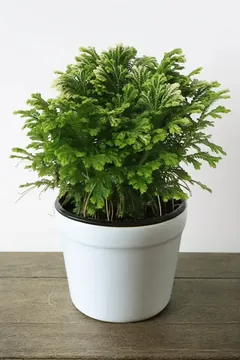
Selaginella kraussiana
- LightClubmoss prefers low to medium indirect light of 50 to 150…
- WaterKeep Clubmoss consistently moist without making the soil…
- ToxicitySafe for cats & dogs
- Mature sizeIt reaches 4 to 6 in / 10 to 15 cm…
Clubmoss is a low-growing relative of ferns with tiny, bright green leaves that resemble moss. Its creeping stems knit together into dense mats, adding soft texture without much height. It fits humid terrariums, shallow containers, and mixed indoor displays. This easy plant is best for growers who can provide steady moisture and moderate humidity.
Shop this plant
Full care guide →
Care notes
Clubmoss prefers low to medium indirect light of 50 to 150 μmol·m⁻²·s⁻¹. It does not need a sunny windowsill.
- Place it about 8 ft / 2.5 m from a north, east, or west-facing window.
- A suitable low-light spot should still be bright enough for comfortable reading without artificial lighting.
- Too much light: direct sun can bleach or crisp the fine foliage.
- Too little light: growth thins and spreading slows. Use a PAR meter or PAR meter app to check PPFD in μmol·m⁻²·s⁻¹.
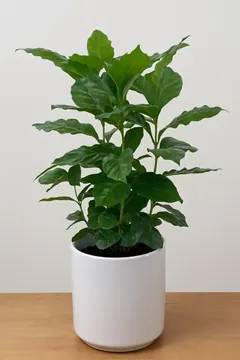
Coffea arabica
- LightCoffee Plant needs bright indirect light of 150 to 250…
- WaterKeep Coffee Plant soil consistently moist but not soggy…
- ToxicityToxic to pets
- Mature sizeIt can grow 3 to 6 ft / 1 to 2 m tall…
Coffee Plant is an evergreen shrub with glossy green leaves and a neat, upright form. Mature specimens may produce fragrant white flowers followed by red fruits called coffee cherries. It brings rich foliage and an unusual crop plant story indoors. Care is moderately demanding because the roots need steady moisture, while the leaves prefer bright filtered light and higher humidity.
Shop this plant
Full care guide →
Care notes
Coffee Plant needs bright indirect light of 150 to 250 μmol·m⁻²·s⁻¹. Give it strong illumination without exposing the leaves to harsh sun.
- Place it about 5 ft / 1.5 m from a south, west, or east-facing window.
- It should not have a direct view of the sky. Use a sheer curtain when sunlight cannot otherwise be avoided.
- Too much light: leaves may bleach, curl, or scorch.
- Too little light: growth becomes thin and flowering is less likely. A PAR meter or PAR meter app can measure PPFD in μmol·m⁻²·s⁻¹.
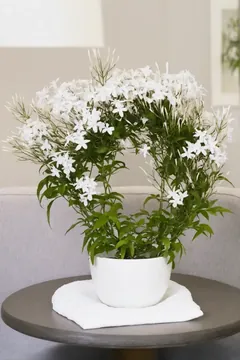
Trachelospermum jasminoides
- LightConfederate Jasmine grows best in bright indirect light of…
- WaterWater Confederate Jasmine when the topsoil feels dry. Check…
- ToxicitySafe for cats & dogs
- Mature sizeThe plant may spread 3 to 4 ft / 0
Confederate Jasmine is an evergreen climber with glossy dark green leaves and twining stems. Its foliage often turns deep bronze-red during winter. Clusters of strongly fragrant white flowers appear from mid to late summer. Indoors, it needs support and room to climb, but rewards steady care with a leafy screen and seasonal scent.
Shop this plant
Full care guide →
Care notes
Confederate Jasmine grows best in bright indirect light of 150 to 250 μmol·m⁻²·s⁻¹. Strong filtered light supports dense vines and flowering.
- Place it around 5 ft / 1.5 m from a south, west, or east-facing window.
- Avoid an open view of the sky. Filter direct rays with a sheer curtain when needed.
- Too much light: intense sun can bleach or scorch exposed leaves.
- Too little light: stems stretch, foliage thins, and flowering declines. A PAR meter or PAR meter app can check PPFD in μmol·m⁻²·s⁻¹.
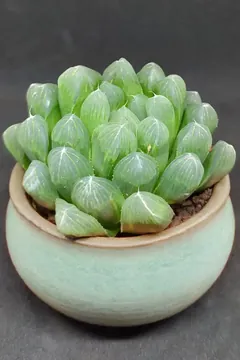
Haworthia cooperi
- LightCooper’s Haworthia prefers bright indirect light of 150 to…
- WaterLet the soil dry out completely before watering Cooper’s…
- ToxicitySafe for cats & dogs
- Mature sizesee care guide
Cooper’s Haworthia is a small succulent that forms tidy clumps of fleshy leaves. Each triangular leaf sits within a compact rosette, often showing a translucent tip that lets light enter. Its limited size makes it useful on windowsills, desks, or narrow shelves. It is easy to maintain when given filtered light, gritty soil, and long drying periods.
Shop this plant
Full care guide →
Care notes
Cooper’s Haworthia prefers bright indirect light of 150 to 250 μmol·m⁻²·s⁻¹. Filter strong rays to protect its translucent foliage.
- Place it about 5 ft / 1.5 m from a south, west, or east-facing window.
- It should not have a direct view of the sky. Use a sheer curtain if sunlight would otherwise hit the rosette.
- Too much light: leaves may bleach, brown, or develop scorched patches.
- Too little light: the rosette stretches and loses its compact form. A PAR meter or PAR meter app can measure PPFD in μmol·m⁻²·s⁻¹.
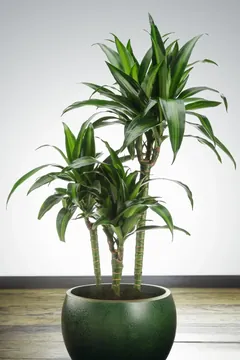
Dracaena fragrans
- LightCorn Plant prefers medium to bright indirect light of 150…
- WaterWater Corn Plant when the topsoil feels dry. Check with a…
- ToxicityToxic to pets
- Mature sizeIt can reach 6 to 8 ft / 1
Corn Plant is an upright indoor tree with one or more sturdy trunks. Long, sword-shaped leaves emerge in broad tufts and resemble the foliage of corn stalks. Its strong vertical form works well as a floor plant in homes or offices. It is fairly forgiving, though careful watering and filtered light reduce brown tips and leaf loss.
Shop this plant
Full care guide →
Care notes
Corn Plant prefers medium to bright indirect light of 150 to 200 μmol·m⁻²·s⁻¹. It needs filtered illumination rather than strong direct rays.
- Place it about 6 ft / 1.8 m from a south, west, or east-facing window.
- The leaves should not have a direct view of the sky. Use a sheer curtain if direct sunlight is unavoidable.
- Too much light: exposed leaves may bleach or develop dry scorch marks.
- Too little light: growth slows and patterned cultivars may lose contrast. A PAR meter or PAR meter app can measure PPFD in μmol·m⁻²·s⁻¹.
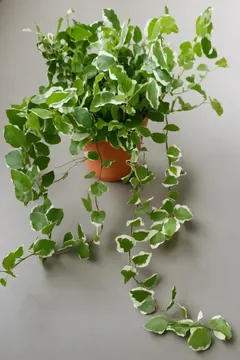
Ficus pumila
- LightCreeping Fig grows in medium to bright indirect light of…
- WaterWater Creeping Fig when the topsoil feels dry. Check before…
- ToxicityToxic to pets
- Mature sizeSupported vines can reach 10 to 15 ft /…
Creeping Fig is a vigorous vine with small, glossy green leaves and a fast growth habit. Adhesive aerial rootlets let its stems cling tightly to walls, supports, and other surfaces. Indoors, it can trail from a pot or cover a frame, but regular pruning keeps it manageable. It suits growers who want dense greenery and can guide its spreading stems.
Shop this plant
Full care guide →
Care notes
Creeping Fig grows in medium to bright indirect light of 150 to 200 μmol·m⁻²·s⁻¹. Filter direct sun before it reaches the small leaves.
- Place it around 6 ft / 1.8 m from a south, west, or east-facing window.
- The vine should not have a direct view of the sky. Use a sheer curtain if direct sunlight cannot be avoided.
- Too much light: exposed foliage may bleach or scorch.
- Too little light: stems become sparse and growth slows. A PAR meter or PAR meter app can measure PPFD in μmol·m⁻²·s⁻¹.
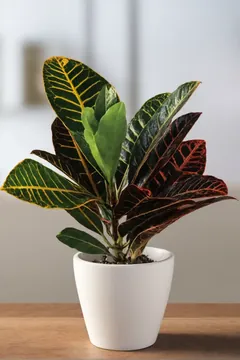
Codiaeum variegatum
- LightCroton Plant needs bright indirect light of 150 to 250…
- WaterWater Croton Plant when the topsoil feels dry. Check the…
- ToxicityToxic to pets
- Mature sizeIndoors, it may reach 3 to 8 ft / 0
Croton Plant is an upright shrub grown for large, leathery leaves with bold variegation. Its foliage may combine green with vivid yellow, red, orange, or other warm tones. The strong color makes it a striking indoor focal point. It needs more consistent light, warmth, and moisture than many easy houseplants, so it best suits attentive growers.
Shop this plant
Full care guide →
Care notes
Croton Plant needs bright indirect light of 150 to 250 μmol·m⁻²·s⁻¹. Strong filtered light helps maintain its vivid leaf colors.
- Place it about 5 ft / 1.5 m from a south, west, or east-facing window.
- Avoid a direct view of the sky. Use a sheer curtain where sunlight would otherwise strike the leaves.
- Too much light: intense direct sun may bleach or scorch foliage.
- Too little light: new leaves become greener and growth slows. A PAR meter or PAR meter app can measure PPFD in μmol·m⁻²·s⁻¹.
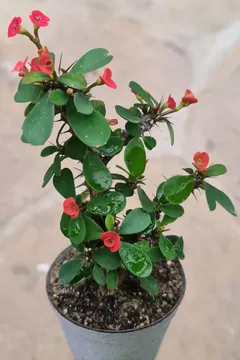
Euphorbia milii
- LightCrown of Thorns needs bright direct light of 250 to 1000…
- WaterAllow Crown of Thorns soil to dry out completely between…
- ToxicityToxic to pets
- Mature sizeIt can reach 2 to 3 ft / 60 to 90 cm…
Crown of Thorns is a woody succulent shrub with thick, spiny stems. Small flowers are surrounded by colorful bracts that create most of the display. Its upright form and tolerance for dry soil make it manageable in sunny indoor spaces. Growers must place it carefully because both the sharp spines and irritating milky sap can cause injury.
Shop this plant
Full care guide →
Care notes
Crown of Thorns needs bright direct light of 250 to 1000 μmol·m⁻²·s⁻¹. Provide 6+ hours of direct sunlight each day.
- Place it within 2 ft / 60 cm of a south or southwest-facing window. Give it an unobstructed view of the sky.
- Too much light: sudden exposure can scorch tissue, so adjust the plant gradually.
- Too little light: stems weaken and flowering declines. Grow lights can support it in winter when daylight hours are shorter.
- A PAR meter or PAR meter app can measure PPFD in μmol·m⁻²·s⁻¹.
Questions about plants that start with C
How many indoor plants start with C?
18, as listed on this page.
Is Cape Jasmine safe for cats and dogs?
Toxic to pets. The ASPCA lists Cape Jasmine, or gardenia, as toxic to cats and dogs. It is also considered toxic to people if plant material is eaten. Ingestion may cause digestive symptoms. Keep fallen flowers and leaves away from pets and children, and wash after handling sap.
How much light does a Cape Jasmine need?
Cape Jasmine needs bright indirect light at 150 to 250 μmol·m⁻²·s⁻¹ PPFD. Good light supports dense growth and flower production.Placement: set it about 5 ft / 1.5 m from a south, west or east-facing window. It should not have a direct view of the sky. Filtering: use a sheer curtain where direct sun
How do I know which of these plants suits my room?
Sort by the facts strip: low-light plants for north-facing rooms, pet-safe names if you have a cat or dog, and the smaller species for shelves and desks.