4 indoor plants begin with R: Rabbit’s Foot Fern, Rattail Cactus, Rattlesnake Plant, Rex Begonia. Every entry below shows the facts you came for first: light, water, toxicity and mature size, with the full care guide one click away. 3 of them are safe for cats and dogs.
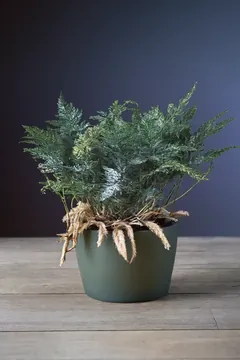
Davallia fejeensis
- LightRabbit’s Foot Fern prefers low to medium indirect light at…
- WaterKeep Rabbit’s Foot Fern evenly moist, but never leave its…
- ToxicitySafe for cats & dogs
- Mature size5 to 3 ft / 0
Rabbit’s Foot Fern is an evergreen fern grown for two distinct features. Its fine green fronds create a soft, lacy canopy. Fuzzy brown rhizomes creep across the pot and resemble small animal feet. It suits shelves, hanging pots, and shaded rooms. This easy fern is a good choice for growers who can provide steady moisture without leaving the soil waterlogged.
Shop this plant
Full care guide →
Care notes
Rabbit’s Foot Fern prefers low to medium indirect light at 50 to 150 μmol·m⁻²·s⁻¹ PPFD. A PAR meter or PAR meter app can measure this light level.
- Placement: keep it 8 ft / 2.5 m from a north, east, or west-facing window.
- Low-light option: a spot is suitable if you can comfortably read a book there without artificial lighting.
- Too much light: direct sun can bleach or scorch the delicate fronds.
- Too little light: new growth becomes sparse and weak.
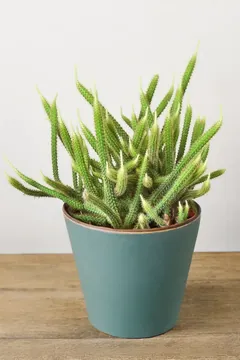
Aporocactus flagelliformis
- LightRattail Cactus needs bright direct light at 250 to 1000…
- WaterLet the potting mix dry completely before watering Rattail…
- ToxicitySafe for cats & dogs
- Mature sizeIts hanging stems can reach an eventual…
Rattail Cactus forms slender, whip-like stems that trail over the edge of a pot or hanging basket. Short spines cover each long green stem. In spring and summer, established plants can produce vivid pink or red tubular flowers. It suits sunny indoor spaces and growers who prefer a drought-tolerant plant. Its hanging stems need room to extend without being handled often.
Shop this plant
Full care guide →
Care notes
Rattail Cactus needs bright direct light at 250 to 1000 μmol·m⁻²·s⁻¹ PPFD. Give it 6+ hours of direct sunlight each day.
- Placement: set it within 2 ft / 60 cm of a south or southwest-facing window.
- Keep its view of the sky unobstructed. A PAR meter or app can confirm the light level.
- Too much light: sudden exposure can scorch stems, so increase direct sun gradually.
- Too little light: stems become weak, stretched, and less likely to flower. Grow lights can help during shorter winter days.
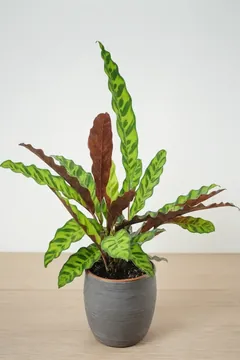
Goeppertia insignis
- LightRattlesnake Plant grows best in bright indirect light at…
- WaterKeep Rattlesnake Plant consistently moist without making…
- ToxicitySafe for cats & dogs
- Mature sizeAt full size, it stands about 1 to 2 ft…
Rattlesnake Plant is an evergreen foliage plant with long, lance-shaped leaves. Dark green markings lie over an olive-toned surface, while each leaf has a vivid purple underside. The bold contrast makes it useful as a decorative floor or tabletop plant. It suits growers who can maintain steady moisture, warm temperatures, and raised humidity. Its care is less forgiving than many common houseplants.
Shop this plant
Full care guide →
Care notes
Rattlesnake Plant grows best in bright indirect light at 150 to 250 μmol·m⁻²·s⁻¹ PPFD. A PAR meter or app can help verify this range.
- Placement: keep it 5 ft / 1.5 m from a south, west, or east-facing window.
- The leaves should not have a clear, direct view of the sky. Use a sheer curtain if sunlight reaches them.
- Too much light: direct sun can fade the patterns and scorch leaf tissue.
- Too little light: growth slows, stems weaken, and the foliage may lose some contrast.
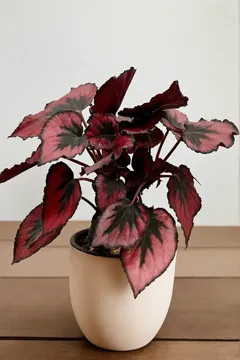
Begonia rex-cultorum
- LightRex Begonia needs bright indirect light at 150 to 250…
- WaterKeep Rex Begonia evenly moist, but do not leave its soil…
- ToxicityToxic to pets
- Mature sizeIt eventually reaches 12 to 18 in / 30…
Rex Begonia is grown mainly for dramatic foliage rather than flowers. Its leaves vary widely in shape, color, and surface texture. Depending on the cultivar, they may show metallic highlights, velvet-like surfaces, or sharp graphic patterns. This compact plant adds strong color to shelves and tabletops. It suits attentive growers who can provide filtered light, steady moisture, and good humidity without soaking the roots.
Shop this plant
Full care guide →
Care notes
Rex Begonia needs bright indirect light at 150 to 250 μmol·m⁻²·s⁻¹ PPFD. A PAR meter or app can be used to check the available light.
- Placement: position it 5 ft / 1.5 m from a south, west, or east-facing window.
- Prevent a direct view of the sky. Filter unavoidable sunlight with a sheer curtain.
- Too much light: leaves may bleach, scorch, or lose their rich colors.
- Too little light: growth becomes weak, and the foliage may look dull or less patterned.
Questions about plants that start with R
How many indoor plants start with R?
4, as listed on this page.
Is Rabbit’s Foot Fern safe for cats and dogs?
Safe for cats & dogs. The ASPCA lists Rabbit’s Foot Fern as non-toxic to cats and dogs. It is also considered non-toxic to people. Chewing any houseplant may still cause mild stomach upset, so discourage pets and children from eating the fronds or fuzzy rhizomes.
How much light does a Rabbit’s Foot Fern need?
Rabbit’s Foot Fern prefers low to medium indirect light at 50 to 150 μmol·m⁻²·s⁻¹ PPFD. A PAR meter or PAR meter app can measure this light level.Placement: keep it 8 ft / 2.5 m from a north, east, or west-facing window. Low-light option: a spot is suitable if you can comfortably read a book there w
How do I know which of these plants suits my room?
Sort by the facts strip: low-light plants for north-facing rooms, pet-safe names if you have a cat or dog, and the smaller species for shelves and desks.