17 indoor plants begin with P: Panda Plant, Parlour Palm, Peace Lily, Peacock Plant, Peanut Cactus, Persian Cyclamen. Every entry below shows the facts you came for first: light, water, toxicity and mature size, with the full care guide one click away. 10 of them are safe for cats and dogs.
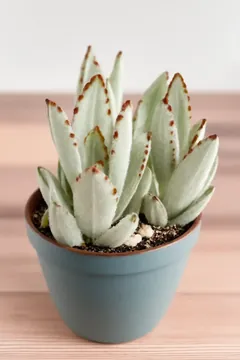
Kalanchoe tomentosa
- LightPanda Plant prefers bright, indirect light at 150 to 250…
- WaterAllow Panda Plant soil to dry out completely before…
- ToxicityToxic to pets
- Mature sizeIts eventual height is 1 to 2 ft / 30…
Panda Plant is a succulent with thick, velvety leaves in soft greyish-green. Fine hairs cover the foliage, while scalloped edges add darker detail. It may produce small bell-shaped flowers in red, pink, yellow, or orange, though blooming is rare indoors. This plant suits bright rooms and growers who prefer infrequent watering. Its tactile foliage is appealing, but the toxic leaves must stay away from children and pets.
Shop this plant
Full care guide →
Care notes
Panda Plant prefers bright, indirect light at 150 to 250 μmol·m⁻²·s⁻¹ as PPFD. Strong filtered light helps preserve compact growth and darker leaf markings.
- Placement: keep it around 5 ft / 1.5 m from a south, west, or east-facing window.
- Direct sun: prevent an open view of the sky. Use a sheer curtain if sunlight would strike the leaves.
- Too much light: fuzzy foliage may bleach, scorch, or develop dry patches.
- Too little light: stems stretch and leaf color becomes weaker. A PAR meter or PAR meter app can measure photosynthetically active radiation as PPFD (μmol·m⁻²·s⁻¹).
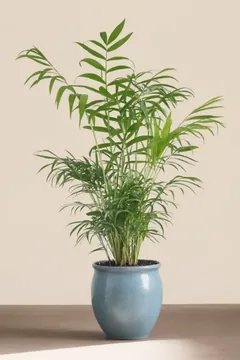
Chamaedorea elegans
- LightThe Parlour Palm prefers bright, indirect light but…
- WaterKeep the Parlour Palm evenly moist, but never leave its…
- ToxicitySafe for cats & dogs
- Mature sizeIndoors, it can reach 3 to 6 feet / 0
The Parlour Palm is a compact indoor palm with soft, light green fronds. Mature plants may develop tiny yellow flowers followed by black fruits. Its manageable size and easy care suit homes and offices. It also tolerates lower light than many palms. People often grow it for its graceful foliage and reputation as an air-purifying plant.
Shop this plant
Full care guide →
Care notes
The Parlour Palm prefers bright, indirect light but tolerates lower levels from 50 to 250 μmol·m⁻²·s⁻¹.
- Place it 5 to 8 ft / 1.5 to 2.5 m from a north, south, west, or east-facing window.
- Keep it where the leaves have no direct view of the sky. A sheer curtain can soften unavoidable sunlight.
- Too much light can scorch or fade the fronds. Too little light slows growth.
- A PAR meter or PAR meter app can check photosynthetically active radiation as PPFD (μmol·m⁻²·s⁻¹).
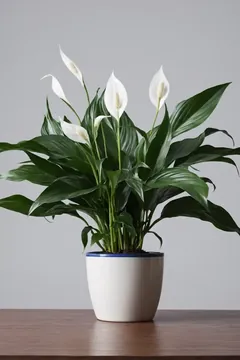
Spathiphyllum
- LightPeace Lily performs best in bright, indirect light…
- WaterKeep Peace Lily soil consistently moist without making it…
- ToxicityToxic to pets
- Mature sizeDepending on the variety, it may grow 1…
The Peace Lily is a leafy tropical grown for glossy, dark green foliage and upright white spathes. These flower-like structures are modified leaves surrounding the true flowers. Its full shape works well on floors, desks, and shaded indoor displays. It is easy to maintain when moisture stays steady, though its toxicity makes careful placement important in homes with pets or young children.
Shop this plant
Full care guide →
Care notes
Peace Lily performs best in bright, indirect light measuring 150 to 250 μmol·m⁻²·s⁻¹.
- Set it about 5 ft / 1.5 m from a south, west, or east-facing window.
- Choose a position without a direct view of the sky. Filter unavoidable sun through a sheer curtain.
- Strong direct light may bleach or scorch the leaves. Weak light reduces growth and flowering.
- A PAR meter or PAR meter app can measure photosynthetically active radiation as PPFD (μmol·m⁻²·s⁻¹).
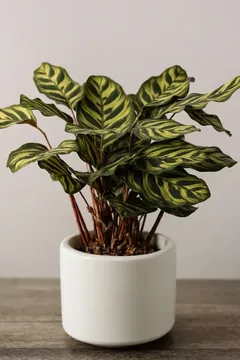
Goeppertia makoyana
- LightThe Peacock Plant needs bright, indirect light at 150 to…
- WaterKeep the Peacock Plant's mix consistently moist, but not…
- ToxicitySafe for cats & dogs
- Mature sizeExpect a height of 1 to 2 ft / 30 to 60…
The Peacock Plant is grown for broad, pale green leaves marked with dark feather-like patterns. Each leaf has a rich reddish-purple underside, adding color when the foliage moves. Its layered markings make it useful as a compact statement plant. It suits growers who can provide stable moisture, warm temperatures, and moderate humidity without exposing the leaves to harsh sun.
Shop this plant
Full care guide →
Care notes
The Peacock Plant needs bright, indirect light at 150 to 250 μmol·m⁻²·s⁻¹ to keep its patterns clear.
- Position it about 5 ft / 1.5 m from a south, west, or east-facing window.
- Do not give the leaves a direct view of the sky. Use a sheer curtain when sunlight cannot be avoided.
- Excess sun can fade patterns and scorch foliage. Dim conditions slow growth and weaken color.
- Measure photosynthetically active radiation as PPFD (μmol·m⁻²·s⁻¹) with a PAR meter or PAR meter app if needed.
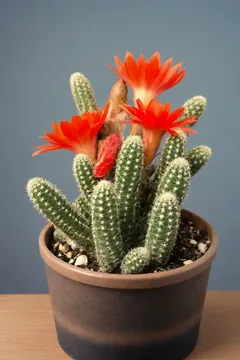
Echinopsis chamaecereus
- LightPeanut Cactus needs bright, direct light between 250 and…
- WaterLet the Peanut Cactus soil dry completely before watering…
- ToxicityNot ASPCA-listed
- Mature sizesee care guide
The Peanut Cactus is a small succulent that forms spreading clumps of short, finger-like stems. Their shape gives the plant its common name. Mature clumps can produce vivid orange or red flowers during spring and summer. Its modest height suits sunny windowsills and compact displays. It is easy to manage when given strong light, gritty soil, and careful watering.
Shop this plant
Full care guide →
Care notes
Peanut Cactus needs bright, direct light between 250 and 1000 μmol·m⁻²·s⁻¹.
- Provide 6+ hours of direct sunlight each day. Place it within 2 ft / 60 cm of a south or southwest-facing window.
- Give the plant an unobstructed view of the sky. Too little light causes weak, stretched growth.
- Consider grow lights during winter when daylight hours are shorter.
- A PAR meter or PAR meter app can measure photosynthetically active radiation as PPFD (μmol·m⁻²·s⁻¹).
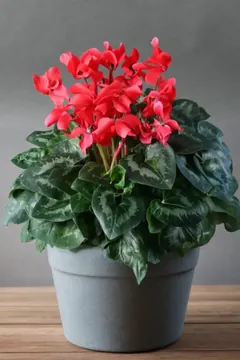
Cyclamen persicum
- LightPersian Cyclamen grows best in bright, indirect light…
- WaterWater Persian Cyclamen when the topsoil feels dry. Check…
- ToxicityToxic to pets
- Mature sizeIt eventually reaches 6 to 19 inches /…
Persian Cyclamen is a tuberous perennial valued for fragrant flowers from fall through late spring. Its dark green, heart-shaped leaves often carry silver or gray marbling. The flowers and patterned foliage make it useful for cool indoor displays. It suits growers who can provide bright filtered light, careful watering, and cooler conditions than most tropical houseplants prefer.
Shop this plant
Full care guide →
Care notes
Persian Cyclamen grows best in bright, indirect light between 150 and 250 μmol·m⁻²·s⁻¹.
- Place it around 5 ft / 1.5 m from a south, west, or east-facing window.
- Keep it out of an open sky view. Filter unavoidable direct sun with a sheer curtain.
- Excess light can scorch the leaves and flowers. Too little light reduces growth and blooming.
- A PAR meter or PAR meter app can check photosynthetically active radiation as PPFD (μmol·m⁻²·s⁻¹).
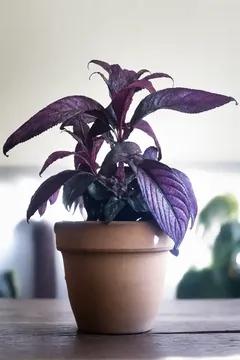
Strobilanthes dyerianus
- LightPersian Shield keeps its strongest color in bright…
- WaterWater Persian Shield when the topsoil feels dry. Check the…
- ToxicityNot ASPCA-listed
- Mature sizeIndoors, it may grow 3 to 4 ft / 90 to…
Persian Shield is a foliage plant prized for its intense metallic color. Long, deep green leaves develop an iridescent purple sheen that shifts with the light. Its upright form and bold surface color create a strong indoor accent. It suits growers who can provide bright filtered light, regular moisture, and moderate humidity while keeping the foliage away from harsh direct sun.
Shop this plant
Full care guide →
Care notes
Persian Shield keeps its strongest color in bright, indirect light at 150 to 250 μmol·m⁻²·s⁻¹.
- Position it about 5 ft / 1.5 m from a south, west, or east-facing window.
- Avoid giving the leaves a direct view of the sky. A sheer curtain can filter unavoidable sunlight.
- Strong direct sun may scorch the foliage. Too little light can dull the purple color and weaken growth.
- Check photosynthetically active radiation as PPFD (μmol·m⁻²·s⁻¹) with a PAR meter or PAR meter app if desired.
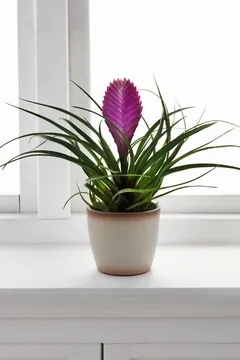
Tillandsia cyanea
- LightPink Quill needs bright, indirect light between 150 and 250…
- WaterPink Quill absorbs much of its water through its foliage…
- ToxicitySafe for cats & dogs
- Mature sizesee care guide
Pink Quill is a small evergreen air plant with arching green leaves and a flat, long-lasting pink bract. Its shape resembles a decorative quill. Violet flowers emerge from the bract during summer. The plant needs no conventional soil, so it works well on mounts, in coarse media, or as part of a compact indoor display with bright filtered light.
Shop this plant
Full care guide →
Care notes
Pink Quill needs bright, indirect light between 150 and 250 μmol·m⁻²·s⁻¹.
- Place it about 5 ft / 1.5 m from a south, west, or east-facing window.
- Select a spot without a direct view of the sky. Filter unavoidable direct light with a sheer curtain.
- Harsh sun can bleach or scorch the leaves and bract. Low light may slow growth and reduce flowering.
- A PAR meter or PAR meter app can measure photosynthetically active radiation as PPFD (μmol·m⁻²·s⁻¹).
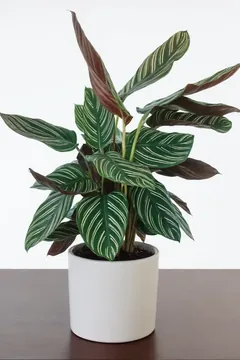
Goeppertia ornata
- LightPinstripe Calathea prefers bright, indirect light measuring…
- WaterKeep Pinstripe Calathea soil evenly moist without…
- ToxicitySafe for cats & dogs
- Mature sizeIt reaches 1 to 2 ft / 30 to 60 cm tall…
Pinstripe Calathea has dark green leaves traced with fine pink stripes. The patterned foliage moves through the day and often lifts at night, which gives it the familiar prayer plant effect. Its upright leaves make a strong display without requiring a large footprint. It suits indoor growers who can maintain steady moisture, warm conditions, and filtered light around its sensitive foliage.
Shop this plant
Full care guide →
Care notes
Pinstripe Calathea prefers bright, indirect light measuring 150 to 250 μmol·m⁻²·s⁻¹.
- Keep it around 5 ft / 1.5 m from a south, west, or east-facing window.
- Choose a position without a direct sky view. Soften unavoidable sunlight with a sheer curtain.
- Too much direct light may fade the stripes or scorch leaves. Low light weakens growth and color.
- A PAR meter or PAR meter app can measure photosynthetically active radiation as PPFD (μmol·m⁻²·s⁻¹).
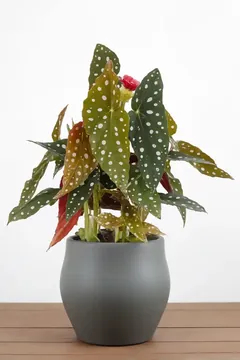
Begonia maculata
- LightPolka Dot Begonia prefers bright, indirect light at 150 to…
- WaterWater Polka Dot Begonia when the topsoil feels dry. Check…
- ToxicityToxic to pets
- Mature sizeIt eventually reaches 2 to 3 ft / 60 to…
Polka Dot Begonia has large, angel-wing leaves covered with silvery-green spots. The upper surface contrasts sharply with a red underside. Under suitable indoor conditions, the plant may also produce delicate pink flowers. Its upright canes and patterned foliage make it a bold display plant. It suits growers who can balance bright filtered light with careful watering and moderate humidity.
Shop this plant
Full care guide →
Care notes
Polka Dot Begonia prefers bright, indirect light at 150 to 250 μmol·m⁻²·s⁻¹.
- Place it about 5 ft / 1.5 m from a south, west, or east-facing window.
- Keep the plant from having a direct view of the sky. A sheer curtain can filter unavoidable sun.
- Excess direct light can scorch the spotted leaves. Too little light weakens growth and may reduce flowering.
- Use a PAR meter or PAR meter app to measure photosynthetically active radiation as PPFD (μmol·m⁻²·s⁻¹).
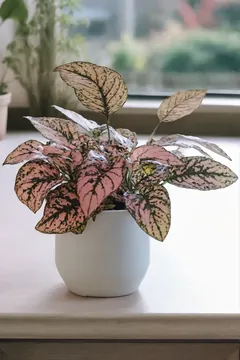
Hypoestes phyllostachya
- LightPolka Dot Plant develops its best color in bright, indirect…
- WaterWater the Polka Dot Plant when the topsoil feels dry. Check…
- ToxicitySafe for cats & dogs
- Mature sizeIts eventual height is 1 to 2 ft / 30…
The Polka Dot Plant is a compact foliage plant known for brightly spotted leaves. Its colors include pink, white, and red, set against contrasting green veins. The low, leafy shape suits small pots, mixed displays, and terrariums. It is easy to grow when moisture remains steady. Regular light also helps prevent weak growth and keeps the leaf patterns vivid.
Shop this plant
Full care guide →
Care notes
Polka Dot Plant develops its best color in bright, indirect light from 150 to 250 μmol·m⁻²·s⁻¹.
- Place it around 5 ft / 1.5 m from a south, west, or east-facing window.
- Choose a location without a direct sky view. Use a sheer curtain if sunlight reaches the leaves.
- Strong sun can scorch or bleach the foliage. Low light causes stretched growth and weaker patterns.
- A PAR meter or PAR meter app can measure photosynthetically active radiation as PPFD (μmol·m⁻²·s⁻¹).
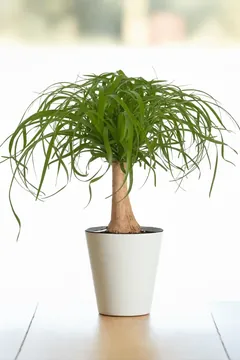
Beaucarnea recurvata
- LightPonytail Palm prefers bright, indirect light between 150…
- WaterAllow Ponytail Palm soil to dry completely before watering…
- ToxicitySafe for cats & dogs
- Mature sizeIndoors, it may reach 6 to 10 feet / 1
Ponytail Palm is a tree-like succulent rather than a true palm. Its swollen base, called a caudex, stores water. Long, narrow leaves arch from the top and droop like a ponytail. The sculptural form suits bright rooms and requires less frequent watering than tropical palms. It is a good choice for growers comfortable letting soil dry fully between waterings.
Shop this plant
Full care guide →
Care notes
Ponytail Palm prefers bright, indirect light between 150 and 250 μmol·m⁻²·s⁻¹.
- Place it about 5 ft / 1.5 m from a south, west, or east-facing window.
- Select a position without a direct view of the sky. Filter unavoidable sunlight with a sheer curtain.
- Excess direct light can scorch foliage if the plant is not acclimated. Too little light slows growth.
- A PAR meter or PAR meter app can measure photosynthetically active radiation as PPFD (μmol·m⁻²·s⁻¹).
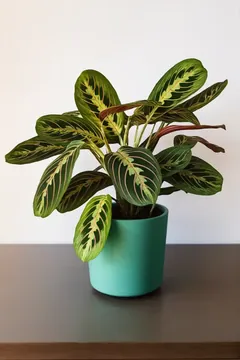
Maranta leuconeura
- LightPrayer Plant thrives in bright, indirect light from 150 to…
- WaterWater Prayer Plant when the topsoil feels dry. Check before…
- ToxicitySafe for cats & dogs
- Mature sizeIts height is usually 12 to 18 inches /…
Prayer Plant is a tropical foliage plant with bold patterns across low, spreading leaves. The leaves lift and fold upward at night, creating the effect of praying hands. Its changing posture and colorful markings make it appealing on shelves or in hanging displays. It suits growers who can supply warm temperatures, filtered light, regular moisture, and moderate humidity without leaving the roots waterlogged.
Shop this plant
Full care guide →
Care notes
Prayer Plant thrives in bright, indirect light from 150 to 250 μmol·m⁻²·s⁻¹.
- Position it about 5 ft / 1.5 m from a south, west, or east-facing window.
- Keep it where the leaves lack a direct view of the sky. Filter unavoidable sunlight with a sheer curtain.
- Direct sun can fade patterns and scorch foliage. Low light weakens growth and leaf color.
- A PAR meter or PAR meter app can measure photosynthetically active radiation as PPFD (μmol·m⁻²·s⁻¹).
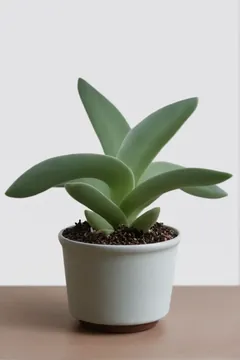
Crassula falcata
- LightPropeller Plant needs bright, direct light from 250 to 1000…
- WaterLet Propeller Plant soil dry completely before watering…
- ToxicitySafe for cats & dogs
- Mature sizeIt reaches 1 to 2 ft / 30 to 60 cm tall
Propeller Plant is a succulent with thick, grayish-green leaves arranged in a spiral around upright stems. Their opposing shape resembles a propeller. Mature plants may develop clusters of tiny red flowers during summer. Its geometric foliage suits sunny windows and succulent collections. It is easy to maintain when given strong light, fast-draining soil, and complete drying between waterings.
Shop this plant
Full care guide →
Care notes
Propeller Plant needs bright, direct light from 250 to 1000 μmol·m⁻²·s⁻¹.
- Give it 6+ hours of direct sun each day. Place it within 2 ft / 60 cm of a south or southwest-facing window.
- Provide an unobstructed sky view. In hot direct sun, afternoon shade can prevent scorching.
- Use grow lights during winter when daylight hours are shorter. Low light causes stretched growth.
- A PAR meter or PAR meter app can measure photosynthetically active radiation as PPFD (μmol·m⁻²·s⁻¹).
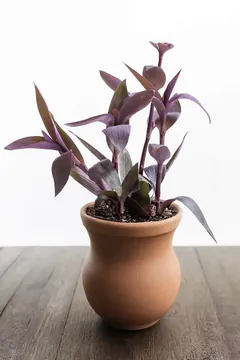
Tradescantia pallida
- LightPurple Heart Plant needs bright, direct light from 250 to…
- WaterWater Purple Heart Plant when the topsoil feels dry. Check…
- ToxicityToxic to pets
- Mature sizeIt grows 1 to 2 ft / 30 to 60 cm tall…
Purple Heart Plant is a trailing evergreen with narrow, boat-shaped leaves in a rich purple shade. Its stems spread readily, creating a dense cascade in pots or hanging containers. Strong light helps maintain the deepest foliage color. It suits growers seeking a fast-growing vine, but its toxic and irritating plant material makes placement important around pets and children.
Shop this plant
Full care guide →
Care notes
Purple Heart Plant needs bright, direct light from 250 to 1000 μmol·m⁻²·s⁻¹.
- Supply 6+ hours of direct sun daily. Place it within 2 ft / 60 cm of a south or southwest-facing window.
- Give it an unobstructed view of the sky. Offer afternoon shade during hot direct sun to prevent scorching.
- Grow lights can support color in winter when daylight hours shorten. Low light produces greener, weaker growth.
- Measure photosynthetically active radiation as PPFD (μmol·m⁻²·s⁻¹) with a PAR meter or PAR meter app.
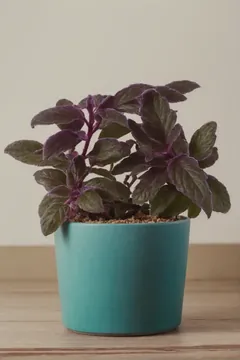
Gynura aurantiaca
- LightPurple Passion Plant develops strong color in bright…
- WaterWater Purple Passion Plant when the top third of the soil…
- ToxicitySafe for cats & dogs
- Mature sizeIt reaches 1 to 2 ft / 30 to 60 cm tall…
Purple Passion Plant is a fast-growing houseplant with velvety foliage covered in deep purple hairs. Green undersides add contrast when the leaves turn or trail over a pot. Its spreading habit works especially well in hanging baskets. It suits growers who want bold color and can provide bright filtered light, careful watering, and regular feeding during the main growing season.
Shop this plant
Full care guide →
Care notes
Purple Passion Plant develops strong color in bright, indirect light from 150 to 250 μmol·m⁻²·s⁻¹.
- Set it around 5 ft / 1.5 m from a south, west, or east-facing window.
- Keep the foliage out of a direct sky view. A sheer curtain can filter unavoidable sunlight.
- Direct sun may scorch the velvety leaves. Low light weakens growth and reduces purple color.
- Use a PAR meter or PAR meter app to measure photosynthetically active radiation as PPFD (μmol·m⁻²·s⁻¹).
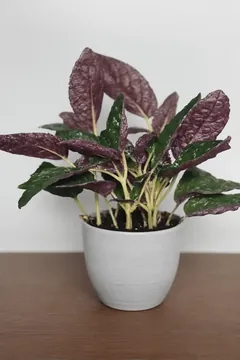
Hemigraphis alternata
- LightPurple Waffle Plant prefers bright, indirect light…
- WaterKeep Purple Waffle Plant soil consistently moist without…
- ToxicitySafe for cats & dogs
- Mature sizeIt grows 8 to 12 in / 20 to 30 cm tall…
Purple Waffle Plant is a small houseplant with metallic gray-green foliage and vivid purple undersides. Each leaf has a deeply crinkled surface that resembles a waffle. Small white flowers may appear during summer. Its compact, spreading form suits shelves, terrariums, and mixed displays. It is easy to grow when the soil stays evenly moist and humidity remains above typical dry-room levels.
Shop this plant
Full care guide →
Care notes
Purple Waffle Plant prefers bright, indirect light measuring 150 to 250 μmol·m⁻²·s⁻¹.
- Keep it about 5 ft / 1.5 m from a south, west, or east-facing window.
- Choose a position without a direct view of the sky. Filter unavoidable sun through a sheer curtain.
- Strong direct light can scorch or fade the textured leaves. Too little light reduces purple color and causes weak growth.
- A PAR meter or PAR meter app can measure photosynthetically active radiation as PPFD (μmol·m⁻²·s⁻¹).
Questions about plants that start with P
How many indoor plants start with P?
17, as listed on this page.
Is Panda Plant safe for cats and dogs?
Toxic to pets. The ASPCA lists Kalanchoe plants as toxic to cats and dogs. Panda Plant is also toxic to people if swallowed. Keep every part of it away from children and pets, including fallen leaves. Seek professional advice if a person or animal eats the plant and develops symptoms.
How much light does a Panda Plant need?
Panda Plant prefers bright, indirect light at 150 to 250 μmol·m⁻²·s⁻¹ as PPFD. Strong filtered light helps preserve compact growth and darker leaf markings.Placement: keep it around 5 ft / 1.5 m from a south, west, or east-facing window. Direct sun: prevent an open view of the sky. Use a sheer curta
How do I know which of these plants suits my room?
Sort by the facts strip: low-light plants for north-facing rooms, pet-safe names if you have a cat or dog, and the smaller species for shelves and desks.