This collection of flowering indoor plants brings together 74 choices grown for blooms as well as foliage and form. It suits readers looking for seasonal colour, unusual flowers or a plant whose display changes through the year. African Violet, Azalea, Bird of Paradise and Black Bat Flower are among the included members. Their requirements vary widely: some are Easy, while others are Intermediate to Advanced, and their light needs range from bright indirect conditions to bright direct light. Flowering often depends on suitable light and consistent care, so use each plant page to understand its individual routine rather than expecting every listed plant to bloom under the same room conditions.
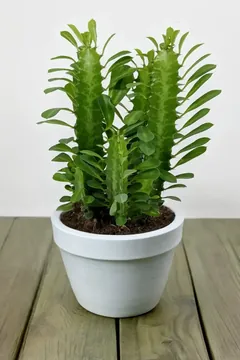
Euphorbia trigona
- LightAfrican Milk Tree prefers bright, indirect light at 150 to…
- WaterLet the potting mix dry completely before watering African…
- ToxicityToxic to pets
- Mature sizeIndoors, it can eventually reach 6 to 9…
African Milk Tree is a tall succulent with upright, branching stems. Each stem has three angled sides, raised ridges, and small leaves that do not last long. Mature plants may also produce small white flowers. Its sculptural shape works well in bright rooms with limited floor space. It is easy to maintain when given strong filtered light, dry soil, and careful handling.
Full care guide →
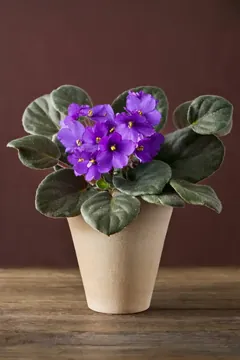
Saintpaulia ionantha
- LightAfrican Violet flowers best in bright, indirect light…
- WaterWater African Violet when the topsoil feels dry. Bottom…
- ToxicitySafe for cats & dogs
- Mature sizeA full-grown plant generally reaches 6…
African Violet is a compact perennial that forms a neat rosette of soft, velvety leaves. Colorful flowers rise above the foliage and may appear in many shades. Its small size suits shelves, desks, and bright windowsills. It can bloom for long periods when light, moisture, and temperature remain stable. Beginners can grow it, although careful watering helps prevent marked or damaged leaves.
Full care guide →
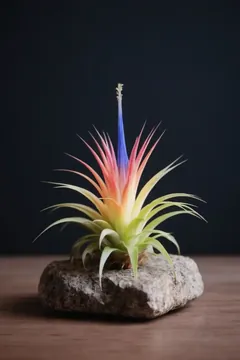
Tillandsia ionantha
- LightAir Plant prefers bright, indirect light at 150 to 250…
- WaterAir Plant needs a complete soak rather than conventional…
- ToxicitySafe for cats & dogs
- Mature sizeIt may grow 6 to 8 in / 15 to 20 cm…
Air Plant is a small bromeliad that forms a tidy rosette without growing in soil. Its narrow, silvery-green leaves absorb moisture and nutrients from the air. The foliage turns red as flowering approaches, adding seasonal color. It suits open displays, mounted arrangements, and small spaces. Care is simple if the plant receives bright filtered light, regular soaking, and enough airflow to dry fully afterward.
Full care guide →
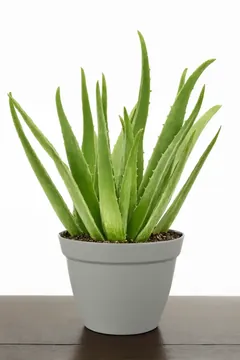
Aloe vera
- LightAloe Vera needs bright, direct light between 250 to 1000…
- WaterAllow Aloe Vera's soil to dry completely before watering…
- ToxicityToxic to pets
- Mature sizeIndoors, it can grow 1 to 2 ft / 30 to…
Aloe Vera is a sturdy succulent that forms a rosette of thick green leaves. Each fleshy leaf has small spikes along its edges and stores water for dry periods. Its clean shape works well on sunny windowsills and in bright rooms. It is easy to grow when given strong light, a draining mix, and infrequent watering. Owners should also consider its toxicity before placing it near pets or children.
Full care guide →
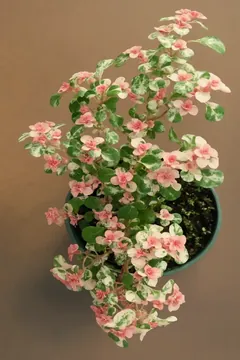
Pilea microphylla
- LightArtillery Plant prefers bright, indirect light between 150…
- WaterKeep Artillery Plant's soil consistently moist without…
- ToxicitySafe for cats & dogs
- Mature sizeIt reaches 6 to 12 in / 15 to 30 cm…
Artillery Plant is a small, spreading Pilea with many rounded leaves on fine stems. Its foliage may combine green and white, creating a soft, textured mound. Tiny flowers release pollen with a sudden burst, which inspired the common name. The plant fits terrariums, small pots, and mixed displays. It is easy to grow when kept warm, evenly moist, and protected from harsh direct sunlight.
Full care guide →
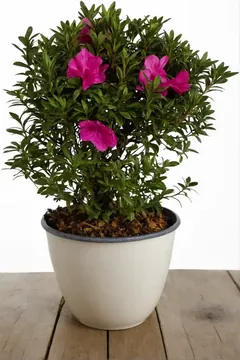
Rhododendron
- LightAzalea prefers bright, indirect light measuring 150 to 250…
- WaterWater Azalea when the topsoil feels dry. Check moisture…
- ToxicityToxic to pets
- Mature sizeIndoors, it can grow 2 to 4 ft / 60 to…
Azalea is an evergreen shrub grown indoors for its abundant spring flowers. Some plants produce a smaller second display in fall. Glossy, dark green leaves create a dense background for blooms in several colors. It suits cool, bright rooms where moisture and soil acidity can be managed. Warm, dry conditions shorten flowering, so it may require more attention than a typical foliage houseplant.
Full care guide →
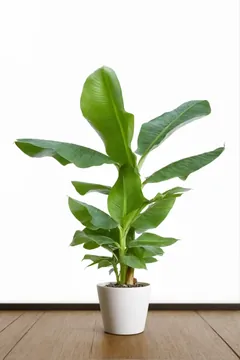
Musa acuminata
- LightBanana Plant prefers bright, indirect light between 150 to…
- WaterKeep Banana Plant's soil consistently moist, but never…
- ToxicitySafe for cats & dogs
- Mature sizeIndoors, it may grow 6 to 8 feet / 1
Banana Plant is a large tropical perennial with huge, glossy leaves shaped like paddles. The foliage rises from a sturdy central form and gives a room a bold canopy. Mature indoor plants may produce orange or purple flowers followed by small, inedible bananas. It needs generous space, warmth, humidity, and steady moisture. Its fast, substantial growth suits bright rooms better than cramped shelves or narrow walkways.
Full care guide →
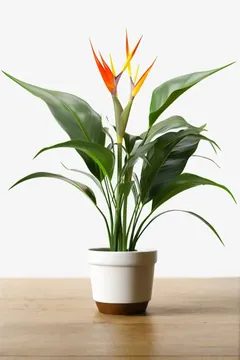
Strelitzia reginae
- LightBird of Paradise needs bright direct light at 250 to 1000…
- WaterLet most of the potting mix dry before watering Bird of…
- ToxicitySafe for cats & dogs
- Mature sizeIndoors, it eventually reaches 3 to 6…
Bird of Paradise is a bold tropical plant with broad, glossy, dark green leaves shaped like banana foliage. Mature plants can produce vivid orange and blue flowers that resemble birds in flight. Its upright form adds height and structure indoors. Grow it if you have strong sunlight, generous floor space, and patience for flowering. Large leaves may need occasional cleaning to show their natural shine.
Full care guide →
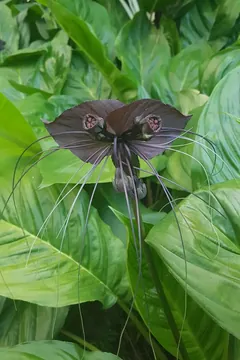
Tacca chantrieri
- LightBlack Bat Flower needs bright indirect light at 150 to 250…
- WaterBlack Bat Flower needs consistently moist soil, but its…
- ToxicityNot ASPCA-listed
- Mature sizeIts eventual height is 2 to 3 ft / 60…
Black Bat Flower is an upright perennial grown for its extraordinary blooms. Broad, dark bracts spread like a bat’s wings around the true flowers, while long whisker-like structures add drama. Green foliage creates a lush base beneath the blooms. This tropical plant appeals to collectors seeking an unusual flowering specimen. It is more demanding than a typical houseplant and needs stable warmth, moisture, humidity, and filtered light.
Full care guide →
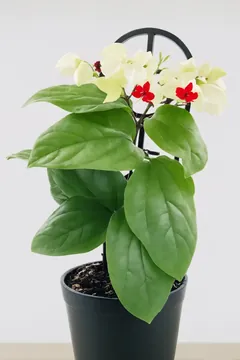
Clerodendrum thomsoniae
- LightBleeding Heart Vine performs best in bright indirect light…
- WaterKeep Bleeding Heart Vine evenly moist, but never leave its…
- ToxicityNot ASPCA-listed
- Mature sizeIts stems may reach 6 to 10 ft / 1
Bleeding Heart Vine is an evergreen climber with glossy green leaves and showy, heart-shaped flowers. Its contrasting blooms appear in clusters and stand out clearly against the foliage. Flexible stems can climb a support or be trained around a frame. This plant suits growers who want a flowering indoor vine and can provide filtered light, steady moisture, and regular shaping as the stems lengthen.
Full care guide →
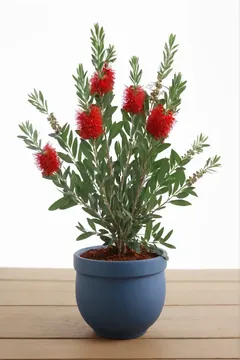
Callistemon citrinus
- LightBottle Brush Plant requires bright direct light at 250 to…
- WaterKeep Bottle Brush Plant soil consistently moist, but not…
- ToxicitySafe for cats & dogs
- Mature sizeIndoors, it may eventually reach 3 to 6…
Bottle Brush Plant is an evergreen shrub with narrow leaves that release a lemon scent. Its dense, cylindrical flower spikes resemble brushes used to clean bottles. The colorful blooms create the plant’s main display, while woody growth gives it a small-shrub form. Indoors, it suits a bright window and needs room for branching. Choose it if you can provide long periods of direct sun and regular shaping.
Full care guide →

Opuntia microdasys
- LightBunny Ears Cactus needs bright direct light at 250 to 1000…
- WaterLet the potting mix dry completely before watering Bunny…
- ToxicityCheck toxicity
- Mature sizeIt eventually grows 1 to 2 ft / 30 to…
Bunny Ears Cactus grows upright from flattened pads that cluster in ear-like pairs. Older specimens can develop a branching, tree-like outline and may produce funnel-shaped flowers. The pads carry many fine glochids rather than harmless fuzz, so careful handling is essential. This cactus suits sunny rooms and growers who prefer infrequent watering. Keep it away from busy walkways, children, and animals that might brush against it.
Full care guide →
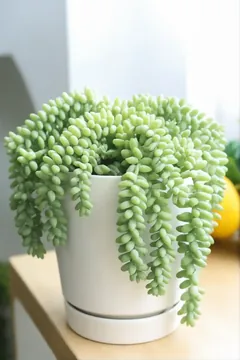
Sedum morganianum
- LightBurro's Tail prefers bright indirect light at 150 to 250…
- WaterAllow the soil to dry completely before watering Burro's…
- ToxicitySafe for cats & dogs
- Mature sizeThe plant spreads about 10 to 12 in /…
Burro's Tail is a trailing succulent with long stems packed tightly with bluish-green leaves. Each fleshy leaf has a rounded tear-drop shape and stores water for dry periods. Mature stems may carry clusters of small, star-shaped flowers. The plant looks best spilling from a hanging pot or high shelf. It suits bright rooms and infrequent watering, but the leaves detach easily when bumped or handled.
Full care guide →
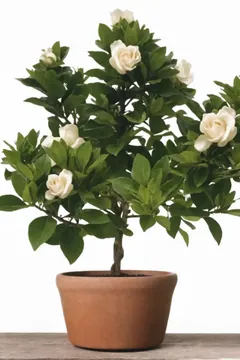
Gardenia jasminoides
- LightCape Jasmine needs bright indirect light at 150 to 250…
- WaterKeep Cape Jasmine soil consistently moist, but not soggy…
- ToxicityToxic to pets
- Mature sizeIndoors, it may eventually reach 3 to 6…
Cape Jasmine is a compact, bushy evergreen shrub with glossy green leaves. Its fragrant white flowers provide the main attraction and stand out against the dark foliage. The plant can become a refined indoor specimen when its light, moisture, acidity, warmth, and humidity remain stable. It suits experienced growers who enjoy fragrant blooms and do not mind monitoring conditions closely. Sudden environmental changes can affect buds and leaves.
Full care guide →
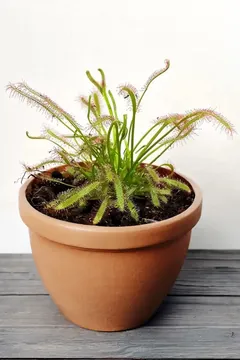
Drosera capensis
- LightCape Sundew needs bright direct light at 250 to 1000…
- WaterCape Sundew must remain wet at all times. Use only room…
- ToxicityNot ASPCA-listed
- Mature sizeIt eventually grows 6 to 12 in / 15 to…
Cape Sundew is a small carnivorous plant that forms a low rosette. Its narrow leaves carry sticky, tentacle-like glands that trap small insects. The glistening droplets give the foliage a jeweled appearance while helping the plant collect nutrients. This sundew suits sunny windows and growers willing to use mineral-free water. Unlike most houseplants, it needs permanently wet, nutrient-poor soil and should never receive standard fertilizer.
Full care guide →
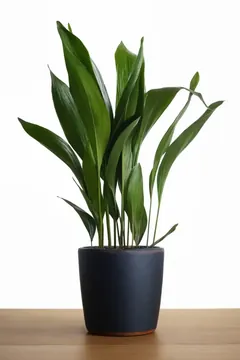
Aspidistra elatior
- LightCast Iron Plant tolerates low to medium indirect light at…
- WaterWater Cast Iron Plant when half of the soil has dried. Use…
- ToxicitySafe for cats & dogs
- Mature sizeIt eventually reaches 1 to 3 ft / 30 to…
Cast Iron Plant is an evergreen perennial that grows as a dense clump. Long, arching leaves have a deep green color, leathery texture, and simple upright shape. It is valued indoors because it tolerates lower light and occasional lapses in care better than many foliage plants. This slow, durable plant suits shaded rooms, quiet corners, and growers who prefer understated foliage over flowers or fast growth.
Full care guide →
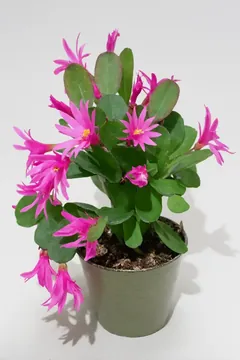
Schlumbergera bridgesii
- LightChristmas Cactus performs best in bright indirect light of…
- WaterWater Christmas Cactus when the topsoil feels dry. Although…
- ToxicitySafe for cats & dogs
- Mature sizeIt can reach 1 to 2 ft / 30 to 60 cm…
Christmas Cactus is a tropical jungle cactus rather than a desert species. It forms long, flat stems made from linked segments, with bright flowers appearing near the tips. Blooms may be red, pink, or white and usually arrive around the winter holidays. It is easy to grow indoors and works well in pots where its arching stems can hang freely.
Full care guide →
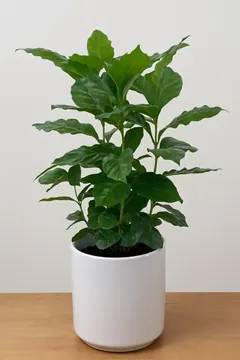
Coffea arabica
- LightCoffee Plant needs bright indirect light of 150 to 250…
- WaterKeep Coffee Plant soil consistently moist but not soggy…
- ToxicityToxic to pets
- Mature sizeIt can grow 3 to 6 ft / 1 to 2 m tall…
Coffee Plant is an evergreen shrub with glossy green leaves and a neat, upright form. Mature specimens may produce fragrant white flowers followed by red fruits called coffee cherries. It brings rich foliage and an unusual crop plant story indoors. Care is moderately demanding because the roots need steady moisture, while the leaves prefer bright filtered light and higher humidity.
Full care guide →
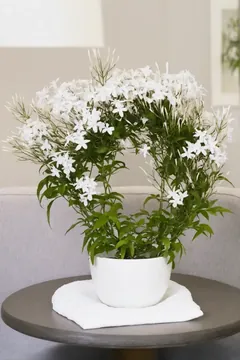
Trachelospermum jasminoides
- LightConfederate Jasmine grows best in bright indirect light of…
- WaterWater Confederate Jasmine when the topsoil feels dry. Check…
- ToxicitySafe for cats & dogs
- Mature sizeThe plant may spread 3 to 4 ft / 0
Confederate Jasmine is an evergreen climber with glossy dark green leaves and twining stems. Its foliage often turns deep bronze-red during winter. Clusters of strongly fragrant white flowers appear from mid to late summer. Indoors, it needs support and room to climb, but rewards steady care with a leafy screen and seasonal scent.
Full care guide →
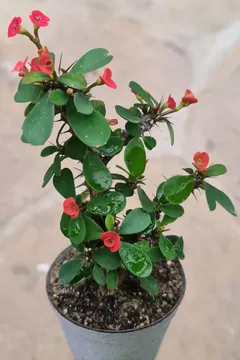
Euphorbia milii
- LightCrown of Thorns needs bright direct light of 250 to 1000…
- WaterAllow Crown of Thorns soil to dry out completely between…
- ToxicityToxic to pets
- Mature sizeIt can reach 2 to 3 ft / 60 to 90 cm…
Crown of Thorns is a woody succulent shrub with thick, spiny stems. Small flowers are surrounded by colorful bracts that create most of the display. Its upright form and tolerance for dry soil make it manageable in sunny indoor spaces. Growers must place it carefully because both the sharp spines and irritating milky sap can cause injury.
Full care guide →
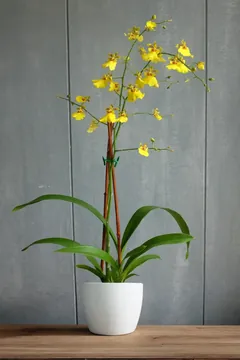
Oncidium altissimum
- LightDancing Lady Orchid prefers bright indirect light of 150 to…
- WaterWater Dancing Lady Orchid when the top of its potting…
- ToxicitySafe for cats & dogs
- Mature sizeFlowering growth may reach 2 to 4 ft /…
Dancing Lady Orchid is an epiphytic orchid known for long, branching flower sprays. Its yellow and brown blooms have a shape often compared with small dancing figures. The airy display adds height without requiring a broad, leafy plant. It suits growers with some orchid experience who can provide filtered light, an open bark mix, and careful watering.
Full care guide →
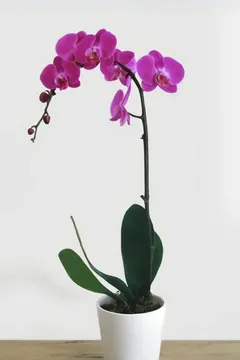
Dendrobium
- LightDendrobium Orchid prefers bright indirect light of 150 to…
- WaterWater Dendrobium Orchid when the top of the potting medium…
- ToxicitySafe for cats & dogs
- Mature sizeIt reaches 1 to 2 ft / 30 to 60 cm tall…
Dendrobium Orchid refers to a diverse group of epiphytic orchids with showy, long-lasting flowers. Blooms may be white, purple, yellow, or pink, depending on the species or cultivar. Their upright or arching canes create a strong shape even when flowers are absent. They suit growers with some experience because temperature and seasonal needs can differ across the group.
Full care guide →
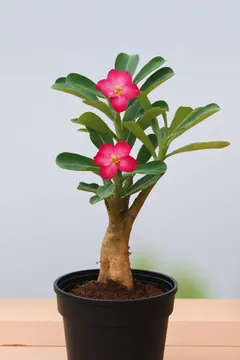
Adenium obesum
- LightDesert Rose needs bright direct light at 250 to 1000…
- WaterLet the potting mix dry completely before watering Desert…
- ToxicityToxic to pets
- Mature sizeIndoors, it can eventually stand 3 to 6…
Desert Rose is a succulent shrub with a thick, swollen base called a caudex. Glossy green leaves grow from its branching stems. Trumpet-shaped blooms appear in pink, red, or white. Its sculptural form and colorful flowers make it an appealing indoor specimen. It suits growers who can provide strong sun, careful watering, and a warm location.
Full care guide →
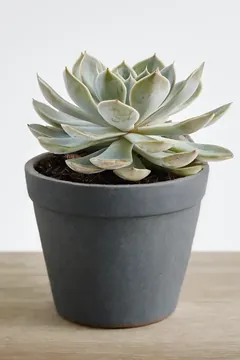
Echeveria
- LightEcheveria needs bright direct light at 250 to 1000…
- WaterAllow Echeveria soil to dry completely before watering…
- ToxicitySafe for cats & dogs
- Mature sizeMost indoor plants grow 6 to 12 in / 15…
Echeveria is a group of compact succulents that form neat leaf rosettes. Their fleshy, spoon-shaped leaves store water and may appear green, blue, gray, or red-edged. The geometric form suits sunny windowsills and small containers. It is an easy choice for growers who can provide strong light, sparse watering, and a gritty mix that dries quickly.
Full care guide →
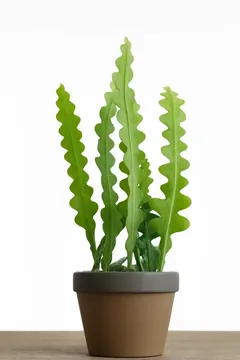
Epiphyllum anguliger
- LightFishbone Cactus prefers bright indirect light at 150 to 250…
- WaterWater Fishbone Cactus when the topsoil feels dry. Although…
- ToxicitySafe for cats & dogs
- Mature sizeIts trailing growth can reach 1 to 2 ft…
Fishbone Cactus is an epiphytic cactus with long, flattened stems that trail from its container. Deep, regular lobes give each stem the outline of a fish skeleton. Unlike desert cacti, it prefers filtered light and somewhat more moisture and humidity. Its cascading habit makes it well suited to hanging baskets, high shelves, and containers where the patterned stems can remain visible.
Full care guide →
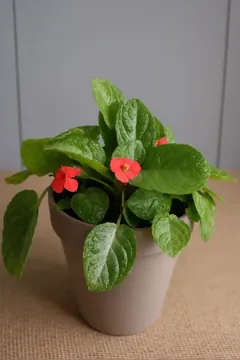
Episcia cupreata
- LightFlame Violet prefers bright indirect light at 150 to 250…
- WaterWater Flame Violet when the topsoil feels dry to the touch…
- ToxicitySafe for cats & dogs
- Mature sizeIt stays 4 to 8 in / 10 to 20 cm tall…
Flame Violet is a trailing evergreen perennial that forms rosettes of soft, velvety leaves. Its stems cascade over container edges, while bright red, funnel-shaped flowers add color. Under suitable conditions, blooming can continue throughout the year. The plant works well in hanging baskets but suits growers who can provide warm air, raised humidity, bright filtered light, and careful watering.
Full care guide →
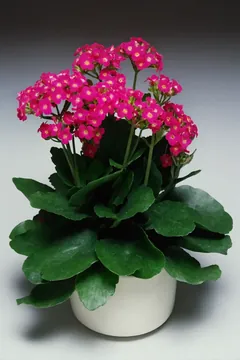
Kalanchoe blossfeldiana
- LightFlaming Katy grows best in bright, indirect light measuring…
- WaterWater Flaming Katy after the surface soil becomes dry…
- ToxicityToxic to pets
- Mature sizeA mature plant stands about 12 to 18 in…
Flaming Katy is a compact, branching succulent with shiny green foliage and dense flower clusters. Its vivid blooms add lasting color without taking up much room. The fleshy leaves store water, so it handles occasional missed watering better than constantly wet soil. It suits bright indoor spaces and growers who want a small flowering plant with simple seasonal care.
Full care guide →
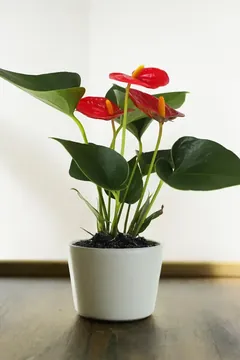
Anthurium andraeanum
- LightFlamingo Flower prefers bright, indirect light at 150 to…
- WaterWater Flamingo Flower once the topsoil feels dry. Test the…
- ToxicityToxic to pets
- Mature sizeIndoors, its eventual height is 1 to 2…
Flamingo Flower is an upright tropical plant that naturally grows as an epiphyte. It has broad, glossy leaves with a clear heart shape. Colorful spathes rise above the foliage and provide its main indoor display. This plant suits someone who can offer bright filtered light, an airy root mix and steady moisture without leaving the roots waterlogged.
Full care guide →
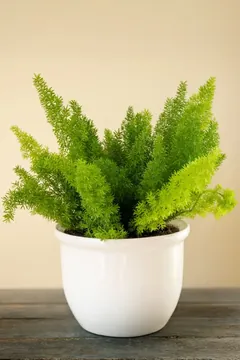
Asparagus densiflorus
- LightFoxtail Fern performs best under bright, indirect light…
- WaterWater Foxtail Fern after the topsoil feels dry. Check the…
- ToxicityToxic to pets
- Mature sizeIts eventual height is 2 to 3 ft / 60…
Foxtail Fern is an airy plant with soft, needle-like foliage arranged on plump, upright stems. Each stem resembles a fluffy fox tail, creating a fine texture without the look of a typical broad-leaf houseplant. Despite its common name, it is an asparagus relative rather than a true fern. It suits growers who can provide filtered light, regular watering and room for a rounded mature clump.
Full care guide →
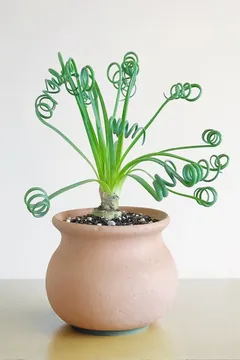
Albuca spiralis
- LightFrizzle Sizzle Plant favors bright, indirect light at 150…
- WaterAllow the Frizzle Sizzle Plant's soil to become completely…
- ToxicitySafe for cats & dogs
- Mature sizeIt eventually stands 8 to 12 in / 20 to…
Frizzle Sizzle Plant is a compact bulb plant known for narrow leaves that twist into corkscrew curls. The foliage rises from an underground bulb and gives the plant an unusual shape even when it is not blooming. In late winter or spring, tall stalks carry yellow flowers with a vanilla fragrance. It suits a bright room and a grower comfortable with a seasonal growth cycle.
Full care guide →
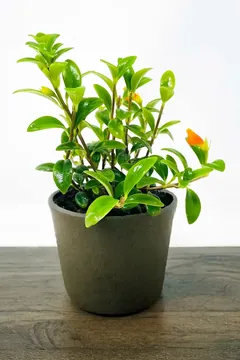
Nematanthus gregarius
- LightGoldfish Plant flowers best in bright, indirect light at…
- WaterKeep Goldfish Plant soil consistently moist but never…
- ToxicitySafe for cats & dogs
- Mature sizeIts trailing stems can reach 2 to 3 ft…
Goldfish Plant is a trailing houseplant with glossy green leaves and bright tubular flowers. Its orange or yellow blooms resemble small goldfish along the stems. The hanging habit works well on a shelf or in a suspended pot. This plant suits growers who can provide bright filtered light, steady moisture and moderate humidity without allowing the roots to remain soggy.
Full care guide →
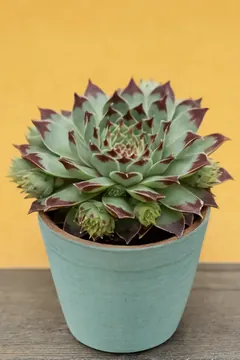
Sempervivum tectorum
- LightHouseleek needs bright, indirect light in the range of 150…
- WaterLet Houseleek soil dry completely before watering. Test…
- ToxicityNot ASPCA-listed
- Mature sizeRosettes stand 4 to 6 in / 10 to 15 cm…
Houseleek is a low, mat-forming succulent made of tight rosettes. Each rosette contains fleshy, pointed leaves and produces offsets around its base. In summer, mature growth may send up a stalk bearing star-shaped pink or red flowers. The plant stays short and suits a sunny indoor collection, especially where fast drainage and long dry intervals can be provided.
Full care guide →
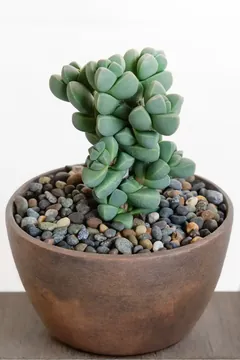
Corpuscularia lehmannii
- LightIce Plant prefers bright, indirect light measuring 150 to…
- WaterAllow Ice Plant soil to dry completely before watering…
- ToxicitySafe for cats & dogs
- Mature sizesee care guide
Ice Plant is a compact succulent with plump, angular leaves that have a distinctive triangular shape. The green foliage grows in close pairs and gives the plant a geometric look. Bright yellow, daisy-like flowers may appear in spring or summer. Its small size works well on a bright sill or plant shelf, provided the soil can dry fully between waterings.
Full care guide →
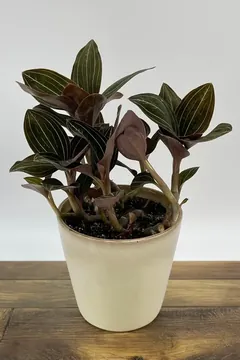
Ludisia discolor
- LightJewel Orchid prefers bright, indirect light between 150 and…
- WaterWater Jewel Orchid when the topsoil feels dry. Test with a…
- ToxicityNot ASPCA-listed
- Mature sizeIts eventual height is 6 to 12 in / 15…
Jewel Orchid is grown mainly for its richly patterned foliage. Velvety leaves range from dark green to almost black and carry pinkish-orange veins. Once a year, the plant typically sends up long spikes of small white flowers. Its compact shape works well in a warm indoor display. It suits growers who value leaves over large blooms and can provide an airy orchid mix.
Full care guide →
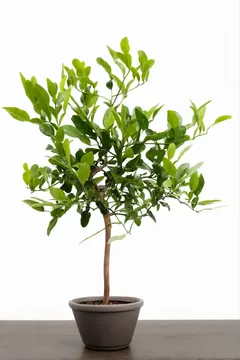
Citrus hystrix
- LightKaffir Lime grows best in bright, indirect light measuring…
- WaterWater Kaffir Lime after the topsoil becomes dry to the…
- ToxicityNot ASPCA-listed
- Mature size5 m, with a spread of 3 to 4 ft / 0
Kaffir Lime is an evergreen citrus shrub grown indoors for its glossy, double leaves and strong citrus scent. Small, bumpy fruits may follow fragrant white flowers when care is suitable. The aromatic foliage is its main indoor attraction. This plant suits growers who can provide bright light, careful watering, and enough room for a compact shrub.
Full care guide →
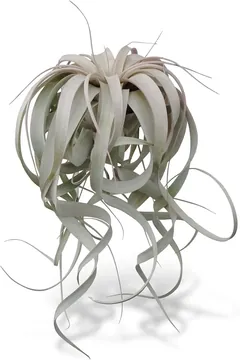
Tillandsia xerographica
- LightKing of Air Plants needs bright, indirect light measuring…
- WaterKing of Air Plants needs a full soak rather than soil…
- ToxicityNot ASPCA-listed
- Mature sizeIt eventually reaches 12 to 24 inches /…
King of Air Plants forms a broad rosette of curling, silvery-green leaves with an octopus-like shape. It needs no potting soil, so it can become a sculptural display on its own. A mature plant may flower once during its lifetime, producing striking red and purple blooms. It suits growers who want an unusual specimen and can maintain a regular soaking routine.
Full care guide →
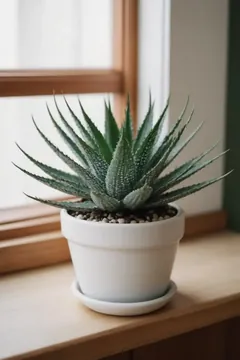
Aristaloe aristata
- LightLace Aloe grows in bright, indirect light at 150 to 250…
- WaterLet the Lace Aloe potting mix dry completely before…
- ToxicityNot ASPCA-listed
- Mature sizeIt eventually reaches 12 to 18 in / 30…
Lace Aloe is a compact, hardy succulent that forms rosettes of dark green leaves. Small white bumps decorate the foliage, while toothed edges create a textured outline. Under suitable conditions, orange-red tubular flowers appear during summer. This easy plant suits a sunny indoor collection and growers who prefer letting the potting mix dry fully between deep waterings.
Full care guide →
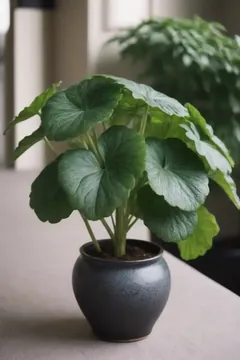
Farfugium japonicum
- LightLeopard Plant needs bright, indirect light at 150 to 250…
- WaterKeep Leopard Plant soil evenly moist, but not soggy. Check…
- ToxicityNot ASPCA-listed
- Mature sizeIts eventual height is 12 to 18 in / 30…
Leopard Plant is a slow-growing evergreen perennial with large, rounded leaves and a glossy surface. Dark green spots create the leopard-like pattern behind its common name. Small yellow flowers may appear during spring. Indoors, it offers bold foliage rather than height. It suits an easy to intermediate grower who can maintain moist soil, moderate humidity, and protection from direct sun.
Full care guide →
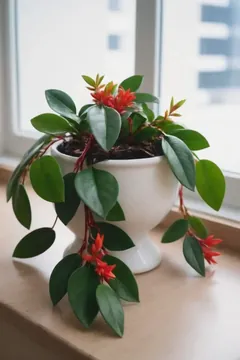
Aeschynanthus pulcher
- LightLipstick Plant performs best in bright, indirect light…
- WaterKeep Lipstick Plant soil consistently moist without leaving…
- ToxicityNot ASPCA-listed
- Mature sizeIts trailing growth can reach 2 to 3 ft…
Lipstick Plant is an evergreen perennial with glossy green leaves carried along trailing stems. Bright red tubular blooms emerge with the look of lipstick rising from a tube. The cascading growth works well in a hanging pot or raised position. It suits an easy to intermediate grower who wants flowering foliage and can supply indirect light, steady moisture, and moderate humidity.
Full care guide →
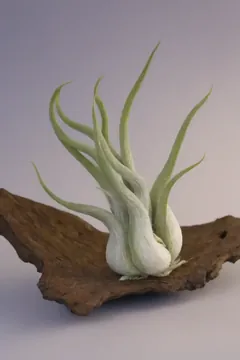
Tillandsia caput-medusae
- LightMedusa’s Head prefers bright, indirect light at 150 to 250…
- WaterMedusa’s Head absorbs moisture through its leaves rather…
- ToxicitySafe for cats & dogs
- Mature sizeA mature plant is usually 6 to 8 in /…
Medusa’s Head is a soil-free air plant with silvery-green leaves that curl and twist outward. Their snake-like form gives the plant its memorable common name. A vivid pink flower can appear during summer. Its small size works well on mounted displays, shelves, or open terrariums. It is easy to place, but regular soaking and good air movement remain important for healthy growth.
Full care guide →
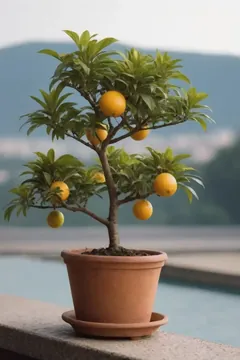
Citrus
- LightMeyer Lemon Tree needs bright direct light at 250 to 1000…
- WaterWater a Meyer Lemon Tree when the topsoil feels dry. Check…
- ToxicityToxic to pets
- Mature sizeIts eventual indoor height is 5 to 10…
Meyer Lemon Tree is a compact evergreen citrus with glossy dark green leaves and some spines. Fragrant white blossoms can develop into rounded orange-yellow fruit. Its lemons taste sweeter and less acidic than common lemons. The tree can grow in a large indoor container, but fruiting demands abundant direct sun. It suits growers who can provide a bright window, seasonal feeding, and room for a small tree.
Full care guide →
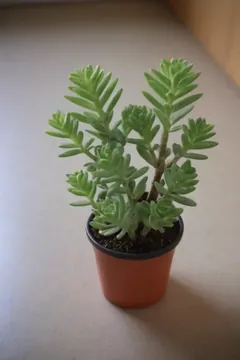
Crassula tetragona
- LightMiniature Pine Tree grows best in bright, indirect light at…
- WaterAllow the soil around Miniature Pine Tree to dry out…
- ToxicitySafe for cats & dogs
- Mature sizeIt can reach 3 feet / 1 m tall and…
Miniature Pine Tree is a succulent rather than a true pine. Its fleshy, triangular leaves resemble short pine needles, while older stems turn woody and form a small tree-like shape. Mature plants may produce small white or cream flowers during spring and summer. It suits sunny indoor displays and growers who prefer letting soil dry fully between waterings. Pruning can help preserve its branching form.
Full care guide →
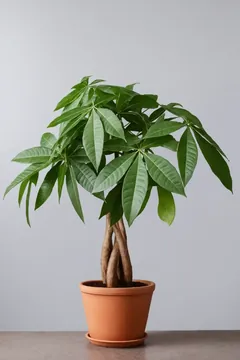
Pachira aquatica
- LightMoney Tree prefers bright, indirect light at 150 to 250…
- WaterWater Money Tree once the topsoil feels dry. Check the soil…
- ToxicitySafe for cats & dogs
- Mature sizeIt eventually reaches 3 to 6 ft / 0
Money Tree is a small indoor tree with glossy leaves divided into hand-like clusters. Several young trunks are often braided to create the familiar decorative form. The plant is linked with prosperity and good luck, making it a common gift. It grows well in bright filtered light and fits floor pots or large tabletops while young. Choose it for tropical foliage, an upright shape, and manageable indoor care.
Full care guide →
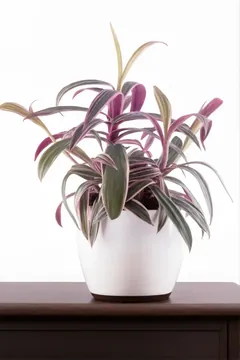
Tradescantia spathacea
- LightMoses in the Cradle prefers bright, indirect light at 150…
- WaterKeep the soil around Moses in the Cradle consistently moist…
- ToxicityToxic to pets
- Mature sizesee care guide
Moses in the Cradle is an evergreen perennial that forms upright rosettes of long, sword-shaped leaves. Their upper surfaces are glossy green, while the undersides are rich purple. Small white flowers with three petals appear inside purple, boat-like bracts among the foliage. The plant offers strong color without relying on blooms and stays compact enough for windowsills, tables, or mixed indoor displays.
Full care guide →
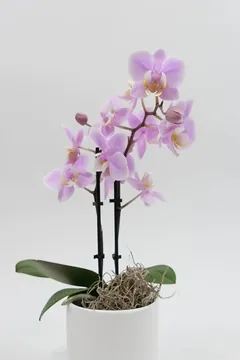
Phalaenopsis
- LightMoth Orchid grows best in bright, indirect light at 150 to…
- WaterWater Moth Orchid when the top of the medium feels dry or…
- ToxicitySafe for cats & dogs
- Mature sizeA mature plant stands about 1 to 2 ft /…
Moth Orchid is a popular flowering orchid with broad, leathery dark green leaves. Long arching spikes carry elegant blooms in many colors and patterns. The flowers often remain attractive for an extended period, making this orchid a common indoor display plant. It suits growers who can provide filtered light, an airy bark mix, and careful watering based on root color rather than a rigid calendar.
Full care guide →
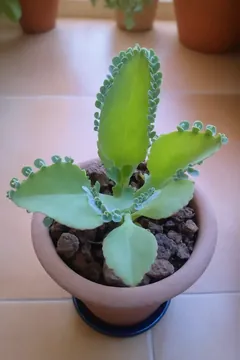
Kalanchoe daigremontiana
- LightMother of Thousands prefers bright, indirect light at 150…
- WaterAllow the soil around Mother of Thousands to dry out…
- ToxicityToxic to pets
- Mature sizeIt can reach 2 to 3 ft / 60 to 90 cm…
Mother of Thousands is a succulent with upright, lance-shaped leaves and scalloped edges. Tiny plantlets form along those edges and drop readily, allowing the plant to spread into nearby pots. The leaves are emerald green, and small grayish-lavender flowers may appear in winter. It is easy to propagate and tolerate dry soil, but its toxicity and prolific plantlets require careful placement around children, pets, and other containers.
Full care guide →
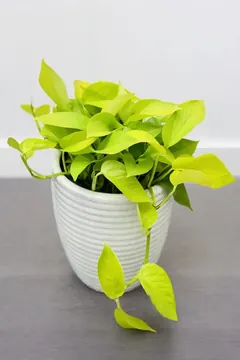
Epipremnum aureum
- LightNeon Pothos prefers bright, indirect light but tolerates…
- WaterLet Neon Pothos become almost dry before watering again…
- ToxicityToxic to pets
- Mature size4 m, with an eventual spread of 3 to 6…
Neon Pothos is a trailing or climbing vine grown for its vivid neon-green leaves. Its bright foliage adds color without flowers and looks striking in hanging baskets or on a support. The plant tolerates lower light, though useful indirect light keeps growth fuller and the color stronger. It suits many indoor spaces, but regular soil checks are important because prolonged wetness can damage its roots.
Full care guide →
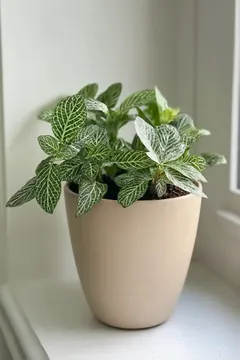
Fittonia albivenis
- LightNerve Plant prefers bright, indirect light at 150 to 250…
- WaterKeep Nerve Plant soil consistently moist, but never soggy…
- ToxicitySafe for cats & dogs
- Mature sizeIt stays low at 6 to 8 in / 15 to 20 cm…
Nerve Plant is a small evergreen perennial with low, creeping stems. Its leaves display a vivid network of white, red, or pink veins against darker foliage. The compact habit works well in terrariums, shallow pots, and small indoor displays. It prefers steady moisture and high humidity, so it needs more attention than a drought-tolerant plant. Choose it for bold leaf detail rather than height or flowers.
Full care guide →
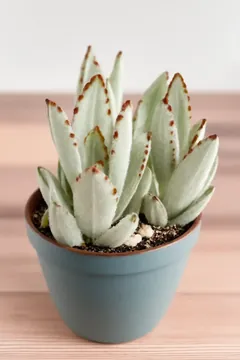
Kalanchoe tomentosa
- LightPanda Plant prefers bright, indirect light at 150 to 250…
- WaterAllow Panda Plant soil to dry out completely before…
- ToxicityToxic to pets
- Mature sizeIts eventual height is 1 to 2 ft / 30…
Panda Plant is a succulent with thick, velvety leaves in soft greyish-green. Fine hairs cover the foliage, while scalloped edges add darker detail. It may produce small bell-shaped flowers in red, pink, yellow, or orange, though blooming is rare indoors. This plant suits bright rooms and growers who prefer infrequent watering. Its tactile foliage is appealing, but the toxic leaves must stay away from children and pets.
Full care guide →
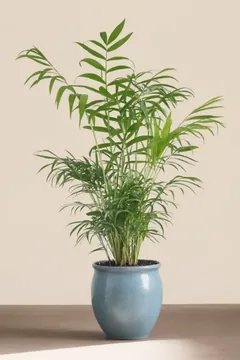
Chamaedorea elegans
- LightThe Parlour Palm prefers bright, indirect light but…
- WaterKeep the Parlour Palm evenly moist, but never leave its…
- ToxicitySafe for cats & dogs
- Mature sizeIndoors, it can reach 3 to 6 feet / 0
The Parlour Palm is a compact indoor palm with soft, light green fronds. Mature plants may develop tiny yellow flowers followed by black fruits. Its manageable size and easy care suit homes and offices. It also tolerates lower light than many palms. People often grow it for its graceful foliage and reputation as an air-purifying plant.
Full care guide →
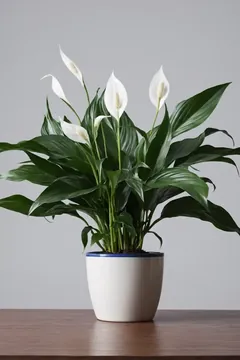
Spathiphyllum
- LightPeace Lily performs best in bright, indirect light…
- WaterKeep Peace Lily soil consistently moist without making it…
- ToxicityToxic to pets
- Mature sizeDepending on the variety, it may grow 1…
The Peace Lily is a leafy tropical grown for glossy, dark green foliage and upright white spathes. These flower-like structures are modified leaves surrounding the true flowers. Its full shape works well on floors, desks, and shaded indoor displays. It is easy to maintain when moisture stays steady, though its toxicity makes careful placement important in homes with pets or young children.
Full care guide →
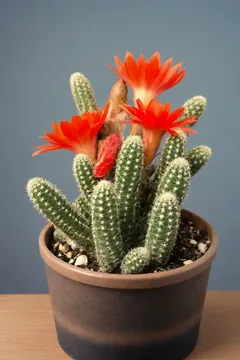
Echinopsis chamaecereus
- LightPeanut Cactus needs bright, direct light between 250 and…
- WaterLet the Peanut Cactus soil dry completely before watering…
- ToxicityNot ASPCA-listed
- Mature sizesee care guide
The Peanut Cactus is a small succulent that forms spreading clumps of short, finger-like stems. Their shape gives the plant its common name. Mature clumps can produce vivid orange or red flowers during spring and summer. Its modest height suits sunny windowsills and compact displays. It is easy to manage when given strong light, gritty soil, and careful watering.
Full care guide →
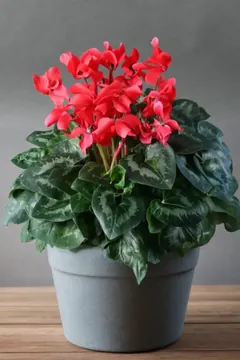
Cyclamen persicum
- LightPersian Cyclamen grows best in bright, indirect light…
- WaterWater Persian Cyclamen when the topsoil feels dry. Check…
- ToxicityToxic to pets
- Mature sizeIt eventually reaches 6 to 19 inches /…
Persian Cyclamen is a tuberous perennial valued for fragrant flowers from fall through late spring. Its dark green, heart-shaped leaves often carry silver or gray marbling. The flowers and patterned foliage make it useful for cool indoor displays. It suits growers who can provide bright filtered light, careful watering, and cooler conditions than most tropical houseplants prefer.
Full care guide →
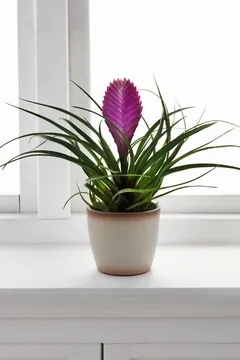
Tillandsia cyanea
- LightPink Quill needs bright, indirect light between 150 and 250…
- WaterPink Quill absorbs much of its water through its foliage…
- ToxicitySafe for cats & dogs
- Mature sizesee care guide
Pink Quill is a small evergreen air plant with arching green leaves and a flat, long-lasting pink bract. Its shape resembles a decorative quill. Violet flowers emerge from the bract during summer. The plant needs no conventional soil, so it works well on mounts, in coarse media, or as part of a compact indoor display with bright filtered light.
Full care guide →
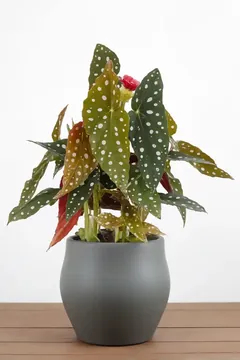
Begonia maculata
- LightPolka Dot Begonia prefers bright, indirect light at 150 to…
- WaterWater Polka Dot Begonia when the topsoil feels dry. Check…
- ToxicityToxic to pets
- Mature sizeIt eventually reaches 2 to 3 ft / 60 to…
Polka Dot Begonia has large, angel-wing leaves covered with silvery-green spots. The upper surface contrasts sharply with a red underside. Under suitable indoor conditions, the plant may also produce delicate pink flowers. Its upright canes and patterned foliage make it a bold display plant. It suits growers who can balance bright filtered light with careful watering and moderate humidity.
Full care guide →
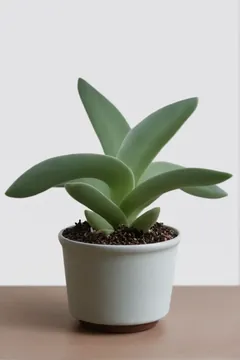
Crassula falcata
- LightPropeller Plant needs bright, direct light from 250 to 1000…
- WaterLet Propeller Plant soil dry completely before watering…
- ToxicitySafe for cats & dogs
- Mature sizeIt reaches 1 to 2 ft / 30 to 60 cm tall
Propeller Plant is a succulent with thick, grayish-green leaves arranged in a spiral around upright stems. Their opposing shape resembles a propeller. Mature plants may develop clusters of tiny red flowers during summer. Its geometric foliage suits sunny windows and succulent collections. It is easy to maintain when given strong light, fast-draining soil, and complete drying between waterings.
Full care guide →
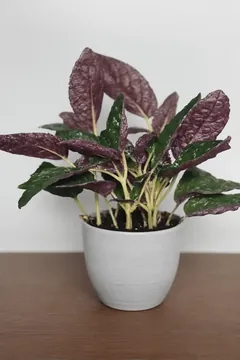
Hemigraphis alternata
- LightPurple Waffle Plant prefers bright, indirect light…
- WaterKeep Purple Waffle Plant soil consistently moist without…
- ToxicitySafe for cats & dogs
- Mature sizeIt grows 8 to 12 in / 20 to 30 cm tall…
Purple Waffle Plant is a small houseplant with metallic gray-green foliage and vivid purple undersides. Each leaf has a deeply crinkled surface that resembles a waffle. Small white flowers may appear during summer. Its compact, spreading form suits shelves, terrariums, and mixed displays. It is easy to grow when the soil stays evenly moist and humidity remains above typical dry-room levels.
Full care guide →
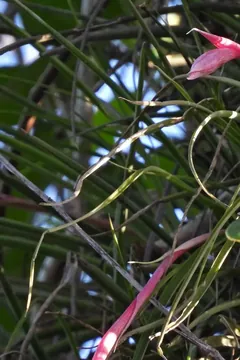
Billbergia nutans
- LightBright, indirect light near an east or west window, or…
- WaterWater the mix when the top 2 to 3 cm (about an inch) feels…
- ToxicityNot ASPCA-listed
- Mature sizeAbout 30 to 50 cm (12 to 20 in) tall…
Queen's Tears is a small bromeliad that forms a funnel-shaped rosette of arching, grey-green leaves. In late winter it sends up a drooping spike of pink bracts with green, purple-edged flowers that drip nectar onto the leaves, which is why it is also called the friendship plant.
Full care guide →
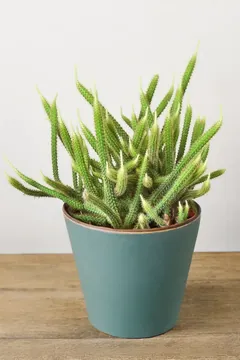
Aporocactus flagelliformis
- LightRattail Cactus needs bright direct light at 250 to 1000…
- WaterLet the potting mix dry completely before watering Rattail…
- ToxicitySafe for cats & dogs
- Mature sizeIts hanging stems can reach an eventual…
Rattail Cactus forms slender, whip-like stems that trail over the edge of a pot or hanging basket. Short spines cover each long green stem. In spring and summer, established plants can produce vivid pink or red tubular flowers. It suits sunny indoor spaces and growers who prefer a drought-tolerant plant. Its hanging stems need room to extend without being handled often.
Full care guide →
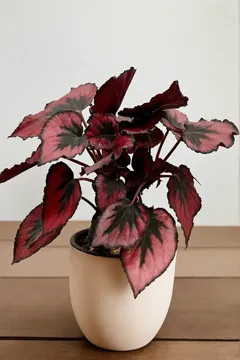
Begonia rex-cultorum
- LightRex Begonia needs bright indirect light at 150 to 250…
- WaterKeep Rex Begonia evenly moist, but do not leave its soil…
- ToxicityToxic to pets
- Mature sizeIt eventually reaches 12 to 18 in / 30…
Rex Begonia is grown mainly for dramatic foliage rather than flowers. Its leaves vary widely in shape, color, and surface texture. Depending on the cultivar, they may show metallic highlights, velvet-like surfaces, or sharp graphic patterns. This compact plant adds strong color to shelves and tabletops. It suits attentive growers who can provide filtered light, steady moisture, and good humidity without soaking the roots.
Full care guide →
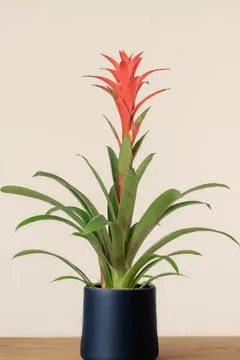
Guzmania lingulata
- LightScarlet Star prefers bright indirect light at 150 to 250…
- WaterKeep fresh water in the central cup of Scarlet Star. Flush…
- ToxicitySafe for cats & dogs
- Mature sizeA full rosette can reach 1 to 2 ft / 30…
Scarlet Star is a bromeliad that forms a central rosette of stiff, sword-shaped leaves. The overlapping bases create a cup that naturally holds water. A bright central bract, which is a modified leaf, provides the display commonly mistaken for a flower. Its tidy shape and long-lasting color suit tabletops and shelves. It is easy indoors when the cup stays fresh and the root mix remains airy.
Full care guide →
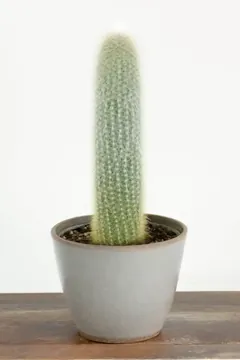
Cleistocactus strausii
- LightSilver Torch requires bright direct light at 250 to 1000…
- WaterLet the soil dry completely before watering Silver Torch…
- ToxicityNot ASPCA-listed
- Mature sizeIndoors, established columns can reach…
Silver Torch is a columnar cactus with slender silver-grey stems covered by dense, short white spines. Mature specimens may produce deep red-magenta flowers during spring and summer. Its upright form brings height without broad foliage, although older clumps eventually need substantial room. This cactus suits bright, dry indoor sites and growers who prefer infrequent watering. The sharp covering makes careful placement and handling important.
Full care guide →
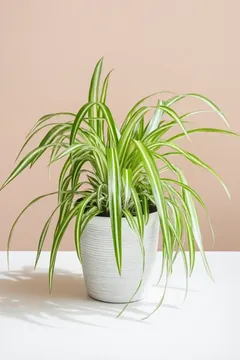
Chlorophytum comosum
- LightSpider Plant prefers bright indirect light but tolerates…
- WaterKeep Spider Plant consistently moist, but never leave the…
- ToxicitySafe for cats & dogs
- Mature sizeThe central foliage reaches about 1 to…
Spider Plant forms a fountain of narrow, arching leaves that are often striped with white. Mature plants send out long stems bearing small white flowers and young plantlets called spiderettes. These offsets make the plant especially useful in hanging baskets or on high shelves. It tolerates a range of indoor light and is easy to propagate, making it a practical choice for beginners and busy growers.
Full care guide →
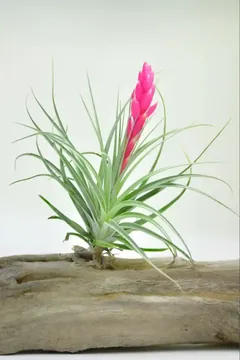
Tillandsia stricta
- LightSpotted Air Plant needs bright indirect light at 150 to 250…
- WaterSoak the entire Spotted Air Plant in rainwater for 20 to 30…
- ToxicityNot ASPCA-listed
- Mature sizeDepending on the form and conditions…
Spotted Air Plant is a clump-forming epiphyte that grows without potting soil. Its green to grayish-green leaves form a neat rosette and absorb moisture through their surfaces. In early summer, mature plants can produce bright red or pink flower spikes with blue flowers. This compact species suits mounted displays and small indoor collections. It is easy when given filtered light, weekly soaking, and enough airflow to dry properly.
Full care guide →
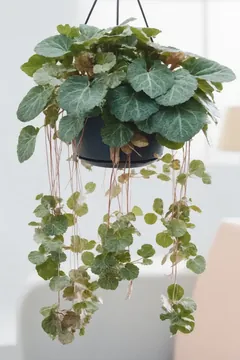
Saxifraga stolonifera
- LightStrawberry Begonia prefers bright indirect light at 150 to…
- WaterWater Strawberry Begonia when the top third of its soil has…
- ToxicitySafe for cats & dogs
- Mature sizeIts low foliage reaches 3 to 9 in / 7
Strawberry Begonia forms low rosettes of rounded, hairy leaves. The upper surfaces are dark green with silver markings, while the undersides are reddish. Slender stems carry tiny white, star-shaped flowers in summer. The plant also produces trailing growth that works well near a pot edge. Despite its common name, it is not a true begonia. It suits growers who can balance filtered light with moderate, even moisture.
Full care guide →
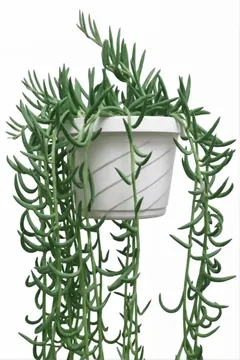
Senecio radicans
- LightString of Bananas needs bright indirect light at 150 to 250…
- WaterAllow the potting mix to dry completely before watering…
- ToxicityToxic to pets
- Mature sizeIts stems reach 1 to 2 ft / 30 to 60 cm…
String of Bananas is a trailing succulent with glossy leaves shaped like tiny bananas. Its long tendrils cascade over shelves and hanging planters, creating a dense curtain of green growth. Small white or light pink flowers may appear in spring. The plant suits bright rooms and growers who prefer the soil to dry fully between waterings. Its toxicity requires placement beyond the reach of children and pets.
Full care guide →
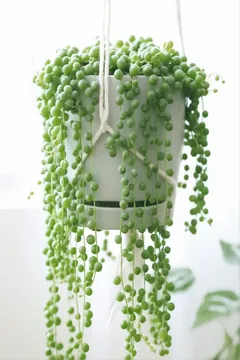
Senecio rowleyanus
- LightString of Pearls prefers bright, indirect light at 150 to…
- WaterWait until the soil has dried completely before watering…
- ToxicityToxic to pets
- Mature sizeThe plant eventually spreads about 1 to…
String of Pearls is a trailing succulent with long stems covered in rounded, pearl-like leaves. The bead-shaped foliage stores water and gives the plant its unusual texture. It looks best spilling from a hanging basket or raised shelf. This easy-care houseplant suits growers who have bright filtered light and can resist watering too often. Its delicate stems need gentle handling during watering and repotting.
Full care guide →
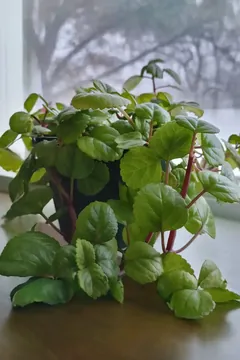
Plectranthus australis
- LightSwedish Ivy performs best in bright, indirect light of 150…
- WaterLet the soil become almost dry before watering Swedish Ivy…
- ToxicitySafe for cats & dogs
- Mature sizeIts eventual height is 2 to 3 ft / 60…
Swedish Ivy is a trailing evergreen perennial with glossy green foliage and softly scalloped edges. Flexible stems spread outward and spill over container rims, making it useful for hanging baskets and high shelves. Small purple flowers may appear during fall. This easy houseplant offers quick visual coverage without needing complex care. It suits growers who can provide bright filtered light and allow the soil to become nearly dry.
Full care guide →
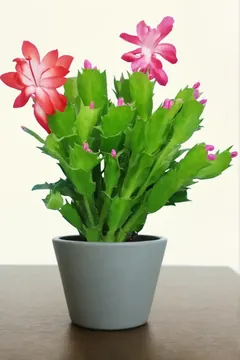
Schlumbergera truncata
- LightThanksgiving Cactus prefers bright, indirect light of 150…
- WaterWater Thanksgiving Cactus when the topsoil feels dry…
- ToxicitySafe for cats & dogs
- Mature sizeIts eventual height is 6 to 12 in / 15…
Thanksgiving Cactus is a tropical cactus grown for colorful tubular flowers that open around Thanksgiving. Instead of desert spines and rounded stems, it forms flat, linked segments with pointed edges that resemble crab claws. Its arching growth works well in pots and hanging containers. This easy houseplant offers seasonal flowers without needing desert-dry treatment. It prefers filtered light, regular drainage, and less water during slower winter growth.
Full care guide →
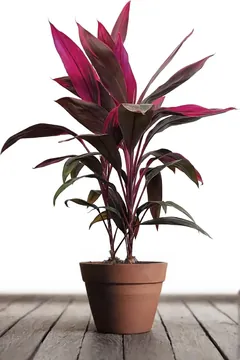
Cordyline fruticosa
- LightTi Plant favors bright, indirect light between 150 and 250…
- WaterWater Ti Plant after the top third of soil has dried. Avoid…
- ToxicityToxic to pets
- Mature sizeIndoors, its eventual height ranges…
Ti Plant is an evergreen tropical shrub with upright, sword-shaped leaves. Depending on the variety, its foliage may show green, red, purple, orange, pink, or cream tones. The bold leaves add height and color without relying on flowers. This easy to intermediate houseplant suits warm rooms with steady humidity and filtered light. It needs more careful watering than a drought-tolerant plant, especially when indoor conditions change.
Full care guide →
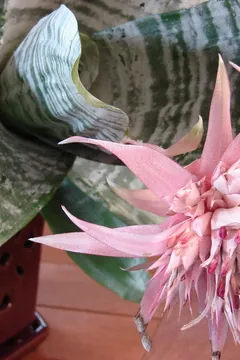
Aechmea fasciata
- LightBright, filtered light or partial shade, such as an east or…
- WaterKeep about 2.5 cm (an inch) of fresh water in the central…
- ToxicityNot ASPCA-listed
- Mature size30 to 90 cm (12 to 36 in) tall and 30…
Urn Plant grows as a stiff rosette of broad, silver-banded green leaves that holds water in a central cup, shaped like a vase. After three to five years it pushes out a large pink flower head with small violet flowers, then the rosette dies and leaves pups behind.
Full care guide →
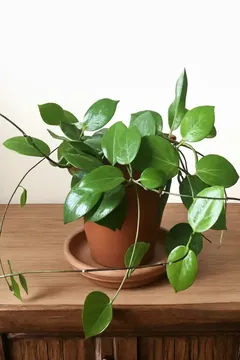
Hoya carnosa
- LightWax Plant prefers bright, indirect light from 150 to 250…
- WaterWater Wax Plant when the topsoil feels dry. Its thick…
- ToxicitySafe for cats & dogs
- Mature sizeIts eventual height is listed as 1 to 2…
Wax Plant is a climbing or trailing vine with thick, glossy leaves that have a polished look. Mature plants can form rounded clusters of sweet-smelling, star-shaped flowers. The flexible stems may be trained on a support or allowed to trail. This easy houseplant appeals to growers who want lasting foliage with the chance of fragrant blooms. It performs best with bright filtered light and careful, moderate watering.
Full care guide →
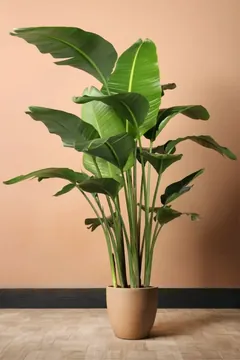
Strelitzia nicolai
- LightWhite Bird of Paradise prefers bright, indirect light at…
- WaterAllow the soil to become almost dry before watering White…
- ToxicityToxic to pets
- Mature sizeIndoors, it can reach 6 to 10 ft / 1
White Bird of Paradise is a large architectural houseplant with broad, glossy leaves shaped like paddles. Upright stems create a bold, tropical screen as the plant matures. Older specimens can produce white and blue flowers, though indoor blooming is rare. This easy to intermediate plant needs generous floor space, height, and bright filtered light. It suits a roomy home better than a crowded shelf or narrow windowsill.
Full care guide →
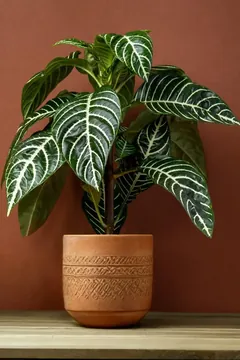
Aphelandra squarrosa
- LightZebra Plant prefers bright, indirect light in the 150 to…
- WaterKeep Zebra Plant soil consistently moist but never soggy…
- ToxicitySafe for cats & dogs
- Mature sizeIts eventual height is 2 to 4 ft / 0
Zebra Plant is a tropical evergreen shrub with dark green leaves crossed by bold white or yellow veins. The sharp contrast resembles zebra stripes and gives the plant year-round interest. Under suitable indoor conditions, upright spikes of bright yellow flowers may appear. This intermediate-care houseplant suits growers who can maintain even moisture, warmth, and humidity. It is less forgiving of dry soil and sudden environmental changes than many foliage plants.
Full care guide →
Common questions
Why is my flowering indoor plant not blooming?
Insufficient light, recent stress, unsuitable temperature or a mismatch in watering and feeding can delay flowering. Check the species page because bloom triggers differ.
Do all flowering indoor plants need direct sun?
No. African Violet and Azalea favour bright indirect light, while Bird of Paradise needs bright direct light.
Which listed flowering plants suit less experienced growers?
African Violet, Azalea and Bird of Paradise are marked Easy to Intermediate, while Aloe Vera and Artillery Plant are marked Easy.