This collection of indoor palm plants includes 13 choices with varied sizes, leaf forms and care levels. It suits readers looking for upright greenery or a leafy focal point, provided the available light and space match the selected plant. Areca Palm, Chinese Fan Palm, Kentia Palm and Parlour Palm are among the included members. Some favour bright indirect light, while European Fan Palm and Madagascar Palm need bright direct conditions. Despite their shared common name, the listed plants do not all have identical botanical relationships or care requirements. Use each profile to compare light and care level, and leave enough room for fronds to develop without constant contact or damage.
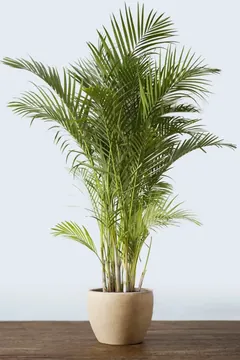
Dypsis lutescens
- LightAreca Palm thrives in bright, indirect light measuring 150…
- WaterWater Areca Palm when the topsoil feels dry. Check below…
- ToxicitySafe for cats & dogs
- Mature sizeIndoors, it can reach 6 to 10 feet / 1
Areca Palm grows as a dense clump of smooth, ringed trunks with a golden-yellow tone. Long, arching fronds divide into narrow green leaflets, creating a soft, feathery look similar to bamboo. It can become a large floor plant and needs room to spread. This palm suits bright interiors where moisture remains steady. Dry air, excess salts, and poor drainage can damage the leaf tips.
Full care guide →
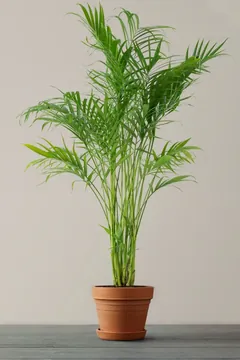
Chamaedorea cataractarum
- LightCat Palm prefers bright indirect light at 150 to 250…
- WaterWater Cat Palm when the topsoil feels dry. Check below the…
- ToxicitySafe for cats & dogs
- Mature sizeThe clump can spread 3 to 5 ft / 0
Cat Palm is a small, clustering palm with many arching, feathery fronds. Its bushy growth rises from the base rather than forming one tall, bare trunk. The foliage brings a soft tropical look to floors and broad plant stands. This palm suits a bright room with space for its widening crown. It needs more moisture and humidity than drought-tolerant palms, so regular checks are important.
Full care guide →
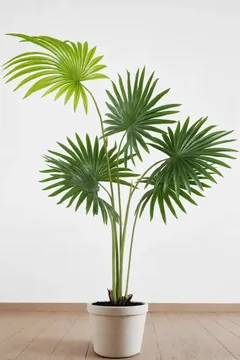
Livistona chinensis
- LightChinese Fan Palm grows best in bright indirect light of 150…
- WaterWater the Chinese Fan Palm when the topsoil feels dry…
- ToxicitySafe for cats & dogs
- Mature sizeIt may eventually reach 6 to 10 feet / 1
The Chinese Fan Palm has large, glossy fronds divided into broad fan-like sections. A mature frond can measure up to 2 ft / 60 cm across, creating a bold tropical outline. Indoors, it becomes a substantial floor plant without needing complicated care. It suits bright rooms with enough space for its widening crown and arching foliage.
Full care guide →
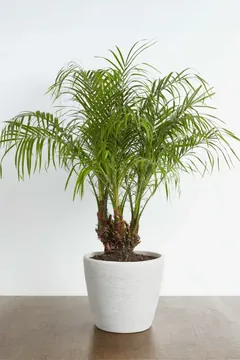
Phoenix roebelenii
- LightDwarf Date Palm needs bright indirect light at 150 to 250…
- WaterWater Dwarf Date Palm when the topsoil feels dry. Check the…
- ToxicitySafe for cats & dogs
- Mature sizeIndoors, it can reach 6 to 8 ft / 1
Dwarf Date Palm is a slow-growing palm with a slim trunk and a full crown of dark green fronds. Each frond arches outward and carries many fine, feathery leaflets. Its graceful shape brings a tropical look to bright indoor spaces. It suits growers who can provide steady moisture, filtered light, and enough room for the spreading crown.
Full care guide →
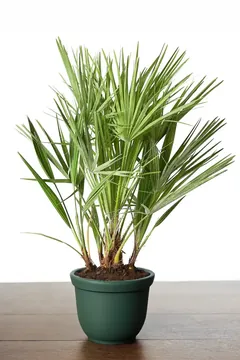
Chamaerops humilis
- LightEuropean Fan Palm needs bright direct light at 250 to 1000…
- WaterWater European Fan Palm when the topsoil feels dry. Check…
- ToxicitySafe for cats & dogs
- Mature sizeIndoors, it can reach 4 to 6 ft / 1
European Fan Palm can grow as a multi-trunked shrub or be trained as a small single-trunk tree. Its fan-shaped fronds divide into long, narrow leaflets, creating a bold architectural outline. Strong sunlight and a wide temperature tolerance make it useful for very bright rooms. Its slow growth also helps it remain manageable in a large indoor container for many years.
Full care guide →
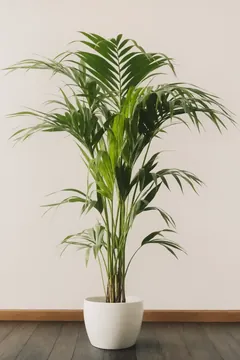
Howea forsteriana
- LightKentia Palm favors bright, indirect light between 150 and…
- WaterWater Kentia Palm when the topsoil is dry to the touch…
- ToxicityNot ASPCA-listed
- Mature sizeA mature specimen can reach 6 to 10…
Kentia Palm is a tall indoor palm with arching fronds and glossy, dark green leaflets. Its graceful outline brings height and soft texture to a room without dense, bushy foliage. It tolerates lower light better than many palms, although growth becomes slower there. This resilient plant suits growers who want a substantial floor specimen and can give it space to mature.
Full care guide →
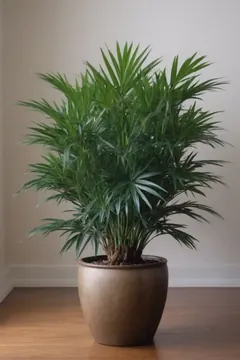
Rhapis excelsa
- LightLady Palm prefers bright, indirect light between 150 and…
- WaterWater Lady Palm after the topsoil feels dry. Check the mix…
- ToxicityNot ASPCA-listed
- Mature sizesee care guide
Lady Palm is a shade-tolerant palm that grows as a cluster of slender stems. Large, glossy leaves divide into broad fan-shaped segments, creating a full and orderly outline. Its upright form works well as a floor plant where softer tropical foliage is wanted. This easy palm suits indoor growers who can offer indirect light, regular watering, and enough space for a wide clump.
Full care guide →
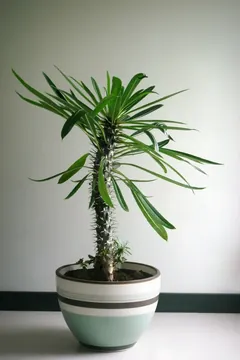
Pachypodium lamerei
- LightMadagascar Palm needs bright, direct light at 250 to 1000…
- WaterAllow Madagascar Palm soil to dry completely before…
- ToxicityNot ASPCA-listed
- Mature sizeIts mature spread remains much narrower…
Madagascar Palm is a succulent rather than a true palm. It develops a thick, swollen caudex that forms its trunk, with sharp spines along the surface. A crown of dark green leaves grows at the top. Its dramatic upright shape suits a bright floor position, but it needs careful handling, strong direct light, and room to reach a substantial indoor height.
Full care guide →
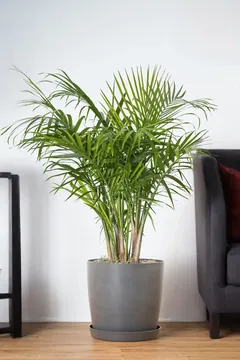
Ravenea rivularis
- LightMajesty Palm grows best in bright, indirect light at 150 to…
- WaterKeep Majesty Palm soil consistently moist without making it…
- ToxicityNot ASPCA-listed
- Mature sizeIts broad fronds may create a mature…
Majesty Palm is a tropical palm with large, feathery fronds that form a graceful indoor canopy. It comes from Madagascar, where it naturally grows near riverbanks and across swampy lowlands. That background explains its preference for steady moisture and humid air. This intermediate plant suits a roomy, bright position and a grower prepared to monitor both watering and humidity closely.
Full care guide →
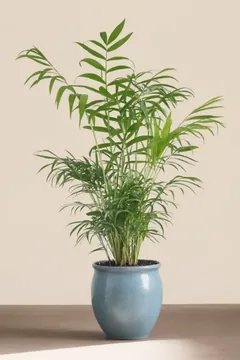
Chamaedorea elegans
- LightThe Parlour Palm prefers bright, indirect light but…
- WaterKeep the Parlour Palm evenly moist, but never leave its…
- ToxicitySafe for cats & dogs
- Mature sizeIndoors, it can reach 3 to 6 feet / 0
The Parlour Palm is a compact indoor palm with soft, light green fronds. Mature plants may develop tiny yellow flowers followed by black fruits. Its manageable size and easy care suit homes and offices. It also tolerates lower light than many palms. People often grow it for its graceful foliage and reputation as an air-purifying plant.
Full care guide →
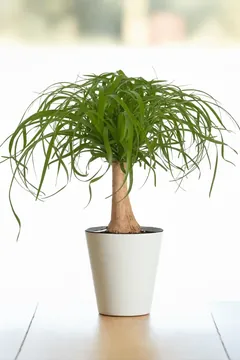
Beaucarnea recurvata
- LightPonytail Palm prefers bright, indirect light between 150…
- WaterAllow Ponytail Palm soil to dry completely before watering…
- ToxicitySafe for cats & dogs
- Mature sizeIndoors, it may reach 6 to 10 feet / 1
Ponytail Palm is a tree-like succulent rather than a true palm. Its swollen base, called a caudex, stores water. Long, narrow leaves arch from the top and droop like a ponytail. The sculptural form suits bright rooms and requires less frequent watering than tropical palms. It is a good choice for growers comfortable letting soil dry fully between waterings.
Full care guide →
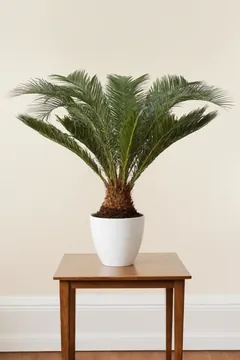
Cycas revoluta
- LightSago Palm prefers bright indirect light at 150 to 250…
- WaterAllow the soil to dry completely before watering Sago Palm…
- ToxicityToxic to pets
- Mature sizeA mature specimen may eventually stand…
Sago Palm is an evergreen cycad, not a true palm. It develops a balanced rosette of stiff, glossy, dark green leaves with a feather-like form. Growth is extremely slow, so it changes little from year to year indoors. The structured shape works well as a long-term floor plant. It suits patient growers, but its serious toxicity makes it unsuitable for homes where children or pets can reach it.
Full care guide →
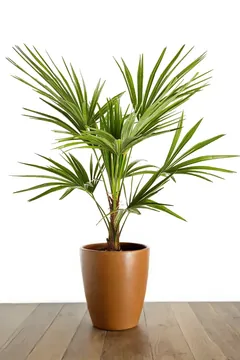
Trachycarpus fortunei
- LightWindmill Palm grows best in bright, indirect light at 150…
- WaterWater Windmill Palm when the topsoil feels dry. Check below…
- ToxicitySafe for cats & dogs
- Mature sizeIndoors, its eventual height is 6 to 8…
Windmill Palm is an evergreen palm with broad, fan-shaped leaves in deep green. Its trunk develops a dark, fibrous covering that adds texture below the canopy. Indoors, the upright form creates a strong floor-level accent without broad branching stems. This easy-care palm suits a bright room with enough height for long-term growth. It needs filtered light, a freely draining palm mix, and regular checks for dry topsoil.
Full care guide →
Common questions
Do all indoor palm plants need direct sunlight?
No. Areca Palm, Kentia Palm and Parlour Palm favour bright indirect light, while European Fan Palm needs bright direct light.
Which listed indoor palms have an Easy care level?
Chinese Fan Palm, Lady Palm and Parlour Palm are among the entries marked Easy.
Why are the tips of my palm turning brown?
Possible causes include inconsistent watering, dry air, salt build-up, root stress or unsuitable light. Check the full care routine before trimming damaged tissue.