6 indoor plants begin with L: Lace Aloe, Lady Palm, Lemon Button Fern, Leopard Plant, Lipstick Plant, Lucky Bamboo. Every entry below shows the facts you came for first: light, water, toxicity and mature size, with the full care guide one click away. 1 of them is safe for cats and dogs.
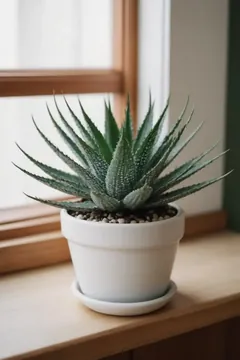
Aristaloe aristata
- LightLace Aloe grows in bright, indirect light at 150 to 250…
- WaterLet the Lace Aloe potting mix dry completely before…
- ToxicityNot ASPCA-listed
- Mature sizeIt eventually reaches 12 to 18 in / 30…
Lace Aloe is a compact, hardy succulent that forms rosettes of dark green leaves. Small white bumps decorate the foliage, while toothed edges create a textured outline. Under suitable conditions, orange-red tubular flowers appear during summer. This easy plant suits a sunny indoor collection and growers who prefer letting the potting mix dry fully between deep waterings.
Shop this plant
Full care guide →
Care notes
Lace Aloe grows in bright, indirect light at 150 to 250 μmol·m⁻²·s⁻¹.
- Position it 5 ft / 1.5 m from a south, west, or east-facing window.
- Avoid giving the rosette a clear view of the sky. Filter unavoidable direct sun with a sheer curtain.
- Excessive direct light may scorch or discolor the leaves. Weak light can stretch the compact rosette and limit flowering.
- Check photosynthetically active radiation with a PAR meter or PAR meter app, expressed as PPFD (μmol·m⁻²·s⁻¹).
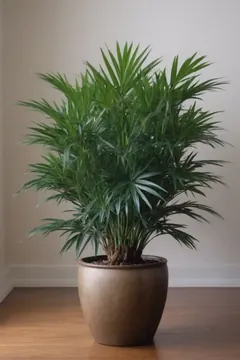
Rhapis excelsa
- LightLady Palm prefers bright, indirect light between 150 and…
- WaterWater Lady Palm after the topsoil feels dry. Check the mix…
- ToxicityNot ASPCA-listed
- Mature sizesee care guide
Lady Palm is a shade-tolerant palm that grows as a cluster of slender stems. Large, glossy leaves divide into broad fan-shaped segments, creating a full and orderly outline. Its upright form works well as a floor plant where softer tropical foliage is wanted. This easy palm suits indoor growers who can offer indirect light, regular watering, and enough space for a wide clump.
Shop this plant
Full care guide →
Care notes
Lady Palm prefers bright, indirect light between 150 and 250 μmol·m⁻²·s⁻¹.
- Set it 5 ft / 1.5 m from a south, west, or east-facing window.
- Do not give the foliage an unobstructed view of the sky. Use a sheer curtain if direct sun would otherwise strike the leaves.
- Strong sunlight can scorch the broad segments. Insufficient light can weaken or slow new growth.
- A PAR meter or PAR meter app can measure photosynthetically active radiation, reported as PPFD (μmol·m⁻²·s⁻¹).
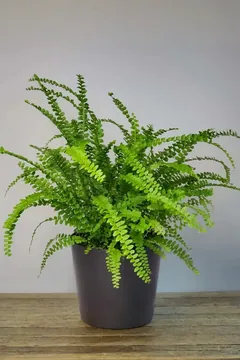
Nephrolepis cordifolia
- LightLemon Button Fern grows best in medium to bright indirect…
- WaterKeep Lemon Button Fern consistently moist without making…
- ToxicityNot ASPCA-listed
- Mature sizesee care guide
Lemon Button Fern is a small fern with a compact outline and rows of rounded, button-like leaflets. Crushing the fronds releases a faint lemon scent. Its modest size works well on shelves, desks, or other areas where a large fern would spread too far. This easy plant suits growers who can keep the mix moist without leaving it saturated.
Shop this plant
Full care guide →
Care notes
Lemon Button Fern grows best in medium to bright indirect light at 150 to 200 μmol·m⁻²·s⁻¹.
- Keep the pot 6 ft / 1.8 m from a south, west, or east-facing window.
- Avoid an unobstructed view of the sky. If direct light reaches the fronds, diffuse it with a sheer curtain.
- Excess sun may scorch the small leaflets. Too little light can slow growth and thin the compact form.
- Use a PAR meter or PAR meter app to measure photosynthetically active radiation as PPFD (μmol·m⁻²·s⁻¹).
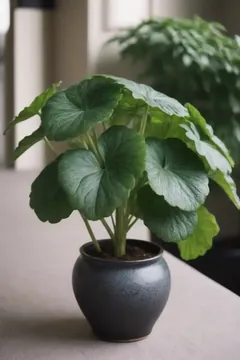
Farfugium japonicum
- LightLeopard Plant needs bright, indirect light at 150 to 250…
- WaterKeep Leopard Plant soil evenly moist, but not soggy. Check…
- ToxicityNot ASPCA-listed
- Mature sizeIts eventual height is 12 to 18 in / 30…
Leopard Plant is a slow-growing evergreen perennial with large, rounded leaves and a glossy surface. Dark green spots create the leopard-like pattern behind its common name. Small yellow flowers may appear during spring. Indoors, it offers bold foliage rather than height. It suits an easy to intermediate grower who can maintain moist soil, moderate humidity, and protection from direct sun.
Shop this plant
Full care guide →
Care notes
Leopard Plant needs bright, indirect light at 150 to 250 μmol·m⁻²·s⁻¹.
- Position it 5 ft / 1.5 m from a south, west, or east-facing window.
- The plant should not have a direct view of the sky. Filter unavoidable sunlight through a sheer curtain.
- Too much sun may scorch or fade the large patterned leaves. Low light can slow growth and reduce flowering.
- A PAR meter or PAR meter app can check photosynthetically active radiation, measured as PPFD (μmol·m⁻²·s⁻¹).
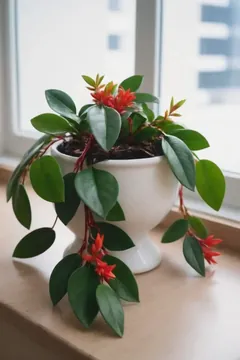
Aeschynanthus pulcher
- LightLipstick Plant performs best in bright, indirect light…
- WaterKeep Lipstick Plant soil consistently moist without leaving…
- ToxicityNot ASPCA-listed
- Mature sizeIts trailing growth can reach 2 to 3 ft…
Lipstick Plant is an evergreen perennial with glossy green leaves carried along trailing stems. Bright red tubular blooms emerge with the look of lipstick rising from a tube. The cascading growth works well in a hanging pot or raised position. It suits an easy to intermediate grower who wants flowering foliage and can supply indirect light, steady moisture, and moderate humidity.
Shop this plant
Full care guide →
Care notes
Lipstick Plant performs best in bright, indirect light measuring 150 to 250 μmol·m⁻²·s⁻¹.
- Place it 5 ft / 1.5 m from a south, west, or east-facing window.
- Avoid giving the foliage a direct view of the sky. Soften unavoidable direct sun with a sheer curtain.
- Excess sun may scorch the glossy leaves. Too little light can slow growth and reduce the display of red flowers.
- Measure photosynthetically active radiation with a PAR meter or PAR meter app, reported as PPFD (μmol·m⁻²·s⁻¹).
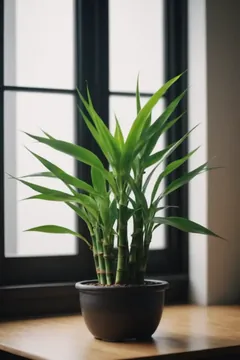
Dracaena sanderiana
- LightLucky Bamboo grows best in bright, indirect light at 150 to…
- WaterLucky Bamboo grown in soil needs consistent moisture…
- ToxicitySafe for cats & dogs
- Mature sizeIts eventual height is 1 to 2 ft / 30…
Lucky Bamboo is a small, upright foliage plant with glossy green stalks and narrow leaves. Despite its common name, it is not a true bamboo. It is often displayed with its stems growing in water, but it can also live in freely draining soil. This easy plant suits compact indoor spaces and growers who prefer either water culture or a conventional pot.
Shop this plant
Full care guide →
Care notes
Lucky Bamboo grows best in bright, indirect light at 150 to 250 μmol·m⁻²·s⁻¹.
- Place it 5 ft / 1.5 m from a south, west, or east-facing window.
- Keep it from having an unobstructed view of the sky. Use a sheer curtain where direct sunlight cannot be avoided.
- Harsh sun may scorch or bleach the narrow leaves. Too little light can produce weak, slow growth.
- A PAR meter or PAR meter app can measure photosynthetically active radiation as PPFD (μmol·m⁻²·s⁻¹).
Questions about plants that start with L
How many indoor plants start with L?
6, as listed on this page.
Is Lace Aloe safe for cats and dogs?
Not ASPCA-listed. The supplied safety information classifies Lace Aloe as non-toxic to people and pets. No ASPCA listing is supplied here, so there is no ASPCA safety ruling for this species. It cannot be called pet safe on that basis, despite the stated non-toxic classification.
How much light does a Lace Aloe need?
Lace Aloe grows in bright, indirect light at 150 to 250 μmol·m⁻²·s⁻¹.Position it 5 ft / 1.5 m from a south, west, or east-facing window. Avoid giving the rosette a clear view of the sky. Filter unavoidable direct sun with a sheer curtain. Excessive direct light may scorch or discolor the leaves. Wea
How do I know which of these plants suits my room?
Sort by the facts strip: low-light plants for north-facing rooms, pet-safe names if you have a cat or dog, and the smaller species for shelves and desks.