1 indoor plant begin with Q: Queen's Tears. Every entry below shows the facts you came for first: light, water, toxicity and mature size, with the full care guide one click away.
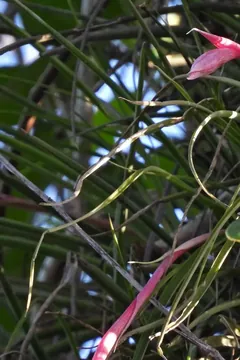
Billbergia nutans
- LightBright, indirect light near an east or west window, or…
- WaterWater the mix when the top 2 to 3 cm (about an inch) feels…
- ToxicityNot ASPCA-listed
- Mature sizeAbout 30 to 50 cm (12 to 20 in) tall…
Queen's Tears is a small bromeliad that forms a funnel-shaped rosette of arching, grey-green leaves. In late winter it sends up a drooping spike of pink bracts with green, purple-edged flowers that drip nectar onto the leaves, which is why it is also called the friendship plant.
No retailer link for this plant yet.
Full care guide →
Care notes
Bright, indirect light near an east or west window, or filtered light from a south window. Partial shade suits it and direct midday summer sun does not.
- Too much light: leaves bleach to a washed-out yellow and then develop dry brown patches on the sunward side.
- Too little light: leaves stay dark green but grow long and floppy, and the plant stops producing its winter flower spike.
Questions about plants that start with Q
How many indoor plants start with Q?
1, as listed on this page.
Is Queen's Tears safe for cats and dogs?
Not ASPCA-listed. Not ASPCA-listed, so there is no safety ruling for this plant and it cannot be called pet safe on that basis. Bromeliads the ASPCA does list, including Neoregelia, Guzmania and Cryptanthus, are classed as non-toxic to cats and dogs, and no toxic principle is documented for Billbergia. Keep it out of reach of pets that chew plants, and call your vet if a pet eats a large amount.
How much light does a Queen's Tears need?
Bright, indirect light near an east or west window, or filtered light from a south window. Partial shade suits it and direct midday summer sun does not.Too much light: leaves bleach to a washed-out yellow and then develop dry brown patches on the sunward side. Too little light: leaves stay dark gree
How do I know which of these plants suits my room?
Sort by the facts strip: low-light plants for north-facing rooms, pet-safe names if you have a cat or dog, and the smaller species for shelves and desks.