4 indoor plants begin with H: Heartleaf Philodendron, Holly Fern, Houseleek, Hoya Hearts. Every entry below shows the facts you came for first: light, water, toxicity and mature size, with the full care guide one click away. 2 of them are safe for cats and dogs.
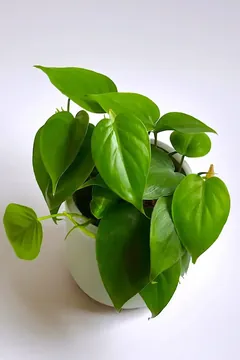
Philodendron hederaceum
- LightHeartleaf Philodendron prefers medium to bright indirect…
- WaterWater Heartleaf Philodendron when the topsoil feels dry…
- ToxicityToxic to pets
- Mature sizesee care guide
Heartleaf Philodendron is an evergreen tropical vine with glossy, heart-shaped leaves in several shades of green. Its flexible stems can trail from a shelf or climb a support. The plant adapts well to ordinary indoor rooms and responds to basic pruning. It suits beginners who want easy foliage, provided the roots receive drainage and the leaves are protected from harsh direct sun.
Shop this plant
Full care guide →
Care notes
Heartleaf Philodendron prefers medium to bright indirect light at 150 to 200 μmol·m⁻²·s⁻¹.
- Place it roughly 6 ft / 1.8m from a south, west or east-facing window.
- Choose a position without a direct view of the sky. Use a sheer curtain when sunlight would otherwise touch the foliage.
- Strong direct light can bleach or scorch the leaves. Low light produces slower growth and longer gaps between leaves.
- Use a PAR meter or PAR meter app to measure photosynthetically active radiation as PPFD in μmol·m⁻²·s⁻¹.
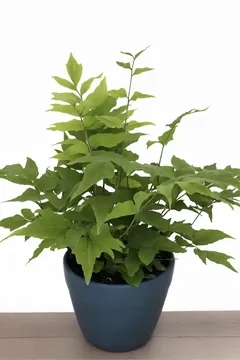
Cyrtomium falcatum
- LightHolly Fern prefers bright, indirect light between 150 and…
- WaterWater Holly Fern when the topsoil feels dry. Check the…
- ToxicitySafe for cats & dogs
- Mature sizeIts eventual height is 1 to 2 ft / 30…
Holly Fern forms a sturdy crown of large, glossy fronds. Each frond carries broad leaflets that resemble holly leaves, giving this fern a bolder texture than fine, feathery species. New growth rises from the center and gradually creates a wide clump. It suits an indoor gardener seeking a structured fern that can handle average room humidity with consistent care.
Shop this plant
Full care guide →
Care notes
Holly Fern prefers bright, indirect light between 150 and 250 μmol·m⁻²·s⁻¹.
- Set it about 5 ft / 1.5m from a south, west or east-facing window.
- Keep the fronds from having a direct sky view. Filter unavoidable sunlight with a sheer curtain.
- Strong direct rays can bleach or scorch the glossy leaflets. Low light slows growth and may create sparse fronds.
- A PAR meter or PAR meter app can measure photosynthetically active radiation as PPFD in μmol·m⁻²·s⁻¹.
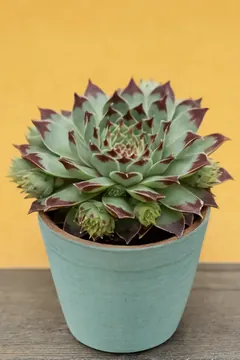
Sempervivum tectorum
- LightHouseleek needs bright, indirect light in the range of 150…
- WaterLet Houseleek soil dry completely before watering. Test…
- ToxicityNot ASPCA-listed
- Mature sizeRosettes stand 4 to 6 in / 10 to 15 cm…
Houseleek is a low, mat-forming succulent made of tight rosettes. Each rosette contains fleshy, pointed leaves and produces offsets around its base. In summer, mature growth may send up a stalk bearing star-shaped pink or red flowers. The plant stays short and suits a sunny indoor collection, especially where fast drainage and long dry intervals can be provided.
Shop this plant
Full care guide →
Care notes
Houseleek needs bright, indirect light in the range of 150 to 250 μmol·m⁻²·s⁻¹.
- Place it approximately 5 ft / 1.5m from a south, west or east-facing window.
- Avoid a site with a direct view of the sky. Filter sunlight through a sheer curtain if it reaches the leaves.
- Excess direct light can scorch the rosette. Too little light causes stretched, loose growth and weaker color.
- Measure photosynthetically active radiation with a PAR meter or PAR meter app, reading PPFD in μmol·m⁻²·s⁻¹.
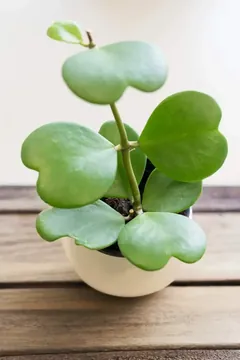
Hoya kerrii
- LightHoya Hearts prefers bright, indirect light at 150 to 250…
- WaterAllow Hoya Hearts soil to dry completely before watering…
- ToxicitySafe for cats & dogs
- Mature sizeMature vines can reach 6 to 10 ft / 1
Hoya Hearts is a succulent vine with thick leaves shaped like hearts. Mature plants carry the leaves along climbing or trailing stems, while single-leaf cuttings are also commonly seen. The waxy foliage stores moisture and remains attractive between growth periods. This hoya suits a bright room and a patient grower, since it develops slowly and needs its potting mix to dry fully.
Shop this plant
Full care guide →
Care notes
Hoya Hearts prefers bright, indirect light at 150 to 250 μmol·m⁻²·s⁻¹.
- Position the plant about 5 ft / 1.5m from a south, west or east-facing window.
- Avoid a location where the foliage has a direct view of the sky. Use a sheer curtain to filter any direct sunlight.
- Intense rays can scorch the fleshy leaves. Too little light slows vine growth and weakens overall performance.
- Check photosynthetically active radiation with a PAR meter or PAR meter app, measuring PPFD in μmol·m⁻²·s⁻¹.
Questions about plants that start with H
How many indoor plants start with H?
4, as listed on this page.
Is Heartleaf Philodendron safe for cats and dogs?
Toxic to pets. Heartleaf Philodendron is toxic to people and pets. The ASPCA lists philodendrons as toxic to cats and dogs. Their tissues contain irritating calcium oxalate crystals, so keep the vines out of reach and collect pruned pieces promptly.
How much light does a Heartleaf Philodendron need?
Heartleaf Philodendron prefers medium to bright indirect light at 150 to 200 μmol·m⁻²·s⁻¹.Place it roughly 6 ft / 1.8m from a south, west or east-facing window. Choose a position without a direct view of the sky. Use a sheer curtain when sunlight would otherwise touch the foliage. Strong direct ligh
How do I know which of these plants suits my room?
Sort by the facts strip: low-light plants for north-facing rooms, pet-safe names if you have a cat or dog, and the smaller species for shelves and desks.