This collection of indoor fern plants includes 16 choices with arching, upright or finely divided foliage. It suits readers who can provide the light and moisture pattern required by the particular fern rather than treating every entry alike. Bird’s Nest Fern, Blue Star Fern, Boston Fern and Kangaroo Paw Fern are among the included members. Most shown choices favour medium to bright indirect light, while their care levels range from Easy to Intermediate. Some common names can be misleading, so use the botanical name and individual profile when identifying a plant. Compare watering, humidity and placement needs before choosing a fern for a shelf, stand or hanging display.
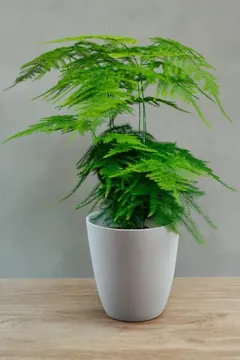
Asparagus setaceus
- LightAsparagus Fern grows best in bright, indirect light…
- WaterKeep Asparagus Fern evenly moist, but do not leave the…
- ToxicityToxic to pets
- Mature sizeDepending on support and pruning, it…
Asparagus Fern has fine, lacy foliage carried on long arching or trailing stems. Although it resembles a fern, it belongs to the asparagus family. Its airy shape works in hanging baskets, tabletop pots, or larger floor displays. It is fairly easy to grow with steady moisture and filtered light. Mature stems may become long and tangled, while dry conditions can make the delicate foliage shed.
Full care guide →
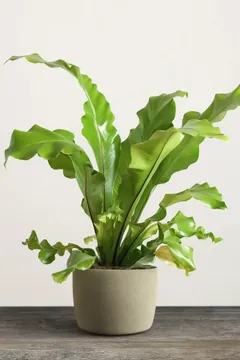
Asplenium nidus
- LightBird’s Nest Fern prefers medium to bright indirect light at…
- WaterKeep the mix evenly moist for Bird’s Nest Fern, but never…
- ToxicitySafe for cats & dogs
- Mature sizeThe fern may eventually stand 3 to 6 ft…
Bird’s Nest Fern forms a neat rosette of bright green, sword-shaped fronds. New growth rises from the central crown and gradually opens outward. Its smooth, undivided leaves give it a cleaner look than many feathery ferns. This plant suits shelves, tables, and shaded rooms with steady warmth. It is manageable for beginners who can provide consistent moisture without soaking the crown or roots.
Full care guide →
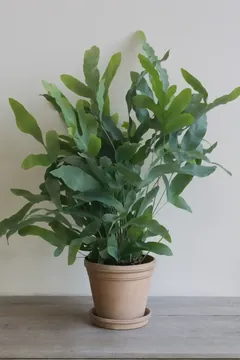
Phlebodium aureum
- LightBlue Star Fern prefers bright indirect light at 150 to 250…
- WaterKeep the soil consistently moist for Blue Star Fern, but do…
- ToxicityNot ASPCA-listed
- Mature sizeIt can eventually reach 2 to 3 feet /…
Blue Star Fern is an evergreen fern that spreads from creeping rhizomes and forms a broad clump. Its arching fronds have an unusual blue-green cast and softly divided outlines. The foliage looks less delicate than many traditional ferns. This easy indoor plant suits shelves, stands, or wide pots. It works well for growers who can maintain light moisture while keeping the rhizomes above dense, soggy soil.
Full care guide →
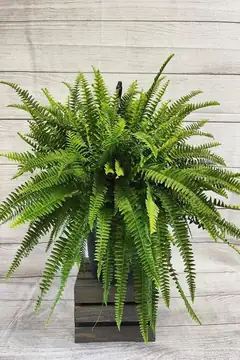
Nephrolepis exaltata
- LightBoston Fern needs bright indirect light at 150 to 250…
- WaterKeep Boston Fern soil consistently moist without leaving it…
- ToxicitySafe for cats & dogs
- Mature sizeIts fronds can stand or trail 1 to 3 ft…
Boston Fern forms a lush fountain of arching fronds covered with many fine leaflets. Mature foliage spills over the pot, making this fern useful on plant stands or in hanging planters. Its soft green texture adds volume without a rigid outline. It suits growers who enjoy full, cascading foliage and can maintain consistent moisture, filtered light, and moderate to high humidity throughout the year.
Full care guide →
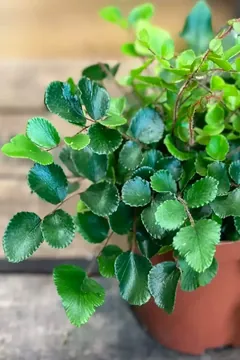
Pellaea rotundifolia
- LightButton Fern grows best in bright indirect light at 150 to…
- WaterWater Button Fern when the topsoil feels dry. Check below…
- ToxicitySafe for cats & dogs
- Mature sizeIts eventual height is 12 to 18 in / 30…
Button Fern is a compact fern with arching, wiry fronds lined by small, rounded leaflets. The neat buttons create a different texture from soft, feathery fern foliage. Its modest size works well on shelves, desks, and narrow plant stands. This plant suits growers who can offer bright filtered light and careful watering. It prefers some drying near the surface but should not endure a long, severe drought.
Full care guide →
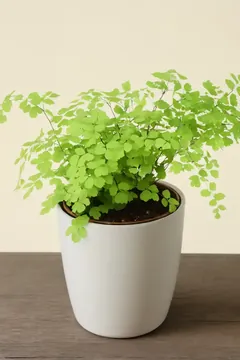
Adiantum raddianum
- LightDelta Maidenhair Fern prefers bright indirect light of 150…
- WaterKeep Delta Maidenhair Fern soil consistently moist, but…
- ToxicitySafe for cats & dogs
- Mature sizeIt reaches 1 to 2 ft / 30 to 60 cm in…
Delta Maidenhair Fern forms delicate triangular fronds carried on arching black stems. Its finely laced foliage creates a soft look while the plant remains naturally compact. It works well on a shaded stand, in a bright bathroom, or inside a humid plant display. Care is intermediate because the thin fronds react quickly to dry soil and dry air.
Full care guide →
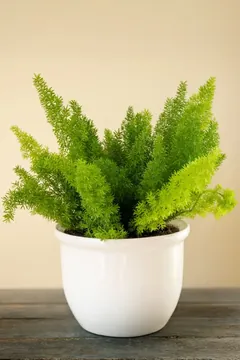
Asparagus densiflorus
- LightFoxtail Fern performs best under bright, indirect light…
- WaterWater Foxtail Fern after the topsoil feels dry. Check the…
- ToxicityToxic to pets
- Mature sizeIts eventual height is 2 to 3 ft / 60…
Foxtail Fern is an airy plant with soft, needle-like foliage arranged on plump, upright stems. Each stem resembles a fluffy fox tail, creating a fine texture without the look of a typical broad-leaf houseplant. Despite its common name, it is an asparagus relative rather than a true fern. It suits growers who can provide filtered light, regular watering and room for a rounded mature clump.
Full care guide →
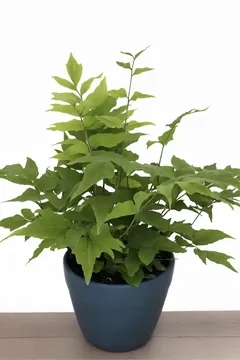
Cyrtomium falcatum
- LightHolly Fern prefers bright, indirect light between 150 and…
- WaterWater Holly Fern when the topsoil feels dry. Check the…
- ToxicitySafe for cats & dogs
- Mature sizeIts eventual height is 1 to 2 ft / 30…
Holly Fern forms a sturdy crown of large, glossy fronds. Each frond carries broad leaflets that resemble holly leaves, giving this fern a bolder texture than fine, feathery species. New growth rises from the center and gradually creates a wide clump. It suits an indoor gardener seeking a structured fern that can handle average room humidity with consistent care.
Full care guide →
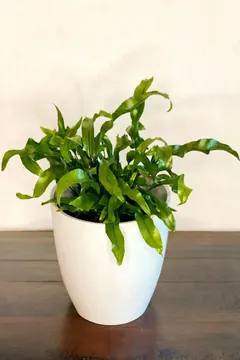
Zealandia pustulata
- LightKangaroo Paw Fern prefers bright, indirect light at 150 to…
- WaterWater Kangaroo Paw Fern when the surface of the potting mix…
- ToxicityNot ASPCA-listed
- Mature sizeIt eventually stands 1 to 2 ft / 30 to…
Kangaroo Paw Fern is a creeping or climbing fern with glossy, dark green leaves divided into single lobes. Its black rhizomes carry brown hairs, giving them a paw-like look. The spreading habit works well in a broad pot or raised display. It is an easy foliage plant for growers who can provide indirect light and regular moisture without leaving the roots waterlogged.
Full care guide →
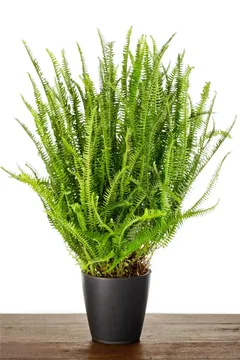
Nephrolepis obliterata
- LightKimberly Queen Fern performs best in bright, indirect light…
- WaterKeep Kimberly Queen Fern evenly moist, but never leave the…
- ToxicityNot ASPCA-listed
- Mature sizeIt can become 2 to 4 ft / 60 to 120 cm…
Kimberly Queen Fern is an evergreen fern with large, sword-shaped fronds that arch from a dense center. Its growth stays more upright and bushy than that of many trailing ferns. The rich foliage can fill a floor pot or plant stand without sprawling immediately. It suits an easy to intermediate grower who can maintain steady moisture, indirect light, and humid air.
Full care guide →
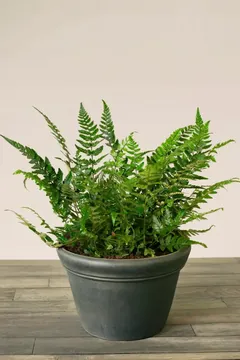
Polystichum tsus-simense
- LightKorean Rock Fern prefers medium to bright indirect light at…
- WaterWater Korean Rock Fern once the topsoil feels dry. Test the…
- ToxicityNot ASPCA-listed
- Mature sizeIts eventual height is 1 to 2 ft / 30…
Korean Rock Fern is a small evergreen fern that develops a neat, tufted shape. Its broad, lance-shaped fronds are leathery, glossy, and blue-green. The compact outline works well where a larger fern would overwhelm the space. This easy plant suits indoor growers seeking year-round foliage, provided the roots receive regular water and the fronds stay out of direct sun.
Full care guide →
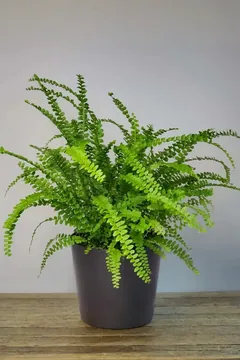
Nephrolepis cordifolia
- LightLemon Button Fern grows best in medium to bright indirect…
- WaterKeep Lemon Button Fern consistently moist without making…
- ToxicityNot ASPCA-listed
- Mature sizesee care guide
Lemon Button Fern is a small fern with a compact outline and rows of rounded, button-like leaflets. Crushing the fronds releases a faint lemon scent. Its modest size works well on shelves, desks, or other areas where a large fern would spread too far. This easy plant suits growers who can keep the mix moist without leaving it saturated.
Full care guide →
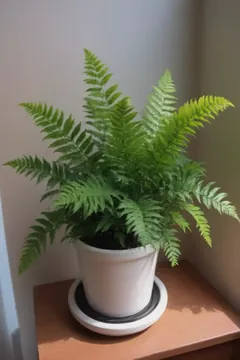
Nephrolepis biserrata
- LightMacho Fern prefers medium to bright indirect light at 150…
- WaterKeep Macho Fern soil consistently moist, but do not let it…
- ToxicityNot ASPCA-listed
- Mature sizeIts eventual height is 3 to 4 feet / 0
Macho Fern is a large, clumping fern with long, bright green fronds that curve downward as they mature. Its bold size creates a fuller display than compact indoor ferns. It works best where the arching foliage has room to spread without being brushed. This easy fern suits growers who can provide steady moisture, indirect light, and space for a broad mature plant.
Full care guide →
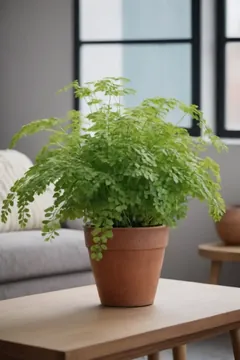
Adiantum
- LightMaidenhair Fern prefers bright, indirect light measuring…
- WaterKeep Maidenhair Fern soil consistently moist but never…
- ToxicityNot ASPCA-listed
- Mature size5 ft / 30 to 75 cm tall
Maidenhair Fern has airy, fan-shaped fronds held on thin, black, wiry stems. The delicate foliage creates a soft texture but reacts quickly when the root zone becomes dry. It favors warm rooms with humid air and steady moisture. This intermediate plant suits attentive growers who can monitor its pot often and protect the fragile fronds from direct sunlight and dry drafts.
Full care guide →
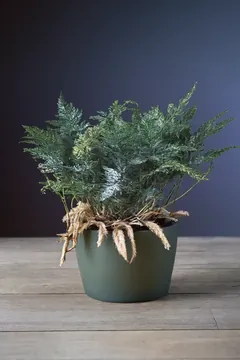
Davallia fejeensis
- LightRabbit’s Foot Fern prefers low to medium indirect light at…
- WaterKeep Rabbit’s Foot Fern evenly moist, but never leave its…
- ToxicitySafe for cats & dogs
- Mature size5 to 3 ft / 0
Rabbit’s Foot Fern is an evergreen fern grown for two distinct features. Its fine green fronds create a soft, lacy canopy. Fuzzy brown rhizomes creep across the pot and resemble small animal feet. It suits shelves, hanging pots, and shaded rooms. This easy fern is a good choice for growers who can provide steady moisture without leaving the soil waterlogged.
Full care guide →
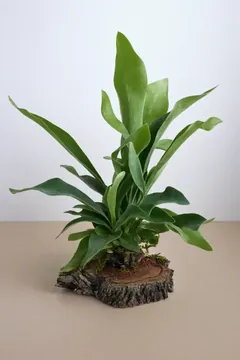
Platycerium bifurcatum
- LightStaghorn Fern grows best in bright indirect light at 150 to…
- WaterSoak the entire Staghorn Fern in rainwater for 20 to 30…
- ToxicitySafe for cats & dogs
- Mature sizesee care guide
Staghorn Fern is an epiphytic fern with two very different frond types. Flat, rounded sterile fronds cover its base and help gather moisture and nutrients. Large fertile fronds grow upward and divide into antler-like forks. Mature plants make striking wall-mounted displays, while young plants can begin in an epiphyte mix. This easy fern suits growers who can provide regular soaking, filtered light, humidity, and airflow.
Full care guide →
Common questions
Do indoor ferns need direct sunlight?
The listed ferns generally favour indirect light, with exact intensity varying by species. Direct exposure may damage foliage if it exceeds the plant’s needs.
Which indoor ferns on this list are marked Easy?
Blue Star Fern, Kangaroo Paw Fern, Korean Rock Fern and Lemon Button Fern are among the entries marked Easy.
Why is my indoor fern developing crisp leaves?
Dry potting mix, low humidity, salt build-up, root stress or excessive light may be involved. Check the species page and current conditions before adjusting care.