3 indoor plants begin with N: Neon Pothos, Nerve Plant, Norfolk Island Pine. Every entry below shows the facts you came for first: light, water, toxicity and mature size, with the full care guide one click away. 2 of them are safe for cats and dogs.
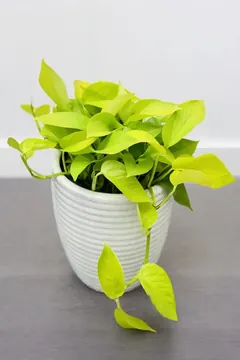
Epipremnum aureum
- LightNeon Pothos prefers bright, indirect light but tolerates…
- WaterLet Neon Pothos become almost dry before watering again…
- ToxicityToxic to pets
- Mature size4 m, with an eventual spread of 3 to 6…
Neon Pothos is a trailing or climbing vine grown for its vivid neon-green leaves. Its bright foliage adds color without flowers and looks striking in hanging baskets or on a support. The plant tolerates lower light, though useful indirect light keeps growth fuller and the color stronger. It suits many indoor spaces, but regular soil checks are important because prolonged wetness can damage its roots.
Shop this plant
Full care guide →
Care notes
Neon Pothos prefers bright, indirect light but tolerates low light, within 50 to 250 μmol·m⁻²·s⁻¹ as PPFD. Brighter filtered light usually supports fuller vines and vivid leaf color.
- Placement: keep it 5 to 8 ft / 1.5 to 2.5 m from a north, south, west, or east-facing window.
- Direct sun: prevent a clear view of the sky. Filter unavoidable sunlight with a sheer curtain.
- Too much light: neon foliage may bleach or develop scorched marks.
- Too little light: growth slows and the vine may become sparse. A PAR meter or PAR meter app can measure photosynthetically active radiation as PPFD (μmol·m⁻²·s⁻¹).
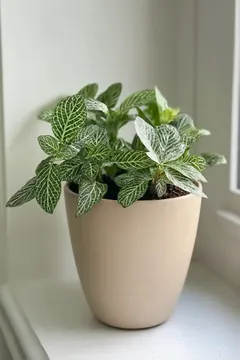
Fittonia albivenis
- LightNerve Plant prefers bright, indirect light at 150 to 250…
- WaterKeep Nerve Plant soil consistently moist, but never soggy…
- ToxicitySafe for cats & dogs
- Mature sizeIt stays low at 6 to 8 in / 15 to 20 cm…
Nerve Plant is a small evergreen perennial with low, creeping stems. Its leaves display a vivid network of white, red, or pink veins against darker foliage. The compact habit works well in terrariums, shallow pots, and small indoor displays. It prefers steady moisture and high humidity, so it needs more attention than a drought-tolerant plant. Choose it for bold leaf detail rather than height or flowers.
Shop this plant
Full care guide →
Care notes
Nerve Plant prefers bright, indirect light at 150 to 250 μmol·m⁻²·s⁻¹ as PPFD. Filtered light keeps its vein colors clear without scorching the thin leaves.
- Placement: keep it about 5 ft / 1.5 m from a south, west, or east-facing window.
- Direct sun: avoid an open view of the sky. Use a sheer curtain when sunlight would otherwise reach the foliage.
- Too much light: leaves may fade, curl, or develop scorched patches.
- Too little light: growth becomes sparse and color may weaken. A PAR meter or PAR meter app can measure photosynthetically active radiation as PPFD (μmol·m⁻²·s⁻¹).
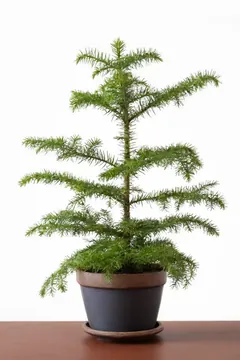
Araucaria heterophylla
- LightNorfolk Island Pine prefers bright, indirect light at 150…
- WaterWater Norfolk Island Pine when the topsoil feels dry. Check…
- ToxicitySafe for cats & dogs
- Mature sizeIt may eventually reach 6 to 8 ft / 1
Norfolk Island Pine is an evergreen conifer with soft foliage arranged on evenly spaced, feathery branches. Its symmetrical tiers create the outline of a small traditional tree. Indoors, it is often used as a living Christmas tree alternative, but it can remain a year-round foliage plant. It suits bright rooms with moderate humidity and space for a broad, upright specimen as it matures.
Shop this plant
Full care guide →
Care notes
Norfolk Island Pine prefers bright, indirect light at 150 to 250 μmol·m⁻²·s⁻¹ as PPFD. Balanced light helps maintain even branches and a symmetrical outline.
- Placement: position it about 5 ft / 1.5 m from a south, west, or east-facing window.
- Direct sun: avoid an unobstructed view of the sky. Filter unavoidable sunlight with a sheer curtain.
- Too much light: soft foliage may bleach or scorch after sudden exposure.
- Too little light: branches weaken, droop, or grow unevenly. A PAR meter or PAR meter app can measure photosynthetically active radiation as PPFD (μmol·m⁻²·s⁻¹).
Questions about plants that start with N
How many indoor plants start with N?
3, as listed on this page.
Is Neon Pothos safe for cats and dogs?
Toxic to pets. The ASPCA lists Epipremnum aureum as toxic to cats and dogs. Neon Pothos is also toxic to people if chewed. Insoluble calcium oxalate crystals can irritate the lips, mouth, and digestive tract. Keep every part of the vine away from children and pets.
How much light does a Neon Pothos need?
Neon Pothos prefers bright, indirect light but tolerates low light, within 50 to 250 μmol·m⁻²·s⁻¹ as PPFD. Brighter filtered light usually supports fuller vines and vivid leaf color.Placement: keep it 5 to 8 ft / 1.5 to 2.5 m from a north, south, west, or east-facing window. Direct sun: prevent a cl
How do I know which of these plants suits my room?
Sort by the facts strip: low-light plants for north-facing rooms, pet-safe names if you have a cat or dog, and the smaller species for shelves and desks.