LightCape Jasmine needs bright indirect light at 150 to 250…
WaterKeep Cape Jasmine soil consistently moist, but not soggy…
ToxicityToxic to pets
Mature sizeIndoors, it may eventually reach 3 to 6…
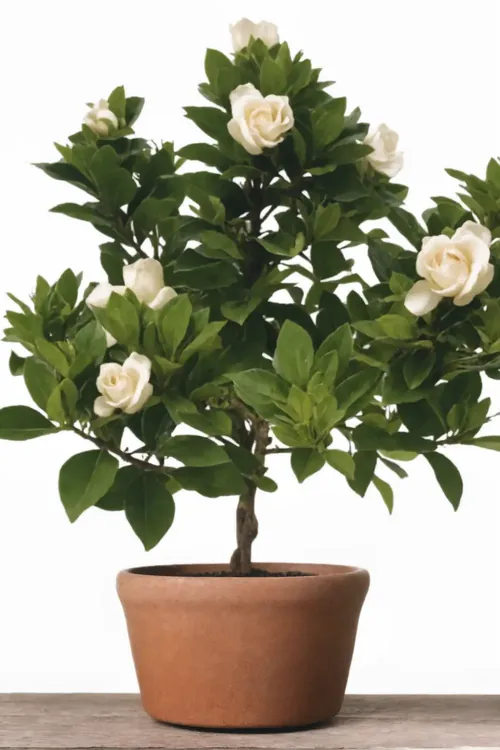
Cape Jasmine is a compact, bushy evergreen shrub with glossy green leaves. Its fragrant white flowers provide the main attraction and stand out against the dark foliage. The plant can become a refined indoor specimen when its light, moisture, acidity, warmth, and humidity remain stable. It suits experienced growers who enjoy fragrant blooms and do not mind monitoring conditions closely. Sudden environmental changes can affect buds and leaves.
Care data checked 25 September 2026 · Dany · A-Z Plants
Light requirements
Cape Jasmine needs bright indirect light at 150 to 250 μmol·m⁻²·s⁻¹ PPFD. Good light supports dense growth and flower production.
Placement: set it about 5 ft / 1.5 m from a south, west or east-facing window. It should not have a direct view of the sky.
Filtering: use a sheer curtain where direct sunlight would otherwise strike the leaves.
Measurement: a PAR meter or PAR meter app can check photosynthetically active radiation.
Too much light can scorch foliage. Too little light causes weak growth, poor bud development, and fewer flowers.
Watering
Keep Cape Jasmine soil consistently moist, but not soggy. Check several depths with a knitting needle or chopstick before watering. Use room temperature rainwater, distilled water, or reverse osmosis water.
Water until the whole root ball is wet and liquid runs through the drainage holes. Let it drain fully before returning it to a saucer or decorative planter.
A pot with drainage holes is essential. Waterlogged roots can rot and cause yellow leaves or bud loss.
Water considerably less in winter, when active growth slows, but do not allow complete dryness.
Dry soil may cause crispy edges, wilting, or dropped buds. Always check the mix before reacting to wilt, since overly wet roots can produce similar symptoms.
Soil
Use an organic all-purpose potting mix amended with an organic soil acidifier. Cape Jasmine needs a moisture-retentive yet free-draining root zone, and the pot must have drainage holes.
DIY recipe: combine 3 parts coir with 1 part pumice.
Amend the blend with an organic soil acidifier, then top dress lightly with worm castings.
Apply an organic all-purpose fertilizer every 2 to 4 weeks from March to October. Feed Cape Jasmine on moist soil while it is actively growing and flowering. Avoid excessive fertilizer, which can damage roots or disrupt flowering. Pause regular feeding during the slower winter months.
Temperature & humidity
Cape Jasmine prefers a narrow temperature range of 65 to 70°F / 18 to 21°C. Protect it from cold drafts and rapid changes that may trigger bud drop. Humidity near 50% is suitable. Keep it away from drying heating and cooling vents.
What to expect
Cape Jasmine takes about 3 to 5 years to mature. Indoors, it may eventually reach 3 to 6 ft / 0.9 to 1.8 m tall. Its spread is about 2 to 4 ft / 0.6 to 1.2 m, forming a compact, branching shrub.
Varieties & cultivars
Gardenia jasminoides ‘August Beauty’: Large, fragrant flowers appear from spring through fall. The plant keeps a compact form.
Gardenia jasminoides ‘Kleim’s Hardy’: This cold-tolerant selection suits cooler climates and produces smaller, double flowers.
Gardenia jasminoides ‘Chuck Hayes’: A dwarf cultivar suited to limited space. It produces many single flowers.
Cape Jasmine: questions
Is Cape Jasmine toxic to cats and dogs?
The ASPCA lists Cape Jasmine, or gardenia, as toxic to cats and dogs. It is also considered toxic to people if plant material is eaten. Ingestion may cause digestive symptoms…
How much light does Cape Jasmine need?
Cape Jasmine needs bright indirect light at 150 to 250 μmol·m⁻²·s⁻¹ PPFD. Good light supports dense growth and flower production. - Placement: set it about 5 ft / 1.5 m from a south, west or east-facing window. It should not have a direct view of the sky. - Filtering: use a sheer curtain where…
How often should I water Cape Jasmine?
Keep Cape Jasmine soil consistently moist, but not soggy. Check several depths with a knitting needle or chopstick before watering. Use room temperature rainwater, distilled water, or reverse osmosis water. - Water until the whole root ball is wet and liquid runs through the drainage holes. Let it…
How big does Cape Jasmine get?
Mature size indoors: Indoors, it may eventually reach 3 to 6….