LightPurple Passion Plant develops strong color in bright…
WaterWater Purple Passion Plant when the top third of the soil…
ToxicitySafe for cats & dogs
Mature sizeIt reaches 1 to 2 ft / 30 to 60 cm tall…
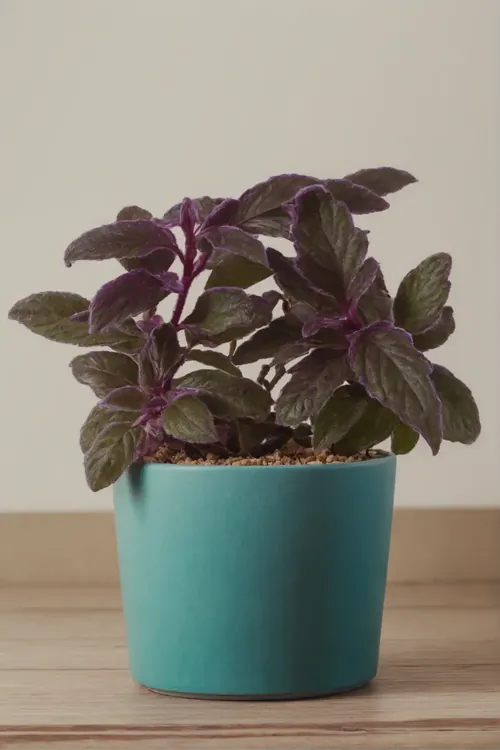
Purple Passion Plant is a fast-growing houseplant with velvety foliage covered in deep purple hairs. Green undersides add contrast when the leaves turn or trail over a pot. Its spreading habit works especially well in hanging baskets. It suits growers who want bold color and can provide bright filtered light, careful watering, and regular feeding during the main growing season.
Care data checked 25 September 2026 · Dany · A-Z Plants
Light requirements
Purple Passion Plant develops strong color in bright, indirect light from 150 to 250 μmol·m⁻²·s⁻¹.
Set it around 5 ft / 1.5 m from a south, west, or east-facing window.
Keep the foliage out of a direct sky view. A sheer curtain can filter unavoidable sunlight.
Direct sun may scorch the velvety leaves. Low light weakens growth and reduces purple color.
Use a PAR meter or PAR meter app to measure photosynthetically active radiation as PPFD (μmol·m⁻²·s⁻¹).
Watering
Water Purple Passion Plant when the top third of the soil has dried. Test several depths with a knitting needle or chopstick before adding water.
Use room temperature rainwater, distilled water, or reverse osmosis water.
Water thoroughly until excess flows through the drainage holes. Let the pot drain fully before setting it on a saucer or placing it inside a decorative planter.
Drainage holes are essential. Constantly wet soil can cause root rot, while waiting far beyond the top third becoming dry may lead to wilted growth and crisp edges.
Water considerably less during winter when the plant is not growing actively, but continue checking moisture rather than following a fixed calendar.
Soil
Use an organic all-purpose potting mix that keeps some moisture while allowing excess water to leave quickly. Purple Passion Plant roots should not remain in compact, saturated soil.
DIY mix: combine 3 parts coir with 1 part pumice.
Top dress with worm castings.
Feeding
Apply an organic all-purpose fertiliser every 2 to 4 weeks from March to October. Use it at the stated strength on moist soil. Do not overfeed in an effort to increase color or growth. Pause regular feeding during winter.
Temperature & humidity
Purple Passion Plant prefers 60 to 75 °F / 15 to 24 °C. Keep it away from cold drafts and direct heat. Humidity from 40 to 50% is suitable, making average indoor conditions acceptable.
What to expect
Purple Passion Plant generally matures in 2 to 3 years. It reaches 1 to 2 ft / 30 to 60 cm tall and spreads 1 to 2 ft / 30 to 60 cm. It grows quickly and develops a trailing form.
Varieties & cultivars
G. aurantiaca ‘Purple Haze’: The most common form has deep purple leaves with a soft, velvety surface.
G. aurantiaca ‘Variegated’: Green leaves carry creamy white variegation, while the undersides remain purple.
Purple Passion Plant: questions
Is Purple Passion Plant toxic to cats and dogs?
The ASPCA classifies Purple Passion Plant as non-toxic to cats and dogs. It is also considered non-toxic to people. Even so, the fuzzy leaves are not edible, and chewing plant…
How much light does Purple Passion Plant need?
Purple Passion Plant develops strong color in bright, indirect light from 150 to 250 μmol·m⁻²·s⁻¹. - Set it around 5 ft / 1.5 m from a south, west, or east-facing window. - Keep the foliage out of a direct sky view. A sheer curtain can filter unavoidable sunlight. - Direct sun may scorch the…
How often should I water Purple Passion Plant?
Water Purple Passion Plant when the top third of the soil has dried. Test several depths with a knitting needle or chopstick before adding water. - Use room temperature rainwater, distilled water, or reverse osmosis water. - Water thoroughly until excess flows through the drainage holes. Let the…
How big does Purple Passion Plant get?
Mature size indoors: It reaches 1 to 2 ft / 30 to 60 cm tall….